Pharmaceutical Supply Chain Quality: How It Affects Patient Safety
 Aug, 17 2026
Pharmaceutical Supply Chain Risk Assessor
Overall Risk Score
Imagine waiting for a life-saving infusion, only to be told it’s delayed by two weeks due to a shipping issue. For millions of patients, this isn’t just an inconvenience; it’s a direct threat to their health. The pharmaceutical supply chain is the invisible network that moves medication from factories to your hands, and its quality determines whether you get safe, effective drugs or face dangerous gaps in treatment. This system spans over 180 countries and involves roughly 30,000 manufacturing facilities. When it works, you don't notice it. When it fails, you feel it immediately through shortages, expired meds, or compromised potency. Recent data shows that 68% of hospitals have had to substitute medications due to supply issues, with nearly 30% of those substitutions leading to adverse patient reactions. Understanding how this chain operates-and where it breaks down-is crucial for anyone relying on daily medication. ### Key Takeaways * **Temperature matters:** 72% of biologics require strict 2-8°C storage; deviations can ruin efficacy. * **Shortages are common:** Drug shortages increased by 300% during the early pandemic phase and remain a top cause of treatment delays. * **Technology is catching up:** Blockchain and real-time monitoring now cover 68% of high-value shipments, reducing temperature errors by 42%. * **Regulation is tightening:** The FDA’s DSCSA mandates full product tracing, aiming to eliminate counterfeits and track every unit. * **Vulnerability persists:** Geopolitical risks and concentrated manufacturing in Asia make the global system fragile despite technological advances.
The Hidden Backbone of Your Medication
The pharmaceutical supply chain is often described as the "invisible backbone" of healthcare. It’s not just about trucks moving boxes. It’s a complex web of manufacturers, distributors, wholesalers, and retailers that must maintain perfect conditions at every step. According to researchers at Butler University, there is "no room for error" because the consequences are life-or-death. If a batch of insulin gets too warm, it clumps and stops working. If a chemotherapy agent is exposed to light, it degrades. These aren't theoretical risks; they are daily realities for supply chain managers.
This network serves 7.9 billion people worldwide. To keep up, companies invest heavily in infrastructure. On average, major pharma firms spend $12.7 million annually on supply chain technology upgrades alone. But why so much? Because unlike buying groceries, where a slightly bruised apple might still be okay, a compromised pill can be ineffective or even toxic. The goal is simple but hard to achieve: ensure product integrity from the moment it leaves the factory floor until it enters a patient's body.
Cold Chains and Critical Storage Requirements
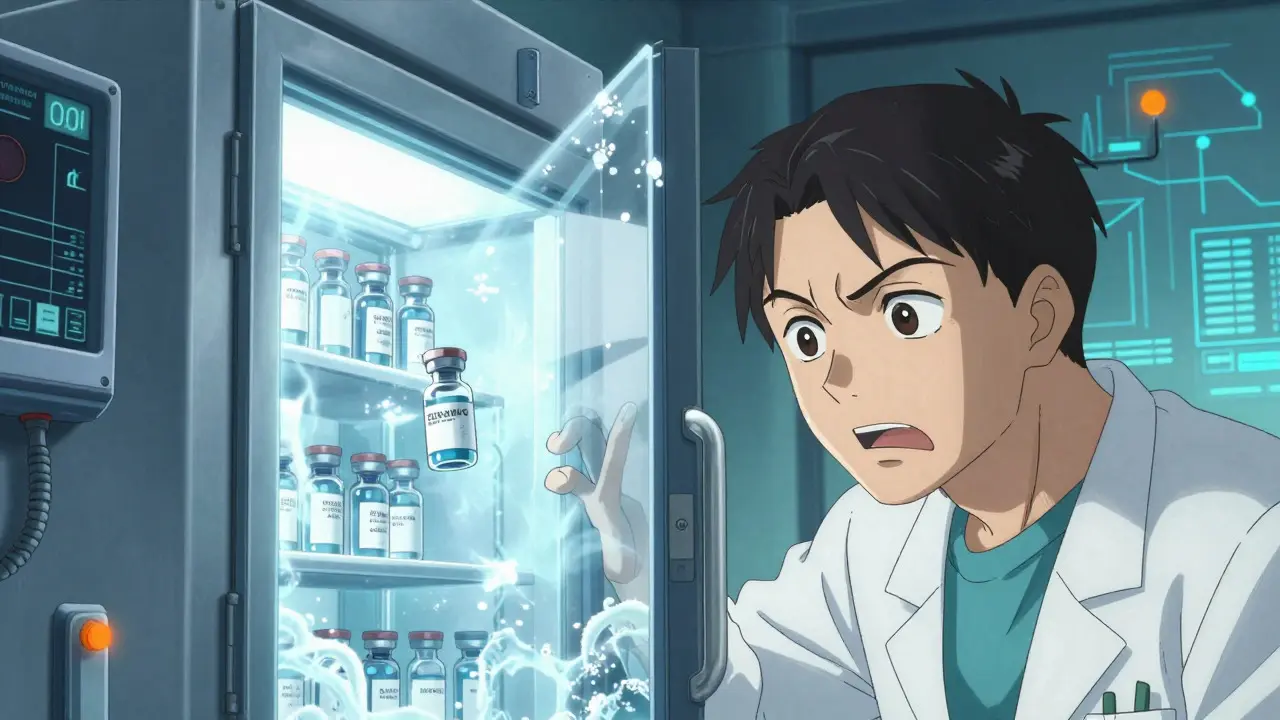
One of the biggest challenges in maintaining quality is temperature control. Most traditional pills are tough, but modern medicines like vaccines, monoclonal antibodies, and gene therapies are delicate. Data from Pharmaceutical Commerce (2024) reveals that 72% of biologics need to stay between 2°C and 8°C. Another 15% require ultra-cold storage below -60°C. That’s colder than most home freezers.
To manage this, specialized distribution centers cost an average of $2.8 million to build and operate. These facilities use continuous monitoring systems that track temperature and humidity in real time. In 2025, real-time monitoring covered 68% of high-value shipments, which helped reduce temperature excursions by 42%. But it’s not perfect. Rural areas still struggle, with 32% of last-mile deliveries facing temperature integrity issues. For patients in remote regions, this means a higher risk of receiving degraded medication without knowing it.
| Factor | Standard Pharmaceuticals | Biologics & High-Value Drugs |
|---|---|---|
| Typical Storage Temp | Room Temperature (20-25°C) | 2-8°C or <-60°C |
| Monitoring Coverage | Batch-level checks | Real-time IoT sensors (68% coverage) |
| Risk of Degradation | Low if sealed | High if temp deviates >1 hour |
| Infrastructure Cost | Standard warehouse | $2.8M per specialized center |
How Shortages Directly Harm Patients
You might think a drug shortage just means waiting longer. In reality, it often means changing your treatment plan abruptly. Mathematica’s 2024 report for ASPE notes that shortages force "last-minute substitutions that can be costly" and increase staff workload. For chronic disease patients, switching brands or forms of medication can lead to unstable symptoms. One multiple sclerosis patient reported on RateMDs that a 17-day delay in Tysabri infusions resulted in two new brain lesions visible on MRI. That’s not a minor setback; that’s permanent damage.
Hospitals are feeling the squeeze too. After Hurricane Helene disrupted operations at Baxter’s plant in North Carolina, more than 80% of healthcare organizations faced shortages. Surgeries were delayed, and treatments were postponed. The American Hospital Association’s 2024 survey found that 68% of hospitals experienced medication substitutions, and 29% reported adverse reactions from these changes. This creates a vicious cycle: patients lose trust in their care, doctors scramble for alternatives, and safety risks rise.
Tracking Every Pill: The Role of Technology
To prevent counterfeits and track shortages, regulators and companies are turning to digital tools. The FDA’s Drug Supply Chain Security Act (DSCSA) requires serialization of 100% of prescription drugs using 2D data matrix barcodes. This means every single box, vial, or bottle has a unique ID. By November 2025, 100% electronic tracing will be mandatory. Currently, 62% of manufacturers are already compliant, according to HDA (2024).
Blockchain technology is also playing a bigger role. Since 2020, blockchain implementation for track-and-trace systems has increased by 37%. Why? Because it creates an immutable record of where a drug has been. If a counterfeit insulin appears in a pharmacy, the system can trace it back to the exact point of entry in minutes. Qualityze (2024) notes that this helps "identify and eliminate counterfeits before they reach patients." While not all hospitals have adopted this yet-implementation takes an average of 8.3 months and $450,000-it’s becoming the standard for high-value drugs.
Geopolitical Risks and Global Fragility
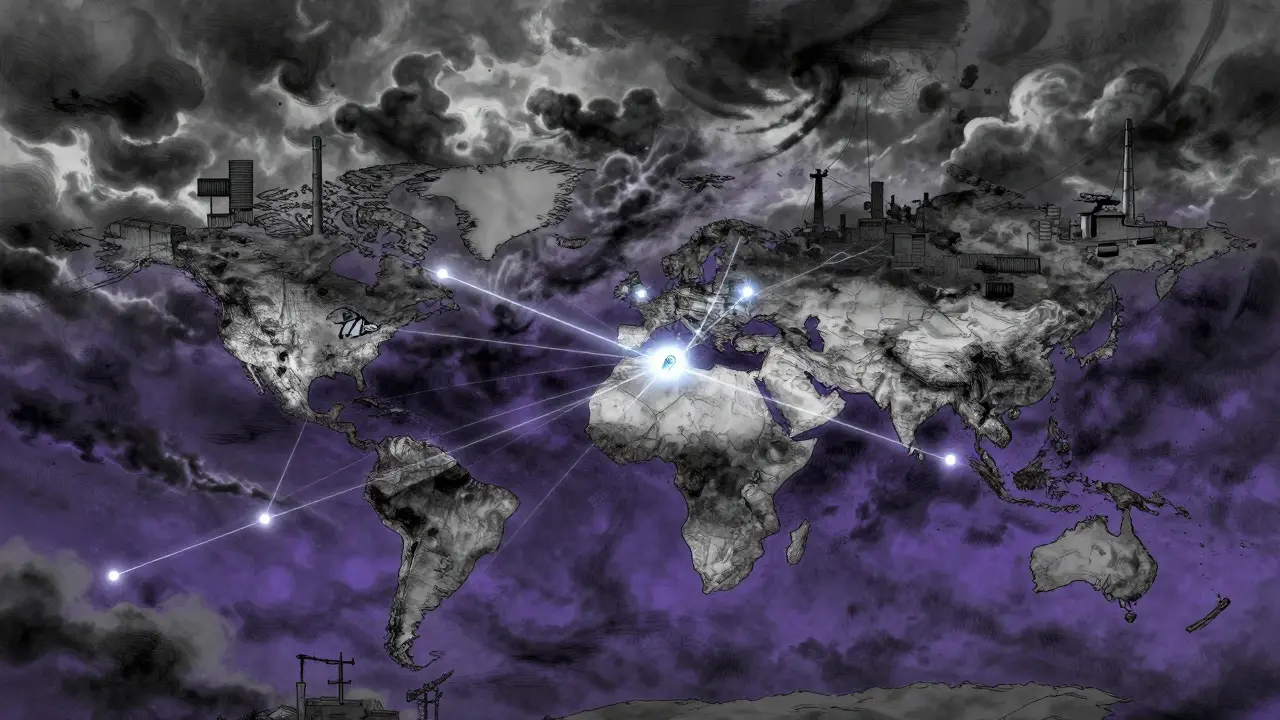
Your medicine likely didn’t start in the country where you live. 78% of global Active Pharmaceutical Ingredients (APIs) are produced in China and India. This concentration makes the supply chain vulnerable to geopolitical tensions, trade disputes, or natural disasters. Trading Economics (2024) reports that pharmaceutical supply chains face 28% higher vulnerability to geopolitical disruptions than medical device supply chains.
Gartner’s 2025 report ranks pharmaceuticals as the third most vulnerable sector to disruption, after semiconductors and aerospace. The average time to recover from a disruption is 14.2 days, compared to 8.7 days for consumer goods. For emerging economies, the risk is even higher. UNCTAD (2024) highlights that Caribbean hospitals face a supply chain pressure index of 8.1, far above the efficiency target. Shipping cost volatility increases this risk by 43%, making imported medications unpredictable and expensive.
What’s Next for Supply Chain Safety?
The future looks promising but requires significant investment. AI-driven demand forecasting is projected to reduce shortages by 35% by 2027. By 2028, blockchain integration is expected to cover 85% of high-value shipments. McKinsey (2025) predicts a 22% reduction in critical drug shortages by 2030 if advanced technologies are widely adopted. However, they warn that without diversifying manufacturing locations, geopolitical tensions could increase vulnerability by 18% in the same period.
For patients, the takeaway is clear: pay attention to your medication sources. Ask your pharmacist if a substitution is needed and why. Check expiration dates carefully. And support policies that fund supply chain resilience. The system is improving, but it’s not bulletproof yet. Your health depends on every link in that chain holding strong.
Why do drug shortages happen so often?
Shortages occur due to manufacturing failures, raw material scarcity, regulatory inspections, and logistical disruptions like weather events or cyberattacks. The reliance on a few key suppliers for APIs exacerbates these issues, creating bottlenecks that ripple through the entire system.
Is my medication being tracked electronically?
Mostly, yes. Under the DSCSA, 100% of prescription drugs must be serialized with unique barcodes. By late 2025, electronic tracing will be fully mandatory. This allows pharmacies and hospitals to verify authenticity and track inventory in real-time, though adoption rates vary by facility size.
What should I do if my doctor substitutes my medication?
Ask why the substitution is necessary and check if the new option is bioequivalent. Keep a log of any side effects or changes in symptom control. If you’re on narrow-therapeutic-index drugs (like warfarin or lithium), discuss the risk-benefit ratio thoroughly with your provider, as small changes can have large impacts.
How does temperature affect my biologic medication?
Biologics are proteins that can denature (unfold) if exposed to heat or cold outside their specified range. This can reduce efficacy or cause immune reactions. Always store them as directed, use insulated carriers for transport, and check for visual changes like cloudiness or particles before injection.
Are generic drugs subject to the same supply chain rules?
Yes. All prescription drugs, including generics, must comply with DSCSA serialization requirements. However, generic manufacturers sometimes have less robust documentation protocols, averaging lower user ratings for supply chain transparency compared to brand-name leaders like Pfizer.