Vaping and Lung Health: What the Evidence Shows About E-Cigarette Risks
 Feb, 16 2026
When you see someone puffing on a sleek vaping device, it’s easy to think they’re avoiding the dangers of smoking. After all, ads have told us for years that e-cigarettes are a safer choice. But the truth is more complicated-and the data is piling up fast. Vaping isn’t harmless. It’s not even close to harmless. If you’re vaping, even just a little, your lungs are being exposed to chemicals that can cause real, lasting damage.
What’s actually in vaping aerosol?
Most people assume e-cigarettes just produce water vapor. They don’t. What comes out is an aerosol filled with chemicals, many of which are toxic. The base liquids usually contain propylene glycol and vegetable glycerin. Sounds harmless, right? A University of North Carolina study found these substances are toxic to lung cells. The more flavorings and additives in the liquid, the worse it gets. Some e-liquids have over 50 ingredients. Each one adds another layer of risk.
Then there are the hidden dangers: acetaldehyde, formaldehyde, acrolein, and benzene. These aren’t just random chemicals-they’re known to cause lung disease. Benzene? That’s the same stuff found in car exhaust. Acrolein? It’s used in industrial weed killers. When you inhale these, your airways get irritated. Your lungs respond by swelling, producing mucus, and tightening up. That’s how chronic coughing and wheezing start.
Flavorings are another big problem. Diacetyl, once used in butter-flavored popcorn, was linked to a rare lung disease called bronchiolitis obliterans-nicknamed "popcorn lung." Even though diacetyl is now banned in e-cigarettes in many countries, other flavor chemicals haven’t been tested. Some of them act just like diacetyl. And here’s the kicker: we don’t know how most of these flavor chemicals affect the lungs long-term. There’s no safety data because no one’s done the long-term studies.
The immune system takes a hit
Your lungs have a built-in defense system. Tiny hairs called cilia sweep out germs and debris. Special immune cells patrol the airways, ready to fight off infections. Vaping shuts this system down. Research from the American Thoracic Society shows that e-cigarette vapor suppresses these immune defenses. That means when you catch a cold, your body can’t fight it as well. You’re more likely to get pneumonia, bronchitis, or even the flu.
One study found that vapers had a harder time clearing bacteria from their lungs than non-users. Even people who had never smoked before showed signs of weakened lung immunity. This isn’t a small risk. It’s a real one. And it’s happening in young adults who thought they were just "trying something new."
EVALI: The wake-up call
In 2019, the U.S. saw a sudden spike in severe lung injuries linked to vaping. Over 2,800 people were hospitalized. Forty-seven died. The cause? Vitamin E acetate, a thickening agent used in THC vaping cartridges. It wasn’t in nicotine vapes-it was in black-market THC products. But the outbreak proved something terrifying: vaping can cause sudden, life-threatening lung damage.
Even though the EVALI outbreak slowed after regulators cracked down on vitamin E acetate, it didn’t disappear. Cases still pop up. And the real danger isn’t just the additives. It’s the fact that we don’t know what’s in most vaping products. There’s no standard. No testing. No oversight. You could be inhaling anything.
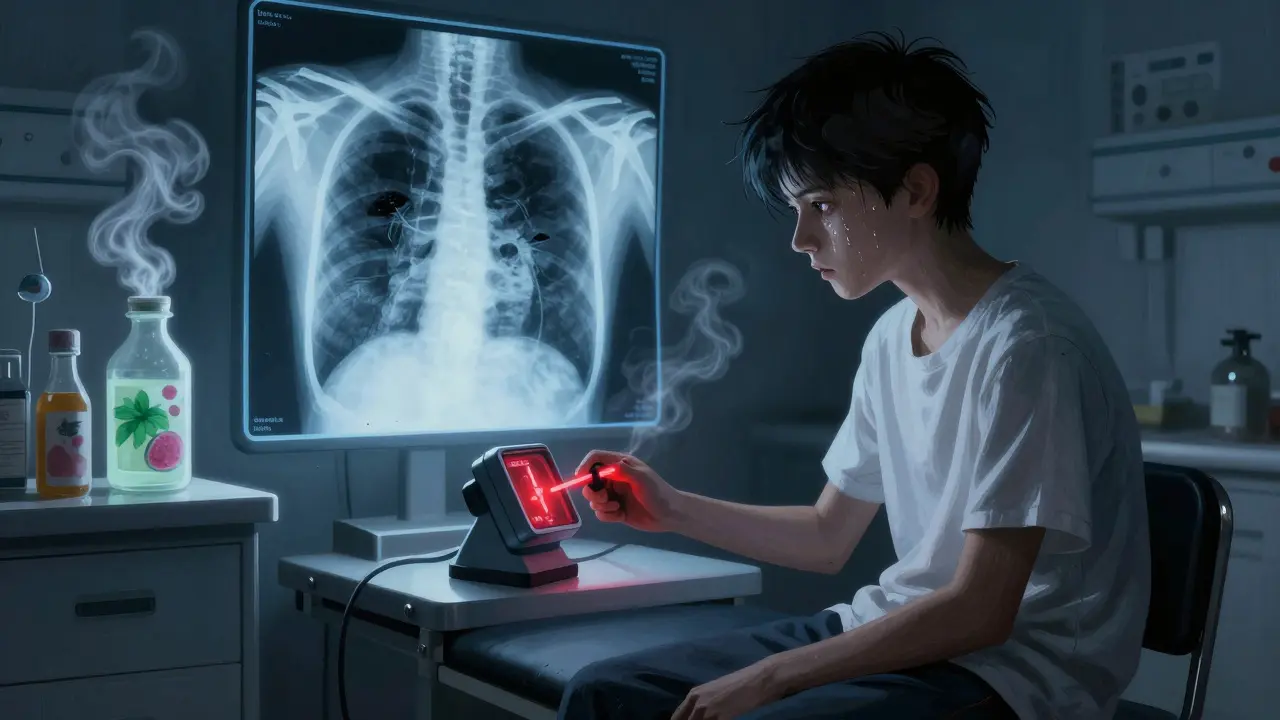
Vaping and chronic lung disease
One of the biggest fears with smoking is COPD-chronic obstructive pulmonary disease. It’s irreversible. It kills. Now, new data shows vaping might be a direct contributor. A 2024 NIH study analyzed over 10,000 adults and found that current e-cigarette users had a 48% higher risk of developing COPD than non-users. That’s not a coincidence. That’s a pattern.
Even people who never smoked tobacco showed this increased risk. It doesn’t matter if you’re a "light vaper." The data doesn’t care. The more you vape, the higher your risk. And unlike smoking, where the damage builds over decades, lung changes from vaping can show up in just a few years.
Is vaping better than smoking?
Yes, it’s less harmful. That’s not in dispute. If you’re a current smoker and you switch completely to vaping, you’ll reduce your exposure to tar, carbon monoxide, and dozens of cancer-causing chemicals. That’s a real benefit. But here’s the catch: "less harmful" doesn’t mean "safe." It means "less bad."
And for non-smokers? Especially teens and young adults? There’s no upside. Vaping introduces nicotine addiction, rewires the brain’s reward system, and damages developing lungs. The National Academies of Science found that youth who vape are more likely to develop asthma symptoms and have more frequent wheezing and coughing. It’s not a gateway-it’s a direct path to lung problems.

What symptoms should you watch for?
You don’t need to be a heavy vaper to feel the effects. Common signs include:
- Chronic cough that won’t go away
- Shortness of breath during light activity
- Chest tightness or pain
- Frequent bronchitis or respiratory infections
- Reduced ability to exercise or climb stairs
If you’re vaping and you have any of these, don’t wait. Talk to a doctor. Get a lung function test. It’s simple. It’s quick. And it could catch damage before it becomes permanent.
Can your lungs heal?
Good news: some damage might be reversible. If you quit vaping, your airway inflammation can start to calm down within weeks. Cilia can begin to recover. Your immune system can bounce back. But not all damage is gone. Scar tissue from chronic irritation? That’s permanent. And if you’ve been vaping for years, especially with high-nicotine or THC products, you might already have changes that won’t go away.
The key is stopping now. The longer you wait, the more irreversible damage you risk. There’s no "safe" level of vaping. No "just a few puffs a day" that’s harmless. Your lungs don’t work that way.
What’s the best move for your lungs?
If you’re vaping to quit smoking: congratulations on taking the first step. But don’t stop there. Talk to your doctor about FDA-approved quitting aids-nicotine patches, gum, or prescription medications. They’re safer, better studied, and don’t carry the same lung risks.
If you’re vaping because you think it’s cool or harmless: reconsider. The science is clear. You’re not just inhaling flavor. You’re inhaling chemicals that damage your lungs, weaken your immune system, and raise your risk of serious disease. There’s no benefit. Only risk.
The bottom line? Vaping isn’t a harmless habit. It’s a respiratory hazard. And the evidence isn’t going away. It’s getting stronger.
Can vaping cause COPD even if I never smoked cigarettes?
Yes. Studies show that people who vape but have never smoked tobacco still have a 48% higher risk of developing COPD compared to non-users. Vaping introduces chemicals that irritate the lungs and trigger inflammation, which over time can lead to airflow obstruction-exactly what COPD is. It doesn’t require a history of smoking.
Is nicotine the main danger in vaping?
Nicotine is addictive and affects the heart and brain, but it’s not the main cause of lung damage. The real culprits are the solvents (like propylene glycol), flavoring chemicals (like diacetyl alternatives), and toxic byproducts (like formaldehyde) created when the liquid is heated. Even nicotine-free vapes can damage your lungs.
Are flavored vapes more dangerous than unflavored ones?
Yes. Flavored e-liquids contain hundreds of chemical additives, many of which haven’t been tested for inhalation safety. Studies show that flavored vapes cause more airway inflammation and cell damage than unflavored ones. Even "fruit" or "mint" flavors can trigger lung irritation. The flavor doesn’t make it safer-it makes it riskier.
How long does it take for lung damage to show up from vaping?
It can happen surprisingly fast. Some users report coughing and shortness of breath within weeks of starting. Long-term damage like reduced lung function or early signs of COPD can appear in as little as 2-3 years of regular use. That’s faster than many people expect. The damage isn’t always visible until it’s advanced.
Should I get my lungs checked if I vape?
Yes. Even if you feel fine, a simple lung function test (spirometry) can detect early signs of damage. It’s non-invasive, takes less than 10 minutes, and is often covered by insurance. If you vape regularly, this test should be part of your annual health checkup. Early detection means you can act before the damage becomes permanent.
Digital Raju Yadav
February 17, 2026 AT 11:12Vaping is just another Western scam to sell poison under the guise of "harm reduction." India banned these toxic devices for a reason. Your lungs aren't a lab for corporate experiments. If you're vaping, you're already losing. No excuses. No "less harmful" nonsense. It's all damage, and the data proves it. Stop lying to yourself.
Carrie Schluckbier
February 18, 2026 AT 21:44Did you know the FDA and CDC are hiding the real data? I've seen internal documents - they knew about the lung damage since 2016 but let it continue because Big Pharma wants you hooked on nicotine patches instead. Vaping is a psyop. They're turning healthy kids into patients so they can sell more inhalers. Wake up. The government is your enemy.
Liam Earney
February 19, 2026 AT 12:13Look, I get it - we’re all just trying to survive in this broken world, right? But vaping… it’s not just about chemicals or lung cells… it’s about the silence between breaths, the way your chest tightens when you think no one’s watching, the way you start counting puffs like they’re prayers… I’ve watched friends disappear into vapor clouds, thinking it was freedom, when really it was just slow-motion surrender. The body doesn’t lie. It remembers every puff. And it cries out in ways we’ve stopped learning to hear.
guy greenfeld
February 20, 2026 AT 22:37It’s fascinating how we’ve turned self-destruction into a lifestyle brand. Vaping isn’t about health - it’s about aesthetics. It’s about the glow of the LED, the Instagrammable cloud, the ritual of charging a device that’s slowly killing you. We’ve commodified mortality. We’ve made poison pretty. And the real tragedy? We don’t even notice anymore. We’re not dying - we’re curating our demise.
PRITAM BIJAPUR
February 22, 2026 AT 03:25Bro, I used to vape daily - 3 pods a week. Then I got a spirometry test. My FEV1 was 78%. I cried. Not because I was scared - because I was stupid. I thought "light vaper" meant "safe." Now I’m 4 months smoke-free. My lungs feel like they remember how to breathe. If you’re reading this and still vaping? Stop. Right now. Go outside. Take 10 deep breaths. That’s what your lungs want. Not flavor. Not clouds. Just air. 🌿💨
Tony Shuman
February 23, 2026 AT 15:29So now we’re saying vaping causes COPD? Funny - because every study I’ve seen says the real cause is pollution, poor diet, and government lies about air quality. This whole post feels like a distraction. Why aren’t we talking about the coal plants? The industrial smog? The fact that 90% of the world’s air is toxic? Vaping is a scapegoat. The real villains are the ones who let cities choke while selling you "safer" vapor.
John Haberstroh
February 23, 2026 AT 20:16I used to think vaping was just a fad. Then I started noticing how people’s breath smelled like a candy store exploded. But here’s the weird part - the ones who vape the most? They’re the quietest. No coughing. No complaints. Just… empty. Like their lungs are full of ghosts. I don’t know if it’s the chemicals or the isolation, but something’s off. And yeah - I quit after seeing a friend go from "just a few puffs" to oxygen therapy in 18 months.
Jonathan Ruth
February 24, 2026 AT 20:06Fact check: the 48% COPD number? That’s from a study with 3000 vapers and 7000 non users. Most vapers were also former smokers. They didn’t control for prior lung damage. So no - vaping doesn’t cause COPD. It’s just another scare tactic to push nicotine patches. Also stop calling it aerosol. It’s vapor. Stop being dramatic.
Philip Blankenship
February 25, 2026 AT 09:48I get why people vape. It’s soothing. It’s ritual. It’s something to do with your hands when you’re anxious. I used to do it after work. Then I started having chest tightness. Didn’t think much of it. Took me 6 months to realize it was the vape. Quit cold turkey. Didn’t need patches. Just started walking. Now I can climb stairs without wheezing. It’s not about being perfect. It’s about listening to your body. You don’t need a PhD to know when something’s wrong.
Oliver Calvert
February 25, 2026 AT 14:02Key point missed: the real danger isn’t nicotine or flavoring - it’s the unregulated black market. Most EVALI cases came from illicit THC cartridges. Legal nicotine vapes in the US and EU are tested. The problem is lack of enforcement. If you buy from a gas station or a dude on TikTok - yes, you’re risking your life. But regulated products? They’re miles safer. Stop conflating criminal negligence with consumer choice.
Kancharla Pavan
February 27, 2026 AT 01:52You think vaping is a personal choice? It’s a moral failure. You’re not just hurting yourself - you’re normalizing addiction for teenagers who don’t know any better. You’re turning your lungs into a billboard for corporate greed. Every puff is a betrayal of your future self. And if you’re still doing it? You’re not just unhealthy - you’re weak. Weak-minded. Weak-willed. Weak-hearted. Stop pretending you’re in control. You’re not. You’re a slave to a marketing campaign designed to make you forget you’re alive.
Logan Hawker
February 27, 2026 AT 20:27Let’s not pretend this is science - it’s performative outrage. The entire narrative is built on fearmongering, cherry-picked studies, and emotionally manipulative language. The phrase "your lungs are being exposed to chemicals"? Every breath you take contains chemicals. Oxygen. Nitrogen. Carbon dioxide. Even water vapor is a chemical compound. The real issue? We’ve been conditioned to fear anything that isn’t 100% natural - even when natural is often more toxic. This isn’t public health. It’s moral panic dressed up as data.