Vaccines and Medications: Timing With Immunosuppressants Explained
 Apr, 1 2026
You take medicine to calm your immune system down. You get a vaccine to wake that same system up. On the surface, these two actions feel like they should fight each other. If you are living with autoimmune disease, cancer, or organ transplant complications, this conflict is your daily reality. Getting the right protection at the right time isn't just about picking a day at the pharmacy; it is about navigating complex biological windows.
The stakes are high. Miss the window, and you walk away with little immunity despite the pain of the needle. Wait too long, and you expose yourself to flu, pneumonia, or shingles while your defenses are low. In 2026, we have more clarity than ever thanks to years of data from the pandemic era, but confusion remains widespread in primary care offices.
Why Timing Is Everything
When you inject a vaccine, your body is supposed to create antibodies. This process requires a functioning army of white blood cells to see the threat and remember it. Immunosuppressantsare medications that dampen or suppress the immune system to stop it from attacking your own tissues. If your medication blocks these cells, the vaccine cannot teach your body to defend itself.
This isn't just a binary switch. Different drugs work differently. Some block specific pathways like cytokines; others wipe out cell counts entirely. For example, a drug like Rituximaba B-cell depleting therapy used for various cancers and autoimmune conditions clears your antibody-making cells for months. Getting a vaccine one week after Rituximab is effectively wasting money-it won't work because there is no one left to respond.
Other drugs, like mild oral steroid doses, have less impact. However, high-dose corticosteroids behave similarly to heavy immunosuppressors. The general rule emerging from major health bodies is that you need a minimum gap to let your immune system recover its ability to react.
The General Guideline Windows
If you aren't currently on treatment, the ideal scenario is to get all needed vaccinations at least two weeks before starting any suppressive therapy. The Centers for Disease Control and Prevention (CDC)a United States government agency focused on public health and disease prevention advises this 14-day buffer. Why two weeks? Because the adaptive immune response takes roughly that long to ramp up initial antibody production.
However, life rarely works in perfect pre-planned timelines. Most patients are already stabilized on a drug regimen before they think about flu shots. When you are already on the med, the strategy flips. You must wait until the drug leaves your system. Here is where the specifics matter significantly.
| Medication Type | Wait Time Before Starting Drug | Wait Time After Stopping Drug |
|---|---|---|
| Methotrexate | None required (usually continue) | Hold dose for 1-2 weeks post-vaccine* |
| TNF Inhibitors (Humira, Enbrel) | Miss next dose before vaccine | Resume 2-4 weeks after vaccination |
| Rituximab / B-cell Depletion | N/A (High priority) | Wait 6-12 months for non-live vaccines |
| Oral Steroids (>10mg prednisone) | N/A | Wait 8 weeks after stopping high doses |
*Specific dosing holds vary based on disease activity.
Biologics and Small Molecules
Better understanding comes when we look at the specific agents driving modern rheumatology and oncology care. Biologics, such as Adalimumaba tumor necrosis factor (TNF) blocker commonly known by brand names like Humira and Abatacepta T-cell co-stimulation modulator used in rheumatoid arthritis, interfere heavily with inflammation signaling.
For TNF inhibitors, the American College of Rheumatology (ACR)a professional society advancing rheumatology care through scientific discovery suggests holding the medication for one dosing interval before getting the shot. Then, you resume the drug four weeks later. This prevents the drug from neutralizing the immune response triggered by the antigen. Abatacept is trickier; studies show it lowers vaccine responses significantly even with pauses, so doctors often try to give shots before starting Abatacept therapy entirely.
Then there are the small molecule inhibitors, like JAK inhibitors (e.g., Xeljanz, Upadacitinib). These work intracellularly and affect signaling pathways directly inside the immune cells. Recent updates from 2025 suggest similar gaps are needed, though they metabolize faster than some monoclonal antibodies. You typically skip the pill around the time of injection and resume shortly after, but do not delay beyond one month without consulting your specialist.
Live Versus Killed Vaccines
This distinction separates standard advice from critical warnings. Inactivated Vaccinesvaccines using weakened or killed versions of the germ, like flu shots, pneumococcal, and Hepatitis B, are generally considered safe for immunosuppressed patients. The virus or bacteria is dead; it cannot replicate inside you.
Live Attenuated Vaccinesvaccines containing a weakened form of the living virus, however, tell a different story. These include the Shingles vaccine (Zostavax-now largely replaced), MMR (Measles, Mumps, Rubella), and Varicella (Chickenpox). If your immune system is suppressed, a live vaccine can cause the actual disease. It replicates uncontrolled.
If you are on moderate-to-high dose steroids or biologics, you are usually contraindicated for live vaccines permanently while on therapy. This is why many transplant patients or leukemia survivors cannot receive certain boosters until years after therapy stops. Always verify the "inactivated" status of any vaccine you are offered. Newer recombinant vaccines, like Shingrix (the shingles shot for older adults), are safer options that mimic the viral protein without the live risk, making them preferred for those on suppressive therapy.
Conflicting Guidelines in Practice
Here is where things get messy. While general principles align, specific numbers differ between organizations. The CDC keeps it broad: two weeks prior or six months post-therapy for heavy agents. The American Society of Hematology (ASH)the world's largest hematology professional organization leans toward a wider safety window of two to four weeks pre-treatment.
More recently, the Infectious Diseases Society of America (IDSA)an international society of physicians dedicated to the clinical practice of infectious diseases released updates in 2025 (implemented in early 2026 workflows) emphasizing biomarker monitoring over fixed dates. Instead of a blanket "wait 6 months," they suggest checking your lymphocyte count or IgG levels. If your levels show reconstitution, you might be eligible for vaccination sooner.
Rheumatologists love the ACR guidelines because they are drug-specific. Oncologists prefer the ASH rules which focus heavily on malignancy risks. As a patient, hearing different numbers can be frustrating. One side says three months; the other says six. The most prudent path is to follow the stricter recommendation unless there is an outbreak risk. Safety is the default setting when the data is split.

Managing Disease Flares During Holds
A major worry for everyone managing chronic autoimmunity is the fear of stopping meds. Will my joints flare up if I pause my humira to get a flu shot? Or will my colitis act up if I miss my biologics?
Cleveland Clinic reports indicate that roughly 31% of patients experience some level of symptom exacerbation during these medication holds. This is why coordination is vital. Do not stop your biologic cold turkey without a plan. Sometimes, your provider will bridge the gap with short-acting NSAIDs or intra-articular steroid injections rather than systemic suppression. This maintains the local control while sparing the systemic immune response enough to handle the vaccine.
If you are worried about a specific disease history, prioritize vaccines that address the highest mortality risk first. Flu and Pneumonia shots are non-negotiables. Others can wait slightly longer to accommodate your treatment stability. The goal is to avoid missing the vaccination window due to disease instability, which is worse than having a lower-than-optimal antibody titer.
Tools for Precision Planning
We are moving past the calendar-based guesswork. Electronic Health Records like Epic are rolling out modules specifically for this calculation. By 2026, many hospital systems automatically flag potential conflicts when prescribing new suppressives versus pending vaccine appointments. The "Immunosuppressant-Vaccine Timing Calculator" tools developed by university health centers help reduce errors. Input your last dose date and medication type, and it outputs the exact green light date.
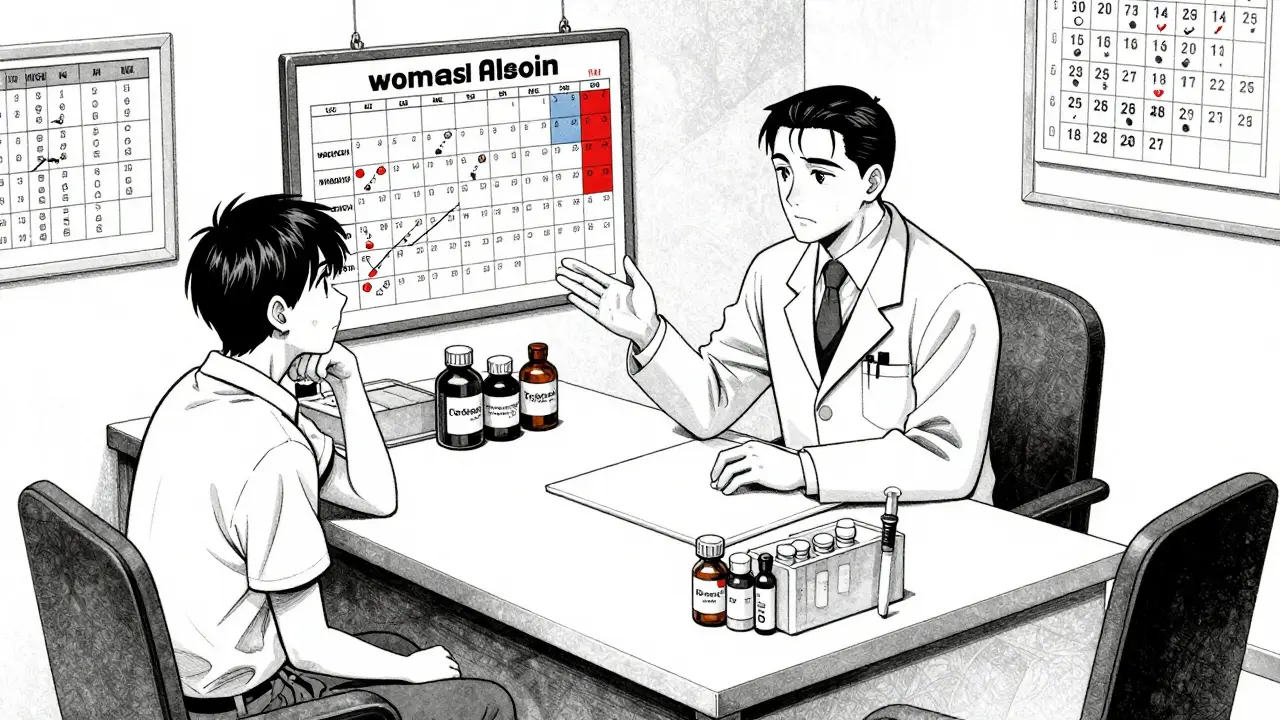
However, technology fails if human communication doesn't exist. The average assessment time is 22 minutes per patient. That means your doctor needs space to review your chart. Bring a printed list of every drug you take-prescription, supplement, and over-the-counter-to your appointment. Hidden steroids in creams or inhalers sometimes count toward suppression totals.
Frequently Asked Questions
Can I get a flu shot if I am on Prednisone?
If you are on low doses (under 20mg/day), it is generally safe. If you are on high doses (>20mg/day for >14 days), the vaccine may be ineffective. It is best to wait 8 weeks after stopping high-dose steroids before receiving a live attenuated vaccine, but inactivated flu shots are okay during treatment.
Is it better to vaccinate before starting my biologic?
Yes. Ideally, complete all catch-up vaccinations 2 to 4 weeks before initiating biologic therapy. Once you start the drug, the chance of mounting a strong immune response drops significantly.
Does Rituximab ruin vaccine effectiveness?
Rituximab depletes B-cells responsible for making antibodies. Because of this, you should generally wait at least 6 months after the infusion for the shot to be effective. If you can't wait that long, the vaccine still offers some protection via cellular memory, but it is weaker.
What is the difference between live and dead vaccines?
Live vaccines contain weakened germs that can still grow and could cause infection in an immunosuppressed person. Inactivated vaccines contain killed or parts of germs that cannot replicate, making them safe for people on suppressive meds.
Will pausing my medicine make my disease flare?
Short pauses (skipping one dose or two weeks) are usually well-tolerated. About 30% of patients report minor symptoms. Discuss bridging strategies like joint injections with your specialist before stopping your regular dose.
Lawrence Rimmer
April 2, 2026 AT 17:10The biological clock never waits for bureaucratic schedules designed by committees who have never felt joint pain firsthand. It feels like the rules are always shifting sand while we try to build a house on top of them.
Dipankar Das
April 3, 2026 AT 18:30Adherence to these protocols ensures maximum efficacy regarding cellular response mechanisms in patients with compromised defenses. We must respect the pharmacological half-life of these agents to prevent therapeutic failure during vaccination periods.
Hope Azzaratta-Rubyhawk
April 4, 2026 AT 04:56You have to trust the data even when your joints feel like concrete blocks waiting to flare up during a med hold. Safety margins exist for a reason and ignoring them puts everyone in the ward at unnecessary risk. I prefer to err on the side of caution rather than regret later on.
simran kaur
April 5, 2026 AT 15:45They claim safety windows exist but really it is about pharmaceutical stock management timelines disguised as medical advice. Who profits when we delay treatment and wait six months for B-cell regeneration? The insurance companies certainly enjoy the extended billing cycle while we sit vulnerable.
Jenna Carpenter
April 7, 2026 AT 00:04People ignore thier meds so much then act surprised when they get sick instead of being responcible. You cant expect a perfect vacine response if you take steriods willy nilly. It makes the whole system look bad when folks are not following basic instrusions.
Brian Shiroma
April 7, 2026 AT 10:44Skiping a dose feels like gambling with your own immune system while the doctor pulls a lucky seven from his pocket every month. We pretend the math works out cleanly but biology rarely cooperates with our spreadsheets.
Vicki Marinker
April 8, 2026 AT 23:27The anxiety of managing this timeline consumes far more mental energy than the disease itself ever did in the past. Every injection becomes a negotiation between survival and comfort which leaves no room for error.
Rob Newton
April 9, 2026 AT 04:32Wait until the inflammation subsides before you attempt anything drastic with shots.
Aysha Hind
April 10, 2026 AT 23:33Navigating this minefield requires a tactical precision that most general practitioners simply lack in their arsenal today. The bureaucracy surrounding medical records often lags behind the rapid advancements in immunology we see daily.
Mark Zhang
April 12, 2026 AT 12:44It helps to print out the chart and bring it to the appointment so the specialist knows exactly where you stand on your schedule. Communication bridges the gap between clinical guidelines and real life constraints effectively.
Rachelle Z
April 13, 2026 AT 12:43Safety first!!! But also patience is key 😌💉 Don't rush things!!
Ace Kalagui
April 13, 2026 AT 13:42I remember my uncle had this same issue back in twenty eighteen when the guidelines were far less defined for him. He struggled through three separate rounds of therapy before finding a window that worked for his specific regimen. Back then the paperwork was always missing pieces and doctors guessed at intervals frequently. Now we have tools that calculate lymphocyte recovery dates automatically in the background systems. Still the human element remains tricky because bodies metabolize drugs at wildly different rates regardless of the software. I once waited ten weeks thinking I was safe only to find antibody counts were still suppressed below zero. My sister had to repeat the entire series because she stopped her prednisone too early in the process. That cost thousands of dollars and wasted precious time before flu season arrived fully. Sometimes the best advice is to listen to your rheumatologist even if it contradicts the online forums you read nightly. They know your history better than a stranger typing into a public comment section on a Tuesday night. Technology is great but it cannot predict a flare triggered by a missed meal or sleepless week. Patience is truly the hardest pill to swallow when you want immediate protection from viruses everywhere. We all just want to live normally without carrying a medical binder in our backpack constantly. These delays are a small price to pay for avoiding serious illness complications down the road. Keep your records updated and communicate clearly with the care team involved.
angel sharma
April 14, 2026 AT 21:06We can overcome this hurdle together! Staying positive while waiting for the right moment is absolutely essential for your mindset. Your body deserves the time it needs to rebuild its defenses properly without rushing through stages. Imagine how strong you will feel when you finally get that green light from your doctor. Every day of waiting brings us closer to safer options for everyone in our community. Keep pushing forward despite the confusing instructions scattered across different websites online.
Joey Petelle
April 15, 2026 AT 15:43The average person does not deserve access to such nuanced medical strategies anyway. Complexity should remain reserved for those who possess the intellectual capacity to manage high-risk interventions safely.
The Charlotte Moms Blog
April 16, 2026 AT 19:09Statistically speaking the risk mitigation strategies outlined here are insufficient for broader populations!! Too many variables remain unaccounted for in standard practice guidelines!! We need better data aggregation from regional clinics!