Uremic Symptoms: Nausea, Itch, and When to Start Dialysis
 Mar, 23 2026
When your kidneys stop working, your body doesn’t just slow down-it starts to poison itself. The waste that should be flushed out builds up in your blood, and that’s what doctors call uremia. It’s not a single disease. It’s a cascade of symptoms that creep in slowly, often dismissed as stress, aging, or just "feeling off." But for people with advanced kidney disease, nausea, relentless itching, and the decision to start dialysis aren’t theoretical-they’re daily battles.
Why You Feel Sick: The Science Behind Uremic Nausea
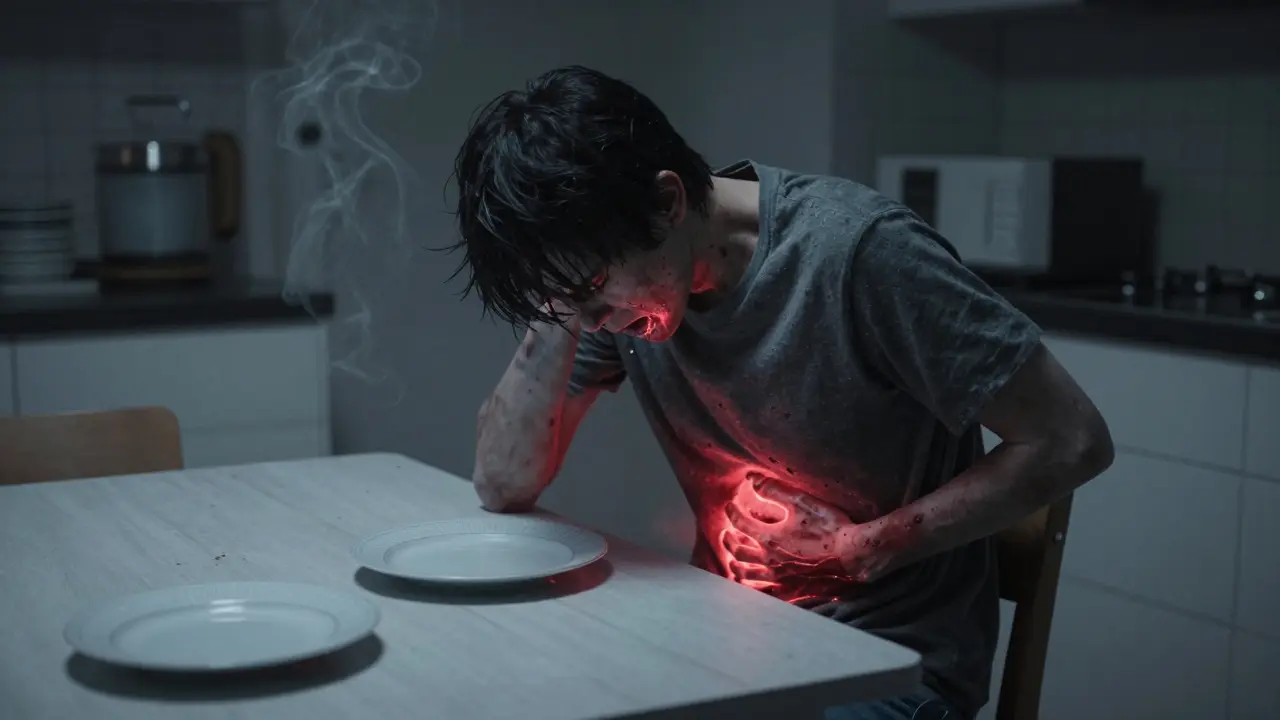
Nausea isn’t just an upset stomach in kidney failure. It’s your brain reacting to toxins your kidneys can’t remove. When blood urea nitrogen (BUN) climbs past 80 mg/dL, it triggers a part of the brain called the chemoreceptor trigger zone. This isn’t food poisoning. It’s a chemical alarm going off. Studies show 68% of people in stage 5 chronic kidney disease (CKD) experience nausea before dialysis starts. For many, it begins with a metallic taste, like licking a battery. Food loses flavor. Appetite vanishes. One patient on Reddit described eating as "swallowing sand." Weight loss isn’t unusual-some lose 15 to 20 pounds in two months just because food feels unbearable. The real culprits? Toxins like p-cresyl sulfate and indoxyl sulfate. These aren’t just waste products-they’re inflammatory chemicals that build up in the blood. Research from UCSF found a direct link: higher levels of these toxins mean worse nausea (r=0.78). That’s not correlation. That’s causation. Doctors don’t just guess. They test. A BUN over 70 mg/dL and creatinine above 8 mg/dL are red flags. But numbers alone don’t tell the whole story. If nausea is making you skip meals, losing weight, or unable to keep down fluids, that’s a clinical emergency. Your body is starving while drowning in poison.The Itch That Won’t Quit: Uremic Pruritus Explained
If you’ve ever had dry skin from winter, imagine that-but worse. Constant. Everywhere. And it doesn’t go away after you scratch. This is uremic pruritus, or CKD-associated pruritus (CKD-aP). It affects up to 70% of people on dialysis and nearly 40% of those not yet on dialysis. It’s not eczema. It’s not allergies. It’s your body’s internal inflammation screaming through your skin. The itch is symmetrical-both arms, both legs, back, sometimes the face. It gets worse at night. One patient tracked her sleep score on a Fitbit: it dropped from 85 to 42 over six months because she was scratching until she bled. That’s not exaggeration. That’s documented. Why does this happen? It’s not just one thing. High phosphate, low calcium, high PTH (parathyroid hormone), and elevated CRP (a marker of inflammation) all play a role. A 2020 study found people with severe itching had CRP levels nearly three times higher than those without. That’s inflammation running wild. The International Forum for the Study of Itch has clear diagnostic rules: itching must last over six weeks, have no visible rash, and rule out 12 other causes-liver disease, thyroid issues, even anxiety. If you’ve been told it’s "just stress," ask for a kidney function test.
When Does Dialysis Become Necessary?
For decades, doctors waited until patients were near death to start dialysis. That changed. But now, the question isn’t just "when is your kidney number low?" It’s "how bad do you feel?" The old rule-start dialysis at eGFR below 10 mL/min-is outdated. The 2023 KDOQI guidelines say: don’t wait for a number. Wait for symptoms that won’t quit. If you’re nauseous, losing weight, and can’t eat, dialysis is likely needed. If your itching is so bad you can’t sleep, work, or leave the house, dialysis isn’t optional-it’s life-saving. The IDEAL trial showed no survival advantage for starting dialysis early (eGFR 10-14) versus late (eGFR 5-7), but quality of life? That’s different. People who started later but managed symptoms well reported 32% better daily function. Experts now use specific triggers:- Weight loss of 5% or more over three months
- 5-D Itch Scale score above 15 (severe, disabling itch)
- Uremic pericarditis (fluid around the heart, detected by ultrasound)
- Refractory nausea that doesn’t respond to medication
What Works to Manage the Symptoms
You don’t have to suffer until dialysis. For nausea, first-line treatment is ondansetron (Zofran), 4 mg three times a day. If that fails, domperidone is used-but it’s risky. It can prolong the QT interval on an ECG, raising the chance of dangerous heart rhythms. Always get monitored. For itching, the approach is step-by-step:- Optimize dialysis: Make sure you’re getting enough (Kt/V ≥1.4). Poor dialysis makes itching worse.
- Try gabapentin: Start with 100 mg at night. Increase slowly. It helps with nerve-related itch.
- Use targeted drugs: Difelikefalin (Korsuva) is FDA-approved for CKD-aP. It reduces itch by over 30% in weeks. Nalfurafine, another option, works fast-some patients sleep through the night for the first time in years.

The Hidden Cost of Silence
Many people delay seeking help. A 2022 University of Michigan poll found 41% of patients saw three or more doctors before someone connected their itching or nausea to kidney failure. The average delay? Over eight months. That delay has real consequences. People with severe itching spend $8,432 more per year on healthcare. They’re hospitalized more often. Some quit jobs. Some stop socializing. One man on a kidney forum said he stopped seeing his grandkids because he was too ashamed of his scratched-up arms. And there’s inequality. Black patients wait 3.2 months longer than White patients before starting dialysis-even when symptoms are identical. That’s not medical. That’s systemic.What’s Next?
The future of dialysis decisions is changing. In 2024, the KDIGO guidelines may require doctors to use patient-reported outcomes. That means your score on a simple itch or nausea survey could be the trigger-not just a blood test. New drugs are coming. Nemifitide, a new selective opioid agonist, showed 45% better itch reduction than placebo in trials. It’s not approved yet, but it’s close. The message is simple: Don’t ignore nausea. Don’t brush off itching. These aren’t side effects. They’re signs your body is failing. And when they’re severe enough, dialysis isn’t a last resort-it’s the best chance to get your life back.Can you have uremic symptoms even if your eGFR is above 10?
Yes. While eGFR below 10 mL/min/1.73m² is often used as a general guideline, symptoms like nausea and itching can appear earlier. Some patients report severe uremic symptoms with eGFR values between 12 and 15. The decision to start dialysis should be based on symptom burden, not just numbers. If you’re losing weight, can’t sleep due to itching, or can’t eat, your kidney team should consider dialysis even if your eGFR hasn’t hit the traditional threshold.
Is uremic itching the same as regular dry skin?
No. Regular dry skin is usually localized, improves with moisturizer, and doesn’t disrupt sleep. Uremic pruritus is widespread, persistent, worse at night, and doesn’t respond to typical lotions. It’s caused by toxins in the blood and systemic inflammation-not lack of moisture. If you’ve tried everything and the itch won’t go away, ask your nephrologist about CKD-associated pruritus.
Why does dialysis sometimes make itching worse at first?
Dialysis can temporarily worsen itching because it rapidly removes fluids and toxins, triggering a rebound effect. Some patients experience a spike in itch during or right after treatment. This often improves over weeks as dialysis becomes more effective and inflammation lowers. Adjusting dialysis frequency, using cool dialysate, or adding medications like difelikefalin can help. Never stop dialysis because of this-it’s a sign your body is adjusting, not that treatment is failing.
Can diet help with uremic nausea and itching?
Diet alone won’t fix uremic symptoms, but it can help manage them. Limiting phosphorus (found in dairy, processed meats, colas) reduces itching. Avoiding high-potassium foods can help with nausea by reducing fluid shifts. Small, frequent meals with bland, cold foods (like yogurt, toast, applesauce) are easier to tolerate than hot, greasy meals. Always work with a renal dietitian-what helps one person might harm another based on lab values.
Are there non-drug options for uremic itching?
Yes. Optimizing dialysis adequacy is the first step. Cool compresses, wearing loose cotton clothing, and using fragrance-free moisturizers can provide relief. Some patients benefit from light therapy (narrowband UVB), which reduces inflammation. Mind-body techniques like mindfulness and cognitive behavioral therapy (CBT) have shown promise in reducing itch perception. These don’t replace medication, but they can reduce reliance on it.
Kevin Siewe
March 25, 2026 AT 02:24Had a cousin go through this last year. The itching was brutal-she’d wake up with bloody arms and still couldn’t sleep. Started dialysis at eGFR 13 because she was losing weight and couldn’t eat. Within two weeks, she was eating pizza again. No joke. It’s not just about numbers. It’s about being able to hug your kids without feeling like your skin is crawling off.
Jacob Hessler
March 25, 2026 AT 17:52they keep saying 'treat the person not the number' but then they still make you wait till your gfr hits 5 before they give you a transplant slot. what a joke.
Darlene Gomez
March 26, 2026 AT 08:33I love how this post breaks down the science without drowning you in jargon. The part about p-cresyl sulfate and indoxyl sulfate? That’s the missing link most doctors skip. My mom’s nausea vanished after we got her on ondansetron + dialysis optimization. It’s not magic-it’s biochemistry. And yeah, it’s okay to fight for better care. You deserve to feel human again.
Amber Gray
March 26, 2026 AT 22:21so dialysis is just a government scam to keep people on meds lol 🤡
Elaine Parra
March 27, 2026 AT 05:52Why do we let pharmaceutical companies dictate treatment? Difelikefalin costs $12k a year. Gabapentin costs $5. They’re not treating you-they’re monetizing your suffering. And don’t get me started on how they market 'quality of life' while ignoring systemic neglect in Black and rural communities.
Agbogla Bischof
March 28, 2026 AT 23:45As a nephrology nurse in Lagos, I see this daily. Patients here don’t have access to Korsuva or even basic labs. We use coconut oil, cool cloths, and prayer. But the symptoms? Identical. The science doesn’t lie-uremia is universal. What’s broken is access, not diagnosis.
Pat Fur
March 30, 2026 AT 17:01My grandma’s itch was so bad she’d rub her arms raw with a toothbrush. We thought it was eczema until her cousin, a nurse, said, 'That’s not dry skin-that’s your kidneys screaming.' She started dialysis at 14. Now she bakes cookies for her grandkids again. Don’t wait for a number. Listen to your body.
Stephen Alabi
April 1, 2026 AT 07:56While the clinical data presented is methodologically sound, one must interrogate the underlying epistemological framework of symptom-based dialysis initiation. The KDOQI guidelines, while empirically derived, inadvertently reify biomedical hegemony by privileging patient-reported outcomes over objective biomarkers. This ontological shift, while rhetorically compelling, risks commodifying suffering as a metric for intervention.
peter vencken
April 3, 2026 AT 00:15gabapentin 100mg at night worked for me. no joke. i used to scratch until i bled. now i sleep. also, cold showers. weird, but it helps. and stop eating cheese. phosphorus is the devil.
Chris Farley
April 4, 2026 AT 08:11So let me get this straight. We’re gonna start dialysis because someone can’t eat pizza? What about personal responsibility? My grandpa worked 50 years, never missed a day, and died with his kidneys intact. Maybe if people didn’t eat so much processed crap, they wouldn’t need this. This isn’t medicine-it’s entitlement.
Donna Fogelsong
April 5, 2026 AT 07:55Uremia? That’s just the government’s way of hiding the fact that fluoride in water is poisoning us. They don’t want you to know dialysis is a cash cow. They’re covering up the real cause-chemtrails and 5G. The itch? Your body’s trying to detox. They don’t want you to know you can heal naturally.
Katie Putbrese
April 6, 2026 AT 13:02Why are we letting people on disability just because they itch? I work 60 hours a week at a factory and I’m always tired. You think I’m gonna cry because I can’t sleep? Get a grip. This isn’t a cry for help-it’s a cry for free stuff. Dialysis should be a last resort, not a lifestyle upgrade.
Raphael Schwartz
April 6, 2026 AT 18:50my bro started dialysis at 11 and now he’s fine. stop making it so complicated. just do it. no one needs to be a hero. just get the treatment.
Natasha Rodríguez Lara
April 7, 2026 AT 05:06As someone who grew up in a household where kidney disease was silent because of stigma, I’m so glad this exists. My mom hid her nausea for two years because she didn’t want to be a burden. Please, if you’re reading this and you feel off-speak up. You’re not weak. You’re human.
rebecca klady
April 7, 2026 AT 21:03Just wanted to say thank you for writing this. I’ve been too scared to tell my doctor how bad the itching is. Now I know it’s not in my head. I’m scheduling my nephrology appointment tomorrow.