Unannounced FDA Inspections: Why Surprise Visits Are Critical for Drug and Food Safety
 Jan, 11 2026
When you pick up a bottle of pills at the pharmacy, you assume they’re safe. You don’t think about who made them, where they were made, or whether the factory had time to clean up before an inspector showed up. But that’s exactly what the FDA is trying to prevent. Since May 2025, the FDA has been conducting unannounced inspections at foreign manufacturing facilities-no warning, no heads-up, no chance to hide. This isn’t just a policy tweak. It’s a full-scale shift in how the U.S. protects its medicine supply.
Why Surprise Visits Exist
The FDA doesn’t show up to inspect because it doesn’t trust manufacturers. It shows up because history proved that warning someone in advance changes behavior. If a company knows an inspector is coming next week, they’ll fix the broken equipment, clean the floors, polish the records, and make sure everyone’s wearing the right lab coat. But that’s not real life. Real life is what happens on a Tuesday at 10:17 a.m. when no one’s expecting anyone. That’s when the FDA wants to see the truth. Before May 2025, foreign factories-like those in India or China-got weeks of notice. Domestic U.S. facilities didn’t. That created a double standard. Foreign manufacturers had time to prepare. American ones didn’t. The FDA found that when foreign facilities got advance notice, serious problems were still found more than twice as often as during unannounced visits to U.S. plants. That meant the system was broken. The warning gave bad actors a chance to cheat. The FDA decided to stop letting them.How an Unannounced Inspection Actually Works
An FDA investigator doesn’t call ahead. They don’t send an email. They just walk in. Maybe it’s early morning. Maybe it’s lunchtime. They show ID, hand over Form FDA 482-the official Notice of Inspection-and say: “We’re here to look at your records, your equipment, your procedures.” They don’t ask for a tour. They don’t wait for someone to get the manager. They start looking. Right now. At the sterile room. At the batch logs. At the training files. At the maintenance records for the autoclave that’s been broken for three months. They check if the SOPs match what’s actually happening on the floor. They pull random samples of production records. They ask an operator: “What do you do if this machine alarms?” If the answer doesn’t match the written procedure, that’s a red flag. Inspections can last hours or days. It depends on how big the facility is, how messy the records are, and whether they find something wrong. The FDA doesn’t just look for big violations. They look for patterns. A missing signature here. A log entry that’s been erased. A technician who can’t explain why a cleaning step was skipped. These aren’t accidents. They’re signs of a culture that’s cutting corners.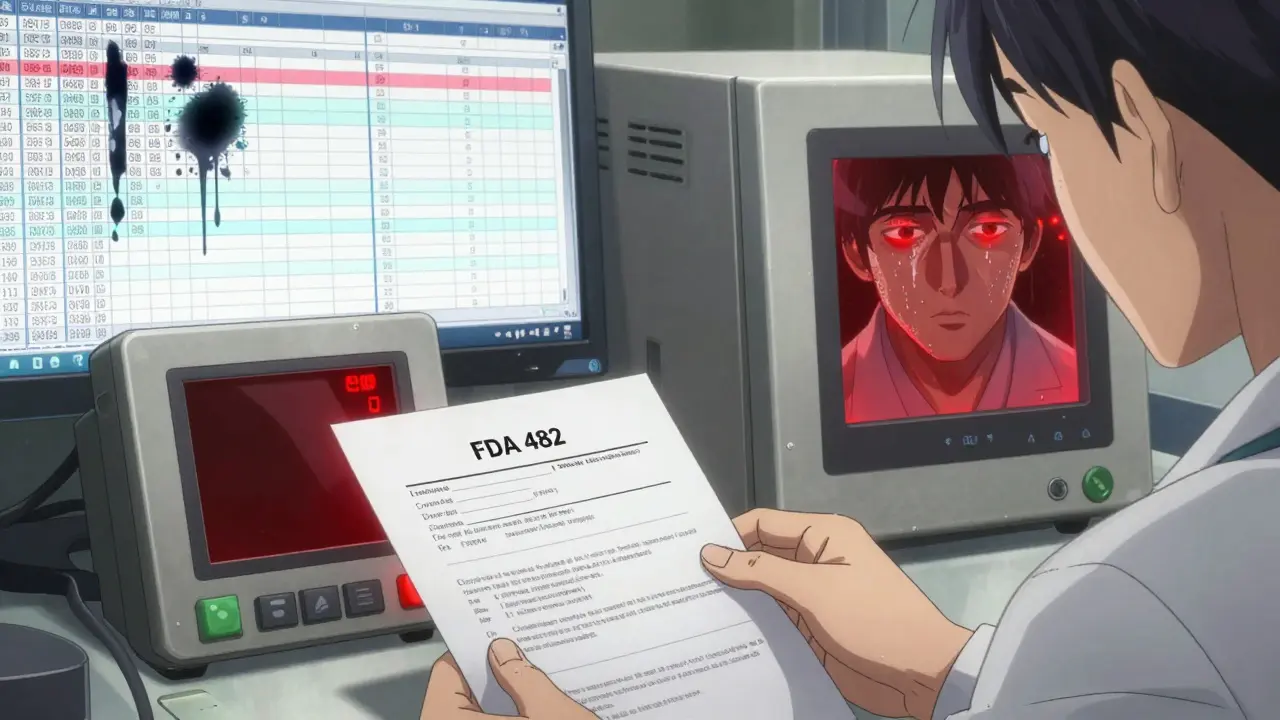
The Global Shift: Why Foreign Factories Are Now Targeted
About 40% of finished drugs sold in the U.S. are made overseas. Eighty percent of the active ingredients come from abroad. That’s not a minor detail-it’s the backbone of the supply chain. But for years, foreign facilities operated under a different set of rules. They got advance notice. They had translators arranged. They knew when the inspectors were coming. And they used that time to clean up. The FDA’s 2025 policy change ended that. Now, a factory in Hyderabad, a plant in Shanghai, a warehouse in Mexico-all face the same surprise visits as a facility in Ohio. The goal? Regulatory parity. No more playing by two different sets of rules. The FDA says it’s not about punishing foreign companies. It’s about protecting American patients. If a pill is sold in the U.S., it must meet the same standards, no matter where it was made. The move was tied to a presidential executive order signed just one day before the FDA’s announcement. It called for stronger oversight of foreign manufacturers. The FDA didn’t just respond-they doubled down. They’re now increasing the frequency of these surprise inspections across more than 90 countries. And they’re not slowing down.What Happens If You’re Not Ready
If your facility isn’t prepared, an unannounced inspection can turn into a nightmare. The FDA doesn’t give warnings. They issue Form 483s-official lists of observations that point out violations. If you’ve got 15 missing signatures, a broken HVAC system in the cleanroom, or batch records that don’t match what’s in the computer, you’re going to get flagged. But it’s worse than that. The FDA can refuse to allow your product into the U.S. They can issue import alerts. They can shut down your export line. They can even recommend criminal charges if they find evidence of fraud-like falsified records or hidden test results. Companies that try to delay, deny, or limit an inspection can face legal action. There’s no room for excuses. One manufacturer in India reported that during a surprise visit, inspectors walked straight into the sterile manufacturing area and asked for the environmental monitoring logs from the past 30 days. The logs were printed, but the digital copies were corrupted. The operator didn’t know how to retrieve them. That one mistake triggered a cascade of findings. The plant lost its FDA approval for six months.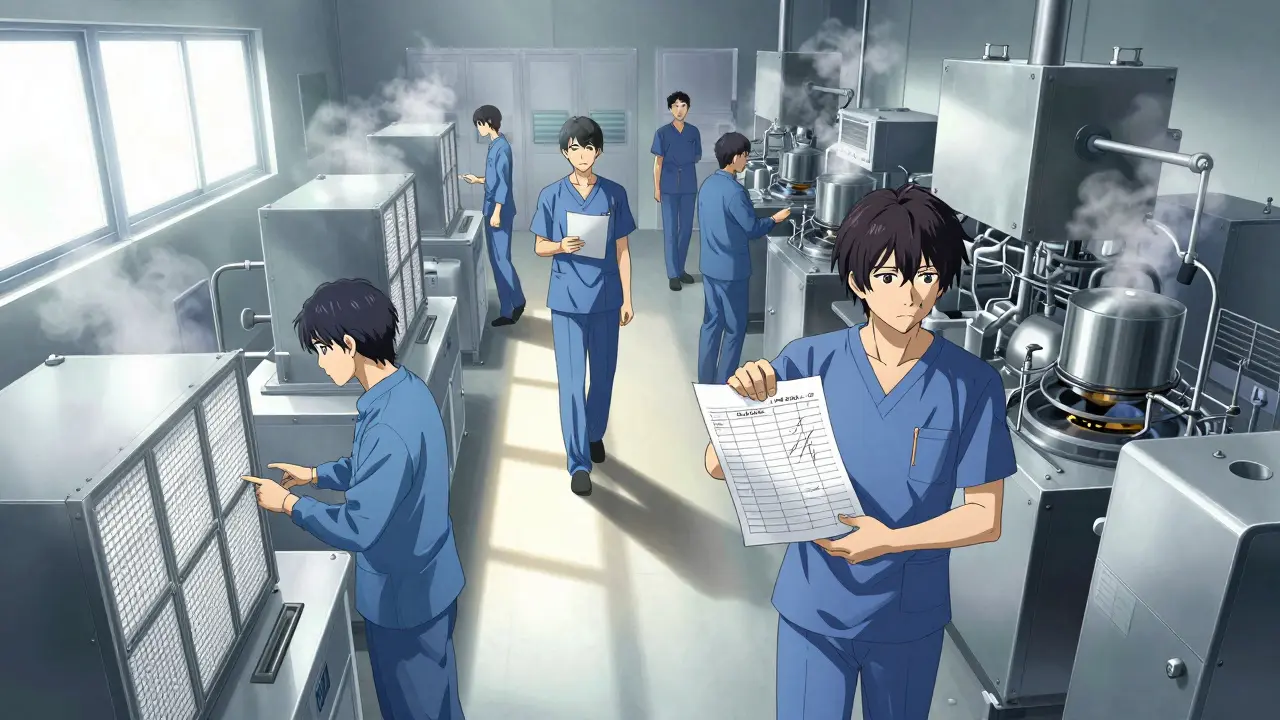
How to Prepare-Without Being Fake
You can’t fake your way through an unannounced inspection. The FDA has seen it all. They know what real compliance looks like. What you need is real readiness. Start with your documentation. Every SOP must be current. Every training record must be signed and dated. Every maintenance log must reflect actual activity. Use quality management software that doesn’t let you edit past entries. Don’t rely on Excel spreadsheets that someone can tweak before the inspector arrives. Train your team. Everyone-from the janitor to the plant manager-needs to know what to do if the FDA walks in. Who do they call? Where are the records kept? What’s the protocol for the sterile area? Practice mock inspections. Do them without warning. See how your team reacts. Fix the gaps before the real one happens. Don’t wait for the inspector to arrive to fix your problems. Fix them now. Because when the door opens, it’s not about impressing the FDA. It’s about proving you’ve been doing the right thing every single day.The Bigger Picture: Why This Matters to You
This isn’t just about manufacturers. It’s about you. Every time you take a prescription, buy an over-the-counter painkiller, or use a medical device, you’re relying on the integrity of the system that made it. Unannounced inspections are the last line of defense. They stop contaminated drugs. They prevent faulty devices. They catch companies that think they can cut corners and get away with it. The FDA doesn’t do this because they like surprises. They do it because they’ve seen what happens when they don’t. In the past, unannounced inspections exposed tainted insulin, contaminated cough syrup, and counterfeit cancer drugs. Those weren’t hypothetical risks. They were real tragedies. Now, with foreign facilities under the same scrutiny as U.S. ones, the safety net is stronger. It’s not perfect. There are still questions-like how the FDA will coordinate with foreign regulators, or whether they’ll have enough staff to handle 3,000+ inspections a year. But the direction is clear: no more hiding. No more waiting. No more double standards. If you’re in the business of making medicine or food for Americans, you better be ready. Because the next time the door opens, there won’t be a knock.Are FDA inspections always unannounced?
Most FDA inspections are unannounced, especially for manufacturing facilities. But there are exceptions. For example, inspections of Class II or Class III medical device manufacturers are usually scheduled every two years. Also, if the FDA is following up on a previous violation or needs specific records or personnel to be present, they may give advance notice. But for routine quality system checks, especially in drug and food manufacturing, surprise visits are the standard.
What happens if a company refuses an FDA inspection?
Refusing an FDA inspection is a serious violation. The agency has legal authority to block imports, issue warning letters, and even pursue criminal charges. If a facility delays, denies, or limits access to inspectors, the FDA can immediately halt shipments of products from that site. In extreme cases, the company may be placed on an import alert, meaning all future shipments are automatically detained at the border until the issue is resolved.
Do foreign manufacturers get translators during unannounced inspections?
Before May 2025, foreign manufacturers often arranged translators in advance. Now, with unannounced inspections, that’s no longer guaranteed. The FDA expects facilities to have bilingual staff on-site who can communicate with inspectors. If no one can translate, the inspection may be delayed or limited, which can itself become a compliance issue. Companies are now expected to train key personnel in basic regulatory English or have qualified interpreters available at all times.
How often do FDA inspectors visit foreign facilities?
The FDA conducts about 3,000 inspections annually at foreign manufacturing sites. Since the May 2025 policy change, the frequency of unannounced visits has increased significantly. High-risk facilities-those with past violations or producing critical drugs-are inspected more often. The agency doesn’t publish fixed schedules, but facilities can expect multiple inspections over a five-year period, especially if they’re in a country with a history of compliance issues.
What’s the difference between a Form 483 and a warning letter?
A Form 483 lists observations of potential violations found during an inspection. It’s not a final decision-it’s a starting point. Companies have 15 days to respond with corrective actions. If the FDA finds the response inadequate or if violations are severe, they issue a warning letter. A warning letter is a formal legal notice that can trigger enforcement actions like product seizures, import bans, or lawsuits. Many companies treat the Form 483 as a wake-up call. The warning letter is the alarm going off.
Bryan Wolfe
January 11, 2026 AT 14:13Finally! Someone’s actually doing the job right. I’ve seen too many stories about contaminated meds coming in from overseas-kids getting sick, elderly people dying because someone cut corners. This isn’t just policy, it’s life or death. The FDA’s not being harsh, they’re being responsible.
Audu ikhlas
January 12, 2026 AT 10:12Ugh another american elitist rant. You think your country has the monopoly on safety? We make half the world's generic drugs and you act like we're all criminals. Your FDA needs to stop acting like a colonial cop and start working WITH us. We’re not your underlings. We’re partners. #StopTheBias
Sumit Sharma
January 14, 2026 AT 08:35As someone who works in API manufacturing in Hyderabad, I can confirm this shift is long overdue. Before 2025, we’d get 3 weeks’ notice-enough time to scrub everything, hire temp QA staff, and print fake logs. Now? We’ve had 3 unannounced visits in 8 months. Each time, we passed because we’ve been compliant daily, not just before inspections. Real GMP isn’t a performance-it’s a habit. The FDA’s finally aligning global standards with reality.
Craig Wright
January 16, 2026 AT 05:17While the intent is commendable, the execution lacks diplomatic nuance. The imposition of American regulatory norms upon sovereign nations without prior consultation or capacity-building initiatives is not merely regulatory-it is imperialistic. One cannot expect compliance without investment in local infrastructure, training, and mutual respect. This is not safety-it is hegemony dressed in lab coats.
Christina Widodo
January 17, 2026 AT 13:12Wait-so if a factory in India can't find digital logs because their system crashed and they don't have backups, is that really fraud? Or just bad IT? I feel like the FDA’s going too hard on small stuff. Like, yeah, missing signatures are bad-but are we criminalizing negligence instead of fixing systems?
Lauren Warner
January 19, 2026 AT 08:03Let’s be real-the FDA’s numbers are manipulated. They’re cherry-picking high-risk facilities to make it look like foreign plants are all corrupt. Meanwhile, U.S. plants have had more recalls in the last 2 years than any foreign country. But you don’t hear about that because the media’s owned by Big Pharma. This is theater. They need to audit their own backyard before pointing fingers overseas.
beth cordell
January 19, 2026 AT 10:35Yessss this is what safety looks like 💪🩺👏 I’ve had family members on life-saving meds made overseas-knowing they’re being checked without warning gives me actual peace of mind. Also, love that they’re forcing bilingual staff. No more ‘I don’t understand’ excuses. 👏👏👏
Jay Powers
January 20, 2026 AT 08:13Sumit’s right-this isn’t about blame, it’s about building trust. I’ve worked in pharma for 15 years and I’ve seen factories turn around after one inspection because they finally realized compliance isn’t a checklist-it’s a culture. The FDA’s not the enemy. They’re the mirror. If you’re doing the right thing every day, you don’t fear the door opening. You just nod and say ‘Welcome.’