Switching Health Plans? How to Check Generic Drug Coverage to Save Money
 Nov, 26 2025
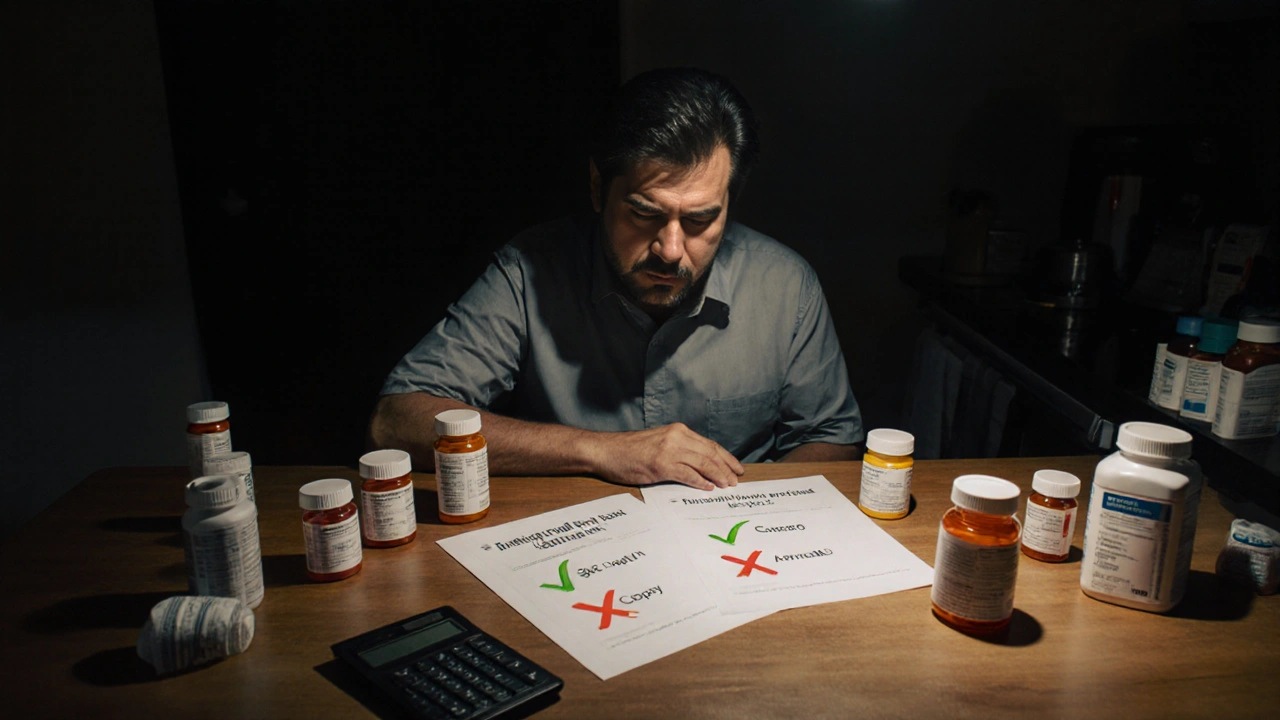
When you switch health plans, your prescription costs can jump overnight - not because your medicine changed, but because your generic drug coverage didn’t. Many people assume all generics are treated the same across plans. They’re wrong. A $5 copay for metformin in one plan can become a $40 coinsurance in another, even if it’s the exact same drug. And if you’re on multiple maintenance meds, that difference adds up to hundreds - or thousands - of dollars a year.
Why Generic Drug Coverage Isn’t the Same Everywhere
Not all health plans treat generic drugs the same. Some treat them like essentials - low cost, no deductible. Others treat them like luxury items - high cost, only after you’ve paid thousands out of pocket. This comes down to something called a formulary: the list of drugs a plan covers and how much you pay for each. Most plans use a tier system. Tier 1 is usually reserved for generics. But here’s the catch: not all Tier 1s are equal. In some Silver marketplace plans, you pay a flat $3-$20 copay for Tier 1 generics, even before you meet your deductible. In others, you have to pay your full medical deductible - say, $3,000 - before that $5 copay even kicks in. That’s the difference between paying $36 a year and $3,036. Medicare Part D plans are even more complicated. Some have $0 copays for preferred generics after a $505 deductible. Others charge $10-$20 for the same drug. And if your generic is labeled "non-preferred," you might pay $30-$50 per prescription. The active ingredient is the same. The cost? Not even close.How to Actually Check Your Generic Coverage
Don’t trust the plan summary. Don’t rely on a sales rep’s word. Here’s how to do it right:- Get the full formulary - not just the tier list. Look for the exact brand name of your generic (e.g., "metformin ER 500mg" - not just "metformin").
- Check the manufacturer. Some plans only cover generics from specific makers. Switch from one brand to another? Your copay might double.
- Verify your pharmacy. Your $3 generic copay only works at preferred pharmacies. Go to a non-preferred one? You could pay 300% more.
- Calculate your annual cost. Multiply your monthly copay by 12. Then add any deductible you must meet first. Don’t forget mail-order discounts - some plans offer 90-day supplies at the same price as 30-day retail.
For example: if you take three generics - metformin, lisinopril, and atorvastatin - and your new plan charges $20 per script with no deductible waiver, you’re paying $720 a year. But if you switch to a Silver SPD plan with $3 copays and no deductible for generics? That drops to $108. That’s $612 saved, just by checking the fine print.
Plan Types That Actually Help With Generic Costs
Some plans are built to protect people on long-term meds. Others aren’t.- Silver SPD plans (Standardized Plan Design): These are the gold standard for generic users. They waive your deductible for Tier 1 drugs and cap copays at $20 or less. Available in 32 states as of 2025.
- Medicare Advantage with Part D: Often cheaper than standalone Part D for people on multiple generics. Average out-of-pocket savings of 18% compared to standalone plans.
- Some employer plans: Federal employees under MHBP’s Basic Option pay $5 for generics - even before deductible. Not all employers offer this.
- High-deductible health plans (HDHPs): Avoid if you take regular generics. Unless your plan waives the prescription deductible (rare), you’ll pay full price until you hit $3,000-$8,000 in medical + drug costs.
California, New York, and DC have state rules that help. In New York, many plans charge $0 for generics - no deductible needed. In California, you pay $85 deductible first, then 20% coinsurance (capped at $250/year). In most other states? You’re on your own.
The Hidden Traps That Cost People Thousands
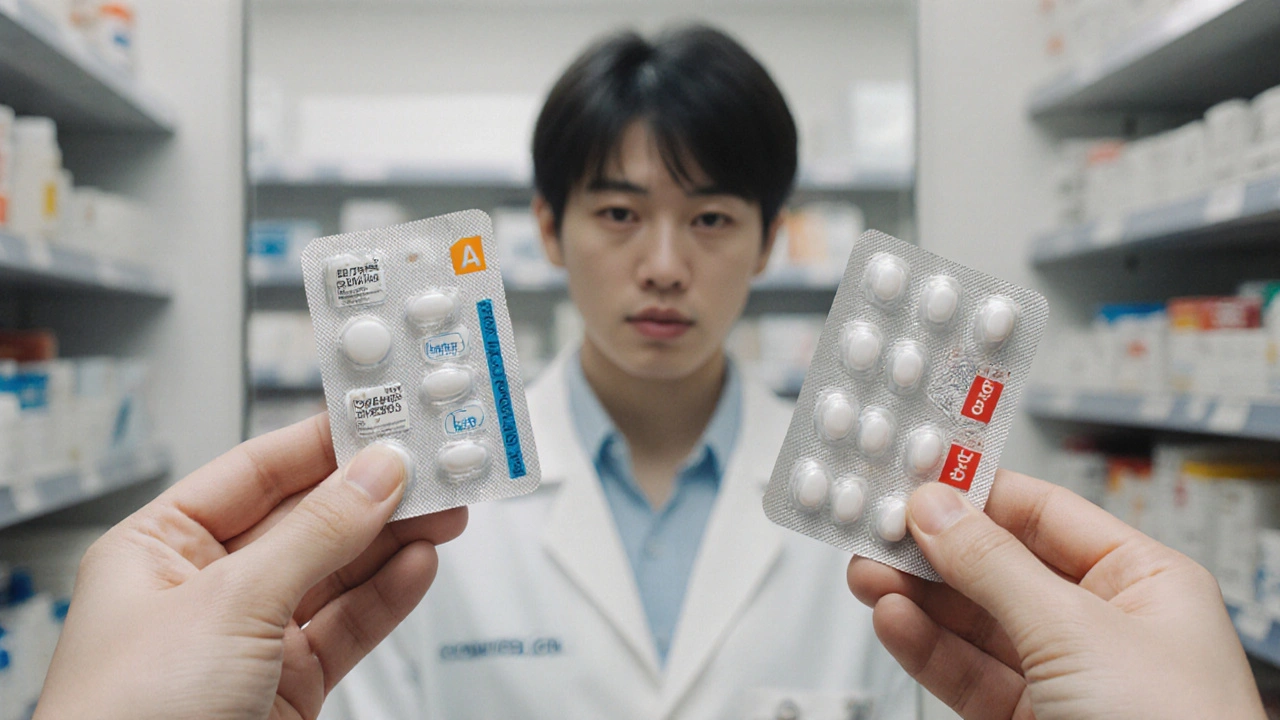
Most people don’t know these traps - until it’s too late.- Manufacturer switches: Your plan covers "metformin," but only the version made by Manufacturer A. Switch to Manufacturer B? Suddenly it’s Tier 2. You pay $30 instead of $5.
- Strength differences: Your doctor prescribes 1000mg metformin. Your new plan only covers the 500mg version. You have to buy two pills. Or pay extra for the higher strength.
- Mail-order vs. retail: Some plans charge $15 for a 30-day supply at the pharmacy, but $10 for a 90-day mail-order. If you don’t switch to mail-order, you’re overpaying.
- Pharmacy networks: CVS, Walgreens, and local pharmacies aren’t all equal. Some plans only pay full coverage at their own pharmacy chains. Go elsewhere? You pay retail price.
Reddit users reported 147 cases in 2023 where people got hit with surprise costs after switching plans - 63% involved generics that moved tiers. One person paid $0 for levothyroxine under Plan A. Under Plan B? 25% coinsurance. Same drug. Same dose. Different cost.
Tools That Actually Work (And Which Ones to Avoid)
Not all plan comparison tools are created equal.- Medicare.gov Plan Finder: Best for Medicare users. Lets you enter your exact drugs and see real-time costs across all Part D plans. Used by over 4 million people in 2023.
- Healthcare.gov plan selector: For marketplace plans. Shows you which Silver SPD plans waive deductibles for generics. Only works if you’re eligible for subsidies.
- Insurer-specific formulary tools: UnitedHealthcare, Blue Cross, and Humana have their own search tools. Accuracy? Up to 96% - far better than third-party sites.
- Third-party calculators (eHealth, etc.): Useful, but not always updated. Some still list 2023 copays in 2025. Always double-check with the insurer’s official site.
People who use these tools reduce unexpected drug costs by 73%. Those who don’t? They’re gambling.
What’s Changing in 2025
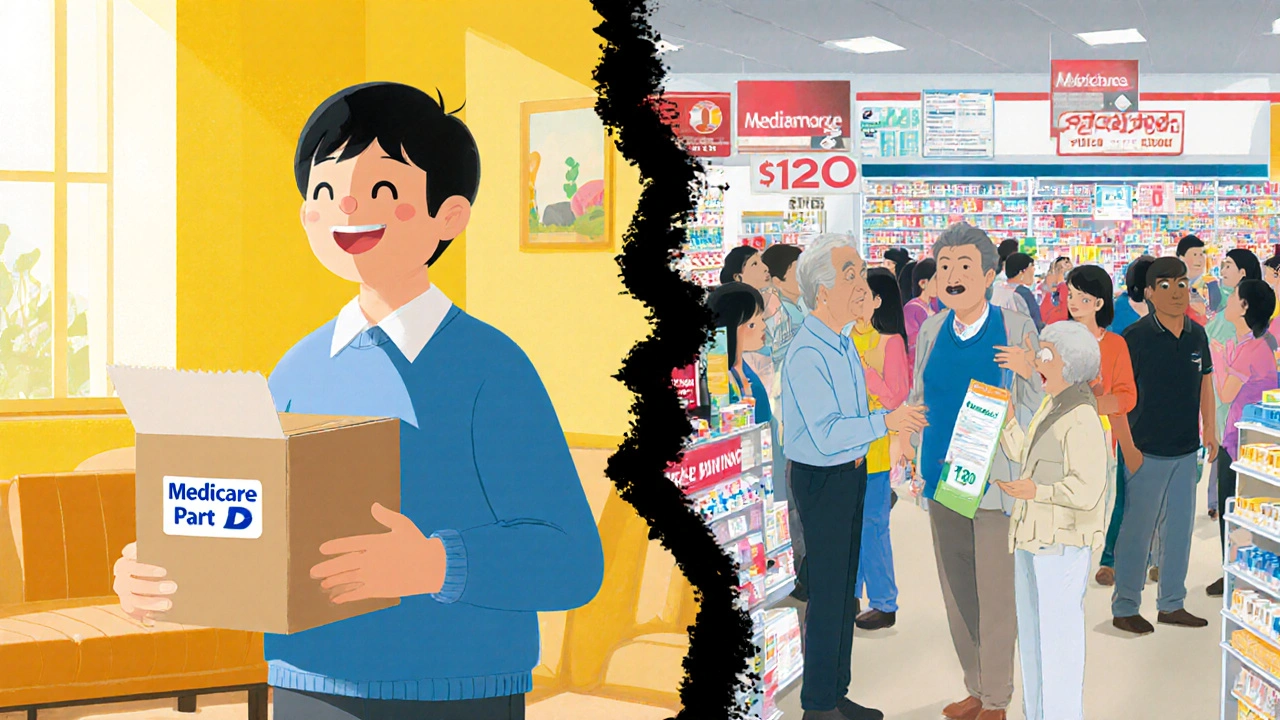
The rules are shifting - and fast.- Medicare Part D: Starting in 2025, there’s a $2,000 annual cap on out-of-pocket drug costs. Also, generics will split into "preferred" and "non-preferred" tiers, with clearer cost differences.
- Marketplace plans: More states are adopting Silver SPD plans. By 2027, most insurers will drop integrated medical + prescription deductibles because consumers keep getting burned.
- Insulin and other drugs: Insulin is now capped at $35/month under federal law. Other drugs may follow.
One thing’s clear: if you’re on generics, your plan switch isn’t just about premiums. It’s about whether your meds are affordable - and whether you’ll be surprised when you pick them up.
Final Checklist Before You Switch
Before you enroll in a new plan, run through this:- Do I know the exact name and strength of every generic I take?
- Is each one listed on the new plan’s full formulary?
- Is the manufacturer covered?
- Is there a deductible for generics? If yes, how much?
- Is the copay $3-$20 - or higher?
- Are my preferred pharmacies in-network?
- Can I get 90-day supplies cheaper by mail?
- Did I calculate the total annual cost - not just the monthly premium?
If you answer "no" to any of these, keep looking. The right plan could save you $500, $1,000, or more every year - just by getting your generics covered right.
Do all health plans cover the same generic drugs?
No. Each plan has its own formulary - a list of covered drugs. Two plans might both cover "metformin," but one might only cover the version made by Manufacturer A, while the other covers Manufacturer B. If your prescription switches manufacturers, your copay could jump from $5 to $40.
What’s the difference between Tier 1 and Tier 2 generics?
Tier 1 generics are "preferred" - usually cheaper and easier to get. Tier 2 are "non-preferred" - often more expensive, sometimes requiring prior authorization. The active ingredient is the same, but the plan considers one more cost-effective based on price, manufacturer, or usage patterns.
Do I have to meet my deductible before generic drugs are covered?
It depends. In most high-deductible plans, yes - you pay full price until you hit your deductible. But in Silver Standardized Plan Design (SPD) plans, generics are covered with a flat copay - even before you meet your deductible. Always check the plan’s formulary details.
Why does my generic cost more at one pharmacy than another?
Because of pharmacy networks. Your plan has a list of preferred pharmacies - usually big chains like CVS or Walgreens - where you get the lowest price. If you go to a non-preferred pharmacy, you might pay retail price or a much higher copay. Always confirm your pharmacy is in-network before switching plans.
Can I switch plans just to get better generic coverage?
Yes - but only during Open Enrollment (usually October to December). Outside that window, you can only switch if you qualify for a Special Enrollment Period (like losing other coverage, moving, or getting married). Don’t wait until your prescription runs out - plan ahead.
What if my generic isn’t covered at all?
You can ask for a formulary exception. Your doctor can submit a request to your plan saying the generic isn’t working for you, or that a non-covered version is medically necessary. Many plans approve these - especially for chronic conditions like diabetes or high blood pressure.
Are there state rules that help with generic drug costs?
Yes. In New York, many plans offer $0 copays for generics with no deductible. California has a $85 outpatient drug deductible with 20% coinsurance capped at $250. Some states require insurers to cover all generic versions of a drug. Check your state’s insurance department website for local rules.
Edward Batchelder
November 28, 2025 AT 01:22Just spent 45 minutes comparing formularies for my dad’s meds - metformin, lisinopril, atorvastatin - and found a Silver SPD plan in Ohio that drops his annual cost from $892 to $108. Same drugs. Same pharmacy. Just different fine print. This isn’t luck. It’s due diligence. Don’t assume. Don’t trust the rep. Get the full formulary PDF. Print it. Highlight everything. Then call the insurer and ask, ‘Is this exact manufacturer covered?’ If they hesitate, walk away. You’re not being difficult. You’re being smart.
reshmi mahi
November 28, 2025 AT 23:19USA health care is a joke 😂 I pay $0.50 for generics in India. Same pill. Same factory. Same active ingredient. But here? You need a PhD in insurance law just to buy metformin. Why does this even exist? 🤦♀️
laura lauraa
November 29, 2025 AT 23:14It’s not just about cost. It’s about control. The pharmaceutical-industrial complex has engineered this system to maximize profit under the guise of ‘choice.’ You think you’re selecting a plan? No. You’re selecting which version of exploitation you’ll endure. Tier 1? Tier 2? Non-preferred? These are linguistic traps designed to confuse the vulnerable. The real question isn’t ‘What’s my copay?’ It’s ‘Who benefits when I can’t afford my medication?’ And the answer is written in quarterly earnings reports, not formularies.
Gayle Jenkins
December 1, 2025 AT 09:03THIS. This is the single most important thing people don’t do before switching plans. I used to be the person who just picked the lowest premium. Then my husband’s insulin jumped from $10 to $120 overnight. We lost two months of coverage because we didn’t check the manufacturer. Don’t be that person. Make a spreadsheet. List every drug. Write down the exact brand name, strength, manufacturer, and pharmacy. Then cross-reference it with every plan you’re considering. It takes 90 minutes. It saves you $1,200 a year. Worth every second.
Kaleigh Scroger
December 2, 2025 AT 03:54Most people don’t realize that even if a drug is on the formulary it might not be covered at your local pharmacy. I had to drive 20 miles to CVS because my plan only covered my generic at their network. Walgreens charged me $47 for the same pill. And no one told me until I was at the counter. Always check the pharmacy network. Always. Even if it’s your usual place. It might not be in-network anymore. And yes mail order is usually cheaper but you have to wait 5-7 days. So plan ahead if you’re low on meds
Elizabeth Choi
December 2, 2025 AT 11:42Let’s be honest. This entire post is just a glorified ad for Silver SPD plans. The author clearly works for an insurer. The data is cherry-picked. The ‘tools that work’ are all owned by big insurers. And the ‘hidden traps’? They’re just sales tactics to scare you into switching. You think your $108 annual cost is real? Wait until your plan changes next year and your ‘preferred’ generic gets moved to Tier 3. It happens. Every time. This isn’t empowerment. It’s manipulation dressed up as advice.
Allison Turner
December 3, 2025 AT 07:33Why are people so surprised? You think insurance companies are here to help you? They’re here to make money. If you’re on meds, you’re a walking ATM. Check your formulary? Yeah right. They change it every month. You think you’re saving $600? Wait until they switch your metformin to a different brand and suddenly it’s $35. Then you’re stuck paying out of pocket until you get a prior auth. It’s a game. And you’re losing.
Darrel Smith
December 4, 2025 AT 01:33This is why America is dying. People think they can just ‘shop’ for health care like it’s Amazon. You don’t shop for life. You don’t shop for your insulin. You don’t shop for your heart meds. But we let corporations turn medicine into a commodity. And now we’re shocked when people can’t afford it? We built this. We let them. We voted for the people who let them. And now we’re surprised when the system eats our children? Wake up. This isn’t a mistake. It’s by design.
Aishwarya Sivaraj
December 5, 2025 AT 10:46Just wanted to add that if you’re on Medicare and your generic isn’t covered you can ask for a formulary exception and most times they approve it especially if your doctor writes a note saying you’ve been on that brand for years and switching causes side effects. I did it for my mom’s thyroid med and it took two weeks but they approved it. Also mail order is way better if you can wait a week. I get 90 days for the same price as 30 at the pharmacy. Huge difference over time
Iives Perl
December 6, 2025 AT 08:50They’re watching you. Every time you check a formulary. Every time you call the insurer. They’re tracking your search history. Next year they’ll raise premiums for people who ‘optimize’ their coverage. This isn’t a system. It’s a surveillance tool disguised as healthcare. You think you’re winning? You’re just feeding the algorithm.
Savakrit Singh
December 6, 2025 AT 21:19It is a well-documented fact that the United States healthcare system exhibits profound structural inefficiencies, particularly in the domain of pharmaceutical pricing. The tiered formulary architecture, while ostensibly designed to incentivize cost-effective prescribing, in fact, perpetuates systemic inequities. One must conduct a rigorous, granular analysis of manufacturer-specific formulary exclusions, which are often opaque and subject to unilateral revision. The disparity between nominal copay structures and actual out-of-pocket exposure is not merely a fiscal concern-it is a moral failure.
Cecily Bogsprocket
December 8, 2025 AT 11:23I remember when I switched plans last year and didn’t check the pharmacy network. I had to drive 40 minutes to get my meds because my local CVS wasn’t in-network. I cried in the parking lot. I didn’t realize how much I relied on that convenience until it was gone. Please, if you’re reading this and you’re thinking about switching-don’t just look at the premium. Look at the pharmacy. Look at the manufacturer. Look at the mail-order option. You’re not just saving money. You’re saving your peace. And your dignity.
Jebari Lewis
December 9, 2025 AT 02:09One thing no one talks about: the 90-day mail-order discount is the single biggest hidden win. I switched all my meds to mail-order and saved $412 last year. But you have to sign up early. If you wait until your prescription runs out, you’re stuck paying retail for a month. Also, if you’re on multiple meds, ask your pharmacist if they can combine them into one bottle. Some plans charge per bottle, not per pill. It’s a loophole. Use it.
Emma louise
December 9, 2025 AT 08:32Wow. So the solution to America’s broken healthcare system is… checking a PDF? That’s it? You’re telling me the answer to $5000 in annual drug costs is… doing your homework? I’m shocked. Truly. Next you’ll tell me we should brush our teeth to avoid cavities. Groundbreaking.