Sublingual Immunotherapy Tablets: Who It Works For and What to Expect
 Dec, 16 2025
For millions of people with seasonal or year-round allergies, the daily struggle isn’t just sneezing or itchy eyes-it’s the endless cycle of antihistamines, nasal sprays, and avoiding triggers that never fully fix the problem. If you’ve tried all the over-the-counter options and still feel like your allergies are running your life, you might be wondering: is there a treatment that actually changes how your body reacts to allergens instead of just masking symptoms?
Sublingual immunotherapy (SLIT) tablets offer a real alternative. Unlike allergy shots, they don’t require needles. You don’t need to take time off work for weekly clinic visits. You just place a small tablet under your tongue and let it dissolve. But they’re not for everyone. And they don’t work overnight. Here’s what actually happens when you start SLIT, who benefits most, and what the real-world results look like.
How SLIT Tablets Actually Work
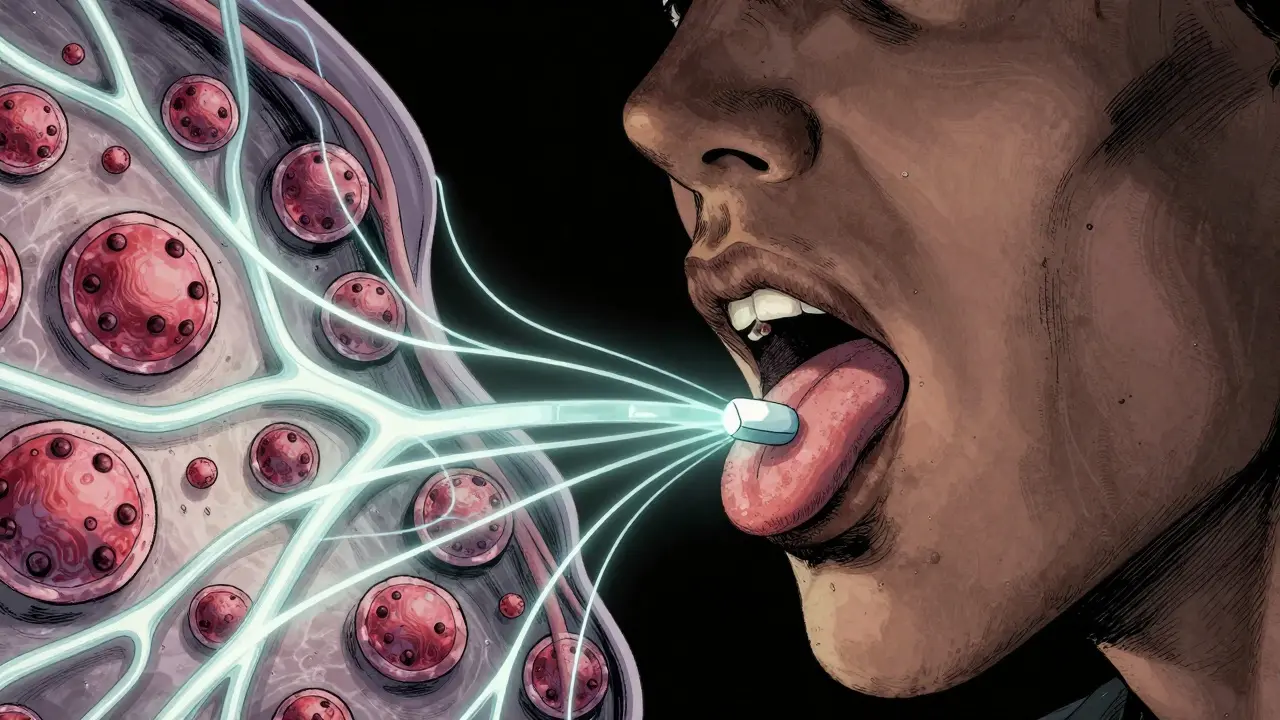
SLIT tablets work by retraining your immune system. Instead of treating symptoms, they slowly teach your body to stop overreacting to specific allergens-like grass pollen, ragweed, or dust mites. The tablet contains tiny, purified amounts of the allergen you’re sensitive to. When you hold it under your tongue for 1 to 2 minutes, the allergen gets absorbed through the mucous membrane. Special immune cells called Langerhans cells grab it and carry it to nearby lymph nodes.
There, they trigger a shift in your immune response. Over time, your body starts producing more regulatory T cells and anti-inflammatory chemicals like IL-10 and TGF-β. These molecules calm down the overactive allergy response. It’s not magic. It’s biology. And it takes months to see results.
Unlike allergy shots, which inject allergens into the skin, SLIT uses the sublingual area because it’s naturally more tolerant to foreign substances. This makes it safer. Most side effects are mild-oral itching, swelling, or an odd taste. Serious reactions like anaphylaxis are rare (about 1 in 700 doses), but because they can happen, the first dose is always given under medical supervision.
Who Is a Good Candidate for SLIT Tablets?
Not everyone with allergies qualifies. SLIT tablets are only approved for three specific allergens in the U.S.: grass pollen, ragweed, and dust mites. If your allergies are triggered by pet dander, mold, or multiple pollen types, SLIT tablets won’t help unless you’re sensitive to one of those three.
Good candidates typically have:
- Modest to moderate allergic rhinitis confirmed by skin or blood tests
- Sensitivity to one of the three FDA-approved allergens (timothy grass, ragweed, or house dust mites)
- No history of severe, uncontrolled asthma
- No eosinophilic esophagitis or oral anatomy issues that make holding the tablet difficult
People with needle phobia, busy schedules, or those who’ve struggled with sticking to allergy shot schedules often find SLIT easier to manage. It’s also a better fit for those who want to avoid injections but still want long-term relief.
But if you’re allergic to five different things, or your symptoms are so bad you need immediate relief, SLIT isn’t the right first step. It’s a slow, steady process-not a quick fix.
Efficacy: What the Data Shows
Studies show SLIT tablets reduce allergy symptoms by 30% to 50% compared to placebo. That’s not a cure, but it’s meaningful. For many, it means fewer antihistamines, less disrupted sleep, and more time outdoors during pollen season.
Compared to allergy shots (SCIT), SLIT is slightly less effective. Shots typically reduce symptoms by 40% to 60%. But SLIT wins on convenience and safety. No needles. No weekly clinic visits. No risk of systemic reactions from injections.
The European Academy of Allergy and Clinical Immunology gives SLIT a Grade A recommendation for grass pollen allergy based on over 30 clinical trials. For dust mites, the evidence is weaker-Grade B-because results vary more between studies.
Real-world data from patient surveys shows 65% report noticeable improvement within the first year. But 32% expected faster results and got discouraged. That’s a key point: SLIT doesn’t work in weeks. It takes 3 to 6 months to start feeling better. Full benefits usually appear after 2 to 3 years of daily use.
And you have to stick with it. Studies show 68% of SLIT users stay on treatment after one year, compared to just 52% for allergy shots. The main reason? Convenience. Taking a tablet at home is easier than driving to the clinic every week.
How to Take SLIT Tablets Correctly
Getting the dose right matters. If you swallow the tablet too fast or don’t hold it under your tongue long enough, you won’t get the full benefit. Here’s the simple protocol:
- Place the tablet under your tongue. Don’t chew or swallow it.
- Hold it there for 1 to 2 minutes. Let it dissolve completely.
- Avoid eating, drinking, or brushing your teeth for 5 minutes after.
- Take it at the same time every day.
That’s it. No complicated steps. But skipping doses or rushing the process reduces effectiveness by up to 40%, according to clinical studies. Most people learn the technique after just one supervised dose. Apps like Grastek’s adherence tracker help remind users to take their dose, and 42% of patients use them regularly.
Manufacturers offer video tutorials-like Oralair’s YouTube channel with over 15,000 views-to walk you through the process. Telehealth visits with allergists can also help troubleshoot issues like persistent mouth irritation or forgetfulness.
Cost, Insurance, and Real-World Barriers
SLIT tablets are expensive. Without insurance, you’ll pay $85 to $120 per month per allergen. That’s $1,000 to $1,800 a year. For comparison, allergy shots cost $800 to $1,200 annually when you factor in office visits.
Medicare covers 80% of the cost for approved indications. But many private insurers require you to try and fail at least two types of allergy medications first (step therapy). That can delay treatment for months.
On Reddit and patient forums, cost is the #1 reason people quit. One user wrote: “I felt better after 8 months, but my deductible reset. I couldn’t afford to keep going.” Another said: “I had to choose between my allergy meds and my kid’s braces.”
Some manufacturers offer patient assistance programs. But they’re not always easy to access. If you’re considering SLIT, talk to your allergist about financial options before you start.

What’s Next for SLIT?
The future looks promising. In 2023, the FDA approved Pollenguard, a new grass pollen tablet. That brings the total to four approved SLIT tablets in the U.S.
Europe already has a multi-allergen tablet that combines grass, birch, and olive pollen. The U.S. is watching closely. Clinical trials for peanut SLIT tablets showed 67% of kids could tolerate 600mg of peanut protein after 44 weeks-compared to just 6% in the placebo group. That’s a game-changer for food allergies.
Researchers are also testing biomarkers to predict who will respond best. Early data shows that measuring IL-10 levels after 8 weeks can predict long-term success with 82% accuracy. That could mean personalized dosing in the future-no more guessing.
But cost remains a barrier. Experts agree SLIT has high growth potential, especially as multi-allergen tablets become available. But unless prices come down or coverage improves, many who could benefit won’t get it.
Final Thoughts: Is SLIT Right for You?
SLIT tablets are a solid option if you have allergies to grass, ragweed, or dust mites-and you’re willing to take them daily for years. They’re safer than shots. More convenient. And they can genuinely reduce your reliance on daily meds.
But they’re not a miracle. You won’t wake up allergy-free after a month. You’ll need patience, consistency, and financial planning. If you’re allergic to multiple triggers, or your asthma isn’t under control, talk to your allergist about other options.
For the right person, SLIT isn’t just another pill. It’s a long-term investment in your quality of life. And if you stick with it, the payoff can be years of fewer symptoms, less medication, and more freedom.
How long does it take for SLIT tablets to work?
Most people start noticing fewer symptoms after 3 to 6 months of daily use. Full benefits usually appear after 2 to 3 years. Unlike antihistamines that work in minutes, SLIT works by changing your immune system, which takes time.
Can I take SLIT tablets if I have asthma?
No, if your asthma is severe or uncontrolled. SLIT is only recommended for people with mild to moderate allergic rhinitis and well-managed asthma. A sudden worsening of asthma after taking SLIT can be dangerous. Always get your asthma checked before starting.
Are SLIT tablets covered by insurance?
Medicare covers 80% of the cost for FDA-approved SLIT tablets. Private insurers often require you to try and fail at least two other allergy medications first (step therapy). Coverage varies widely-check with your plan before starting.
What if I miss a dose?
If you miss one day, just take your regular dose the next day. Don’t double up. Missing a few days occasionally won’t ruin your progress, but consistent daily use is key. Missing more than 10 days in a row may reduce effectiveness. Use a reminder app if you’re prone to forgetting.
Can I use SLIT tablets for pet allergies?
No. Currently, SLIT tablets in the U.S. are only approved for grass pollen, ragweed, and dust mites. If your main trigger is cats or dogs, SLIT tablets won’t help. Allergy shots (SCIT) can be customized for pet dander, but SLIT tablets cannot.
Do SLIT tablets have side effects?
Yes, but most are mild. Common side effects include itching or swelling under the tongue, throat irritation, or an odd taste. These usually fade after a few weeks. Serious reactions like anaphylaxis are rare (about 0.14% of doses) and only occur shortly after the first dose-which is why the first one is given at the doctor’s office.
Anu radha
December 17, 2025 AT 17:55This sounds like it might help my mom-she’s been sneezing nonstop since April. No more shots, just a little tablet? I’ll tell her to ask her doctor.
Radhika M
December 18, 2025 AT 16:24I’ve been on Grastek for 18 months. First 3 months? Nothing. Month 4, I didn’t need Claritin once. Now I can ride my bike in May without crying. It’s slow, but it works if you don’t quit.
Pawan Chaudhary
December 19, 2025 AT 20:59Hey, if you’re thinking about this, just start. I was scared too-but my nose stopped acting like a faucet. You got this.
CAROL MUTISO
December 21, 2025 AT 04:23Let’s be real-SLIT is just Big Pharma’s way of selling you a $1,200/year subscription to ‘hope’ while your insurance makes you jump through hoops like a circus monkey. Meanwhile, the guy who invented this is probably sipping champagne in Switzerland while you’re choosing between allergy meds and your kid’s shoes.
But… I’ll admit it. After three years, I haven’t reached for an antihistamine in months. So maybe the system’s broken, but the science? It’s quietly revolutionary. We’re just bad at paying for it.
Linda Caldwell
December 21, 2025 AT 06:25Just started this last month and I already feel lighter. Like my brain isn’t stuck in allergy fog anymore. Don’t give up if it takes time. You’re not broken-you’re rebuilding.
One tablet. One day. One breath at a time. You’re doing better than you think.
Philippa Skiadopoulou
December 22, 2025 AT 02:11The clinical data is robust for grass and ragweed, particularly in European cohorts. However, real-world adherence remains suboptimal due to socioeconomic factors and lack of patient education. The absence of multi-allergen formulations in the US represents a significant therapeutic gap. Cost containment strategies are urgently needed to ensure equitable access.
Anna Giakoumakatou
December 22, 2025 AT 06:17Oh wow, a pill that makes your tongue itch for three years so you can maybe stop being allergic to grass? How very 2024. Next they’ll sell us a $200/month subscription to ‘not sneezing in spring.’
Meanwhile, my dog still loves me, my cat still sleeps on my chest, and I still breathe-without a tablet. Maybe the real problem isn’t our immune systems… but our willingness to pay for slow fixes.
Jonathan Morris
December 23, 2025 AT 03:31Did you know the FDA approved these tablets after a single 12-week trial with 300 people? And the manufacturer? They also make antidepressants. Coincidence? Or is this just another way to keep you dependent on lifelong meds while they patent the ‘immune reset’ as a proprietary process?
And why is the first dose always at the doctor’s? Because they know some people react badly. They just don’t tell you that until after you’ve paid $1,000.
They call it ‘immunotherapy.’ I call it controlled exposure with a side of corporate liability.
Steven Lavoie
December 24, 2025 AT 12:33Reading all this reminded me of my cousin in India who used to chew neem leaves every morning for her allergies. No tablets. No shots. Just tradition and patience.
SLIT is science, but it’s not the only path. I think we’re losing sight of how many cultures have managed allergies for centuries without Big Pharma’s help. Maybe the real breakthrough isn’t the tablet-it’s remembering that healing doesn’t always come in a blister pack.
Also, if you’re on this treatment, please don’t skip doses. I watched someone quit at month 6, then come back a year later saying ‘it didn’t work.’ It did. They just didn’t let it finish.
And to the person who said ‘I chose meds over braces’-I see you. This system is broken. But you’re not alone. There are patient groups. There are apps. There are ways to get help. Don’t give up because the price tag is cruel.
One day, maybe we’ll have affordable, multi-allergen options. Until then, keep showing up. Even if it’s just one tablet a day. That’s courage.