Social Media for Pharmacovigilance: New Opportunities and Safety Risks
 Apr, 13 2026
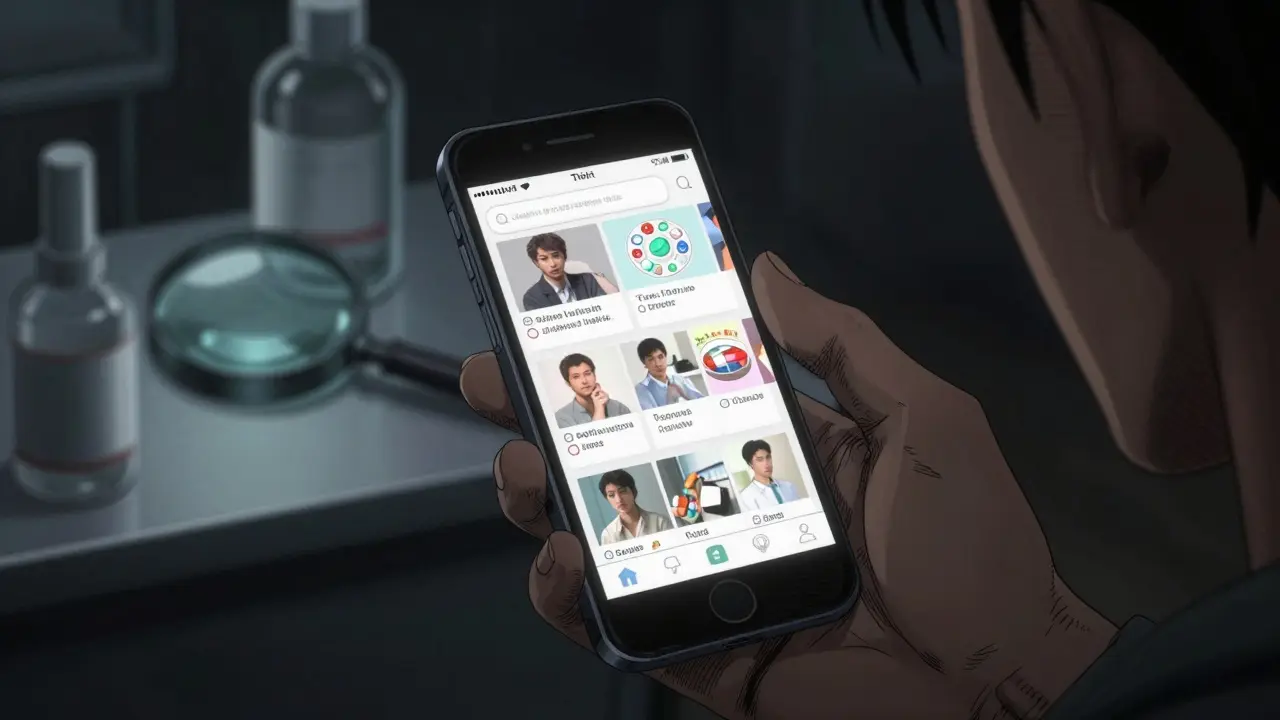
Pharmacovigilance Signal Simulator
How it works:
You are the AI system. Review the social media posts below. Use Named Entity Recognition (NER) to identify posts containing a Drug Name and a Symptom. Filter out the 'noise' (sarcasm, vague claims, or irrelevant posts) to find a valid safety signal.
Incoming Data Stream (Real-time)
AI Analysis Result
Select a post to analyze for a potential Adverse Drug Reaction (ADR).
Target: Identify only valid reports (Avoid false positives).
Imagine a patient discovering a rare side effect from a new medication and posting about it on Reddit. While a doctor might not see that post, a pharmaceutical company's monitoring system does. This is the core of modern drug safety: using the digital footprints we leave online to protect millions of people from harm. With over 5 billion people active on social platforms, the sheer volume of real-time health data is staggering. But can we actually trust a tweet to trigger a medical alert? The answer is a complex mix of massive potential and significant technical danger.
| Feature | Traditional Systems | Social Media Monitoring |
|---|---|---|
| Reporting Rate | Only 5-10% of events captured | Potential for near-total capture |
| Speed | Lag time due to clinic visits | Instant/Real-time |
| Data Quality | High (verified by doctors) | Low (high noise, unverified) |
| Patient Voice | Filtered through providers | Unfiltered and direct |
What exactly is social media pharmacovigilance?
To understand the digital side, we first need a clear definition. Pharmacovigilance is the science and activities relating to the detection, assessment, understanding, and prevention of adverse effects or any other drug-related problems . For decades, this relied on doctors filling out forms. However, Social Media Pharmacovigilance is a newer approach that systematically monitors platforms like Twitter, Facebook, and Reddit to identify Adverse Drug Reactions (ADRs) -those unwanted or harmful effects a drug has on a patient.
This shift gained momentum around 2014 with the WEB-RADR project. This was a massive collaborative effort involving the European Commission and pharmaceutical giants like AstraZeneca and Novartis. Their goal was simple: figure out if the web could help us spot safety signals faster than a clinic report. Because patients often vent about side effects on forums long before they book a doctor's appointment, these digital channels act as an early warning system.
The big opportunities: Why go digital?
The most compelling reason to monitor social media is speed. Traditional reporting is slow; it requires a patient to feel a symptom, see a doctor, and for that doctor to remember to file a report. In contrast, a patient might post "My skin is breaking out after taking X drug" within seconds of noticing the symptom. In one case study by DrugCard, a potential safety signal for a diabetes medication was spotted 47 days before the first formal regulatory report ever arrived.
Beyond speed, there is the "unfiltered" factor. When a doctor reports a side effect, they use medical terminology and may subconsciously filter the patient's experience. Social media gives us the raw, honest perspective of the user. This helps companies understand not just pharmacovigilance signals, but also patient sentiment and how people actually use the drugs in the real world. For example, some users on Reddit have identified unexpected interactions between antidepressants and herbal supplements that were completely missed during clinical trials.

The technical side: How the data is sifted
You can't just have a human read every tweet; there are billions of them. Instead, companies use heavy-duty AI. Currently, about 73% of major pharma companies use AI for this, with some systems processing 15,000 posts per hour. They primarily use two methods:
- Named Entity Recognition (NER): This AI tool scans a post and pulls out specific categories. It looks for the drug name, the dosage, and the specific symptom (e.g., "headache" or "nausea").
- Topic Modeling: This is used when the company doesn't know what to look for. It groups similar conversations together to see if a new, unknown side effect is emerging across a large group of people.
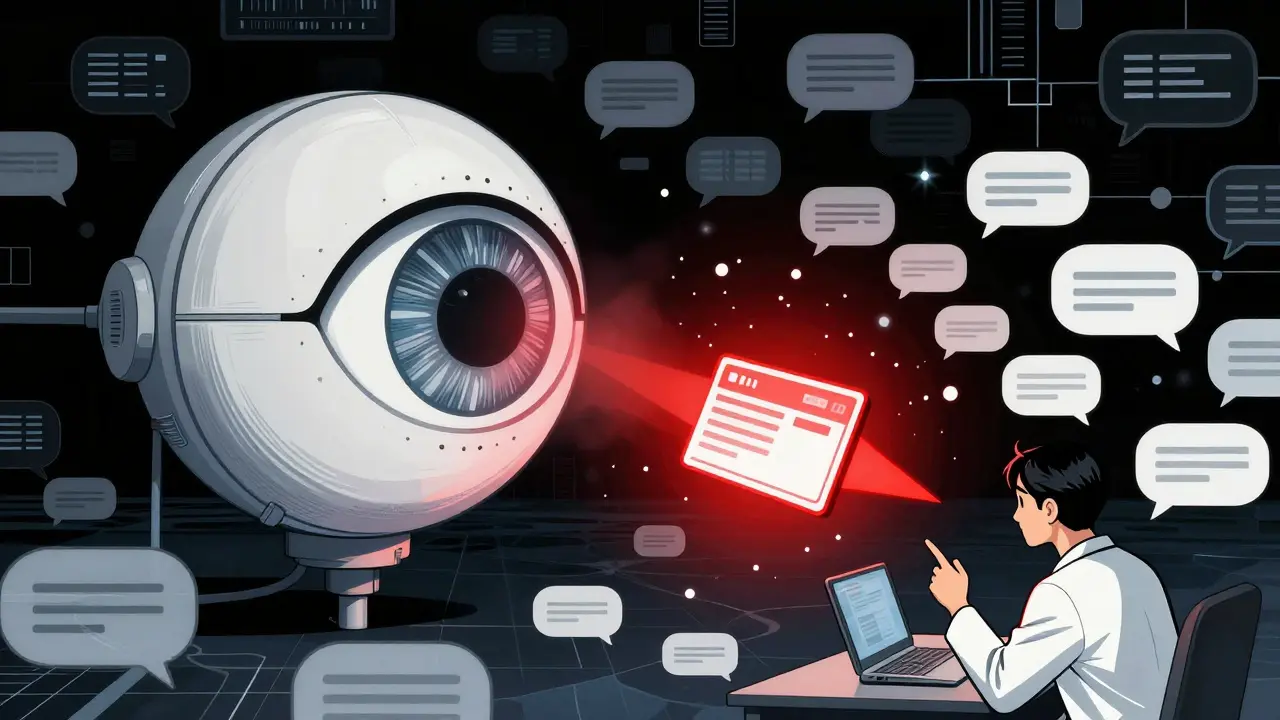
Once the AI flags a potential event, it usually goes through a three-stage human review. This is necessary because AI still struggles with sarcasm, slang, and medical misinformation. For instance, if someone posts "This drug is a killer!" they might mean it's incredibly effective, not that it's actually causing fatalities.
The risks and the "Noise" problem
It isn't all smooth sailing. The biggest hurdle is the signal-to-noise ratio. Amethys Insights found that 68% of potential adverse event mentions on social media require manual verification because they are exaggerated or irrelevant. The WEB-RADR project highlighted this starkly: out of 12,000 potential reports they found on social media, only 3.2% actually met the strict criteria to be included in formal safety databases.
Then there is the issue of verification. In nearly 100% of social media reports, it's impossible to verify the patient's true identity. Furthermore, about 92% of posts lack critical medical history, and 87% have unreliable dosage information. This makes it very hard to prove that the drug actually caused the reaction. This is especially true for rare medications. For drugs with fewer than 10,000 annual prescriptions, the FDA saw false positive rates as high as 97%.
Ethics, Privacy, and the Regulatory Gap
Monitoring people's private conversations-even on public forums-raises a massive ethical red flag. Some patients share sensitive health data without realizing a pharmaceutical company's AI is scraping that data for a safety report. There is a tension here: the "beneficence" of potentially saving lives by finding a side effect versus the right to privacy.
There is also a bias problem. If we only rely on social media, we ignore the elderly, those who aren't tech-savvy, or people in regions where internet access is censored. This creates a "blind spot" in safety data. Regulators like the FDA and the European Medicines Agency (EMA) have acknowledged this. The EMA now requires companies to document their social media monitoring strategies in their periodic safety update reports, but a universal global framework still doesn't exist.
The Future: Where are we heading by 2027?
We are moving toward a hybrid model. Social media will never replace formal clinical reporting, but it will act as a powerful "smoke detector." The goal is to reduce false positives (currently aiming for under 15%) through better AI validation. We are also seeing better collaborations; for example, IMS Health and Facebook have worked together to improve de-duplication rates to 89%, ensuring the same complaint from one person isn't counted as ten different patients.
The market is exploding, with the segment expected to hit nearly $900 million by 2028. As AI becomes more nuanced at understanding human language and cultural slang, the gap between "noisy data" and "actionable intelligence" will shrink. The ultimate goal is a world where a patient's honest post on a forum can lead to a label change in weeks rather than years, potentially preventing thousands of adverse reactions.
Can social media reports actually change a drug's label?
Yes, though it usually happens indirectly. Social media often identifies a "cluster" of symptoms that prompts a company to do a deeper dive into their formal data. For example, Venus Remedies identified rare skin reactions through social media, which led to a product label update 112 days faster than traditional channels would have.
Is it legal for companies to monitor my health posts?
Generally, if the post is on a public forum, it is legal to monitor. However, privacy laws like GDPR in Europe make this more complex. Companies are encouraged to follow regulatory guidelines from the EMA and FDA, which emphasize the need for robust validation and respect for privacy.
Why is the false positive rate so high for rare drugs?
When a drug has very few users, any random mention of a symptom by someone who might have taken the drug (or is just talking about it) creates a huge spike in the data. Without a large baseline of users to compare against, it's hard for AI to tell if a symptom is a genuine trend or just a one-off coincidence.
What is the difference between NER and Topic Modeling?
NER (Named Entity Recognition) is like a filter that looks for specific, known things, like "Aspirin" or "Nausea." Topic Modeling is more like a map; it looks at thousands of posts and says, "I don't know what these people are talking about specifically, but they are all complaining about the same new thing," allowing researchers to discover previously unknown side effects.
Do doctors still need to report side effects?
Absolutely. Social media data is considered "supplementary." Because it lacks verified medical histories and dosages, it cannot stand on its own. Formal reporting provides the clinical proof and verification that is required for regulatory action.
Mary Johnson
April 15, 2026 AT 04:29This is exactly what I've been warning everyone about for years. Pharma companies aren't "monitoring for safety," they're building a database of our biological vulnerabilities to better manipulate us. They scrape our private pain just to feed an AI and then decide which side effects are "acceptable" and which ones they need to hide. It's a total surveillance state masquerading as healthcare. Once they link your social media handle to your medical records, you're just a data point in their profit machine and there's no way to opt out once the AI has already indexed your symptoms.
Billy Wood
April 16, 2026 AT 00:21Total game changer!!! Faster alerts save lives!!! Let's goooo!!!
Haley Moore
April 16, 2026 AT 21:47Honestly, the idea that AI can distinguish between a genuine medical crisis and a dramatic tweet is just... laughable 🙄. I can't even imagine the absolute chaos of a bot trying to parse sarcasm while some pharmaceutical exec thinks they've found a "signal." It's all so quaint that we think this is high-tech when it's basically just fancy keyword searching. Truly tragic 💅.
mimi clouet
April 18, 2026 AT 04:58Actually, Topic Modeling is super fascinating because it uses latent Dirichlet allocation to find patterns that humans would totally miss! 🌟 It's way more powerful than just looking for keywords because it captures the overall theme of the conversation. I love how this bridge between data science and medicine is evolving! 💖✨
Scott Lofquist
April 19, 2026 AT 10:08Oh please, calling this "monitoring" is a joke 🙄. It's glorified corporate eavesdropping. Who actually believes that a company focused on quarterly profits will suddenly become a benevolent guardian of public health just because they have a new AI tool? 🤡 The bias problem mentioned is just the tip of the iceberg; they'll only act on data that doesn't hurt their bottom line. Absolute nonsense to call this a "benefit" to the patient 🙄.
Mark Dueben
April 20, 2026 AT 01:39I think it's important to remember that while the data is noisy, it gives a voice to people who might feel intimidated by the clinical environment. It's a great way to include more diverse perspectives in safety monitoring, even if the process is still being refined.
Olivia Lo
April 21, 2026 AT 11:09The ontological shift here is quite profound. We are moving from a paradigm of structured clinical observation to one of unstructured digital phenomenology. While the epistemological validity of a tweet is naturally lower than a physician's report, the aggregate heuristic value of these digital footprints allows for a more holistic understanding of the patient experience. We must ensure that the ethical framework evolves to prevent the commodification of these narratives while still utilizing the systemic utility of the data.
Tabatha Pugh
April 21, 2026 AT 11:11I've actually seen this happen in real time with a few different medications. If you look at the subreddits for specific chronic illnesses, you'll see people documenting symptoms in a way that's practically a clinical trial. It's weird how people think this is new; we've been crowdsourcing medical data on forums since the early 2000s. Now the companies are just finally catching up to where we've been for two decades.
Princess Busaco
April 22, 2026 AT 19:47It is absolutely appalling that we are expected to just trust "AI validation" when the false positive rate for rare drugs is nearly a hundred percent, which basically means the systems are essentially guessing and hoping for the best while patients are potentially suffering in silence or being misdiagnosed by a machine that doesn't even know what a human being is. I find it utterly pretentious to suggest that a hybrid model is the solution when the fundamental problem is that these corporations are prioritizing automation over actual human medical expertise and empathy, which is the only thing that actually matters in healthcare, but of course, in the world of big pharma, a percentage point of "de-duplication" is worth more than a patient's actual life story.
Shaylia Helland
April 24, 2026 AT 00:32it's kind of wild to think about how much of our lives is just data for someone else to analyze but i guess if it actually stops someone from having a bad reaction to a pill then maybe it's worth it... though i do wonder about the people who can't even get online and how they just get left out of the whole conversation entirely just because they don't have a smartphone or a data plan
Rim Linda
April 24, 2026 AT 13:45Omg the part about the "killer" drug lol!! AI is so clueless! 😂