QR Codes on Drug Labels: Real-Time Safety Updates
 Dec, 3 2025
Drug Safety QR Scanner Simulator
This simulator demonstrates how QR codes on drug labels provide dynamic safety information updates that replace static paper inserts.
Current Safety Information
Drug Name: Lipitor
Dosage: 20 mg once daily
Key Warnings: May cause muscle pain. Avoid grapefruit juice.
Last Updated: Today
Alternative Access Options
For patients who cannot scan QR codes:
- Call 1-800-555-3000 for audio information
- Visit www.druginfo.com for printed summary
- Request audio instructions from pharmacy staff
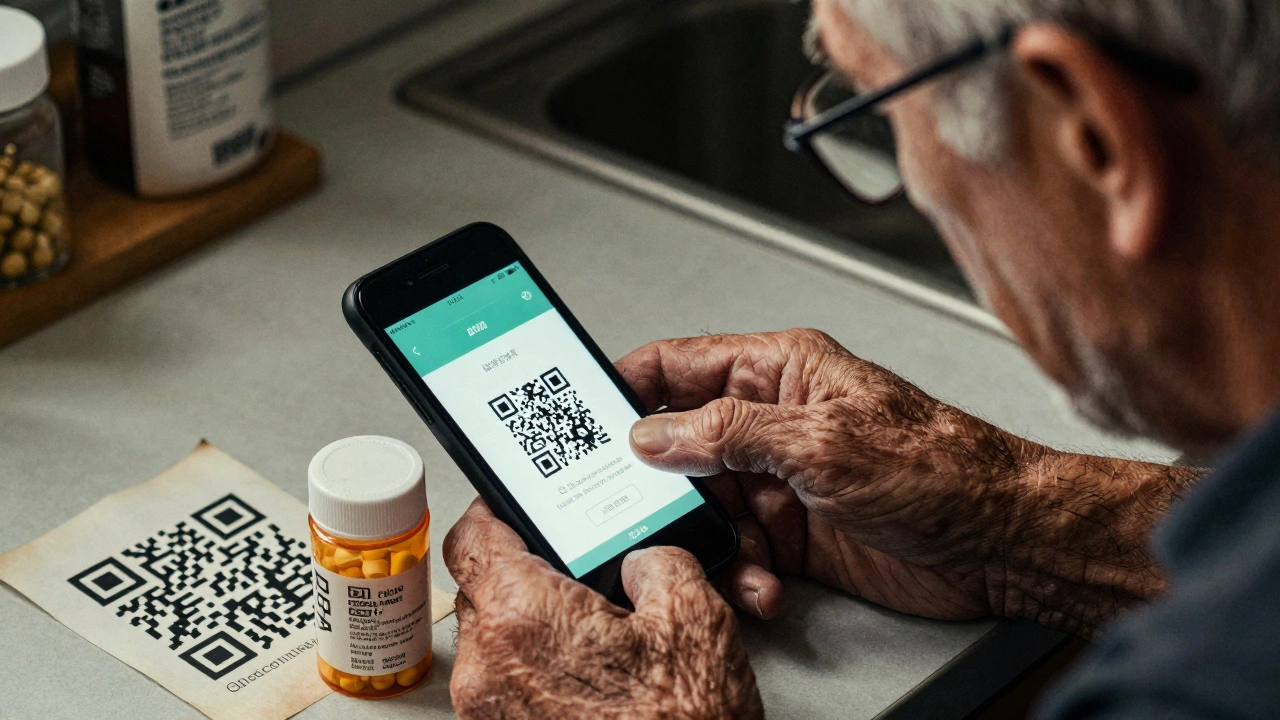
Imagine opening a pill bottle and scanning a QR code on the label to instantly see the latest safety warning - not from a printed leaflet that’s six months out of date, but from a live update issued just hours ago. This isn’t science fiction. It’s happening right now, in pharmacies across Europe and starting to appear in the U.S. and beyond. QR codes on drug labels are transforming how patients and doctors get critical safety information, replacing static paper inserts with dynamic, real-time updates that can change as soon as new risks are identified.
Why Static Labels Are No Longer Enough
For decades, drug labels came with a small paper insert. You’d flip through it to find dosage instructions, side effects, or warnings. But here’s the problem: those inserts don’t update. If the FDA or EMA issues a new black box warning - the strongest safety alert a drug can carry - the printed leaflet stays the same until the next batch of bottles rolls off the line. That could take months. In the meantime, patients are reading outdated info. Between 2013 and 2023, over 225 black box warnings were issued globally for prescription drugs, according to industry data. Each one meant a delay in getting life-saving updates to people who needed them. Some warnings came too late. One 2022 case involved a blood thinner where a new interaction with a common herbal supplement wasn’t added to printed materials until four months after the warning was published. By then, dozens of patients had been hospitalized. QR codes fix this. They link directly to a secure, cloud-hosted version of the product’s official prescribing information. When a safety update is issued, the content behind the code changes - instantly. No new labels. No reprinting. No waiting.How QR Codes on Drug Labels Actually Work
It’s not just a link to a website. These are dynamic QR codes, meaning they’re tied to a central content management system used by the drug manufacturer. When you scan the code, your phone connects to a secure server that serves up the most current version of the drug’s safety data - including dosing, contraindications, pregnancy risks, and recent safety alerts. The system also logs who scanned it, when, and from where. That’s not for spying - it’s for compliance. Regulators require manufacturers to prove they’re distributing accurate, up-to-date information. With scan logs, companies can show they’ve met their duty to inform. The tech is simple but powerful. The QR code itself must be large enough to scan easily, placed where it’s visible on the box or blister pack, and designed to work under any lighting condition. It’s tested on dozens of phone models - from the latest iPhone to budget Androids - because patients aren’t all tech-savvy or using top-of-the-line devices. Security is built in. The link only points to the manufacturer’s official site. Counterfeiters can’t fake it. If you scan a code and it takes you to a sketchy page, you’re not scanning the real thing. That’s why many codes also include the drug’s lot number and expiration date - you can verify authenticity right there.Real-World Impact: What Patients and Pharmacists Are Saying
In hospitals in the UK and Spain, where QR codes have been used since 2021, pharmacists report fewer mistakes. One hospital in Manchester tracked patient understanding after switching to QR-based leaflets. Before: 58% of patients could correctly state their drug’s purpose. After: 82%. That’s a 24-point jump. On Reddit, a pharmacist named HospitalPharm2020 wrote in June 2024: “We put QR codes on discharge meds six months ago. Patients’ ability to explain their own meds improved by about 40%. One guy with three new prescriptions finally got it - he said the video demo on the QR page showed him exactly how to take the pills, step by step.” Pharmacists also love the system for reporting side effects. Instead of filling out paper forms, they can now tap a button in the app that pops up after scanning the code and send a report directly to the manufacturer’s pharmacovigilance team. Eighty-five percent of pharmacy staff surveyed say they prefer this digital method. But it’s not perfect. In rural clinics in New Zealand and parts of the U.S., older patients struggle. A survey in Dunedin last year found that 60% of patients over 70 didn’t scan the QR code - not because they didn’t want to, but because they didn’t have a smartphone, or their phone was too slow, or they were afraid to click something unfamiliar. That’s why smart implementations don’t remove paper. They keep a simplified printed summary - “Take once daily, avoid alcohol, call your doctor if you get dizzy” - right on the box. The QR code is an upgrade, not a replacement.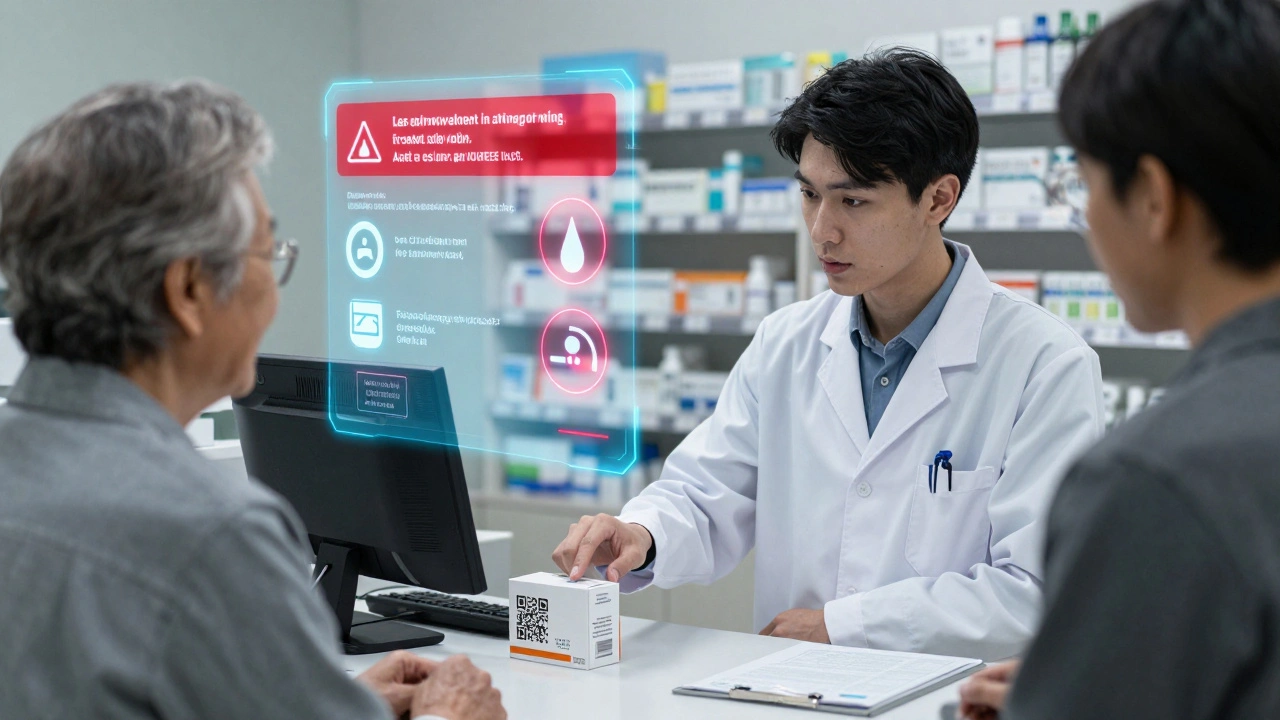
Regulatory Shifts: Who’s Leading the Way?
Spain was the first to officially allow QR codes on drug labels in 2021. The UK followed in 2024, updating its ABPI Code of Practice to let pharma companies use QR codes to link to real-time prescribing info. The European Federation of Pharmaceutical Industries and Associations (EFPIA) is now reviewing its guidelines, and broader adoption across Europe is expected by 2026. In the U.S., the military started using QR codes on prescriptions in 2022 to replace printed leaflets. The VA is piloting the same system. The FDA hasn’t mandated it yet, but it’s watching closely. Industry analysts say a U.S. mandate could come as early as 2027. What’s driving this? Speed. Global drug safety updates used to take 6-12 months to roll out across countries. With QR codes, the same update can go live in every market in under 90 days. That’s a game-changer for drugs used worldwide.Challenges and Ethical Concerns
Not everyone is on board. Dr. Maria Sanchez from the Global Health Institute warned in 2023: “QR codes risk creating a two-tier system. People with smartphones get the best, most current info. People without - often elderly, low-income, or rural - get the old, outdated version. That’s not just inconvenient. It’s unsafe.” Privacy is another concern. If the system tracks who scanned what, does that violate HIPAA or GDPR? The answer is no - as long as no personal data is collected. The logs only record that a code was scanned, not who scanned it. No names, no IDs, no phone numbers. Just a timestamp and location (e.g., “scanned in a pharmacy in Auckland”). Technical glitches happen too. A patient might scan the code and get a 404 error if the server is down. That’s why all systems have a backup: a printed URL or a toll-free number to call for the latest info.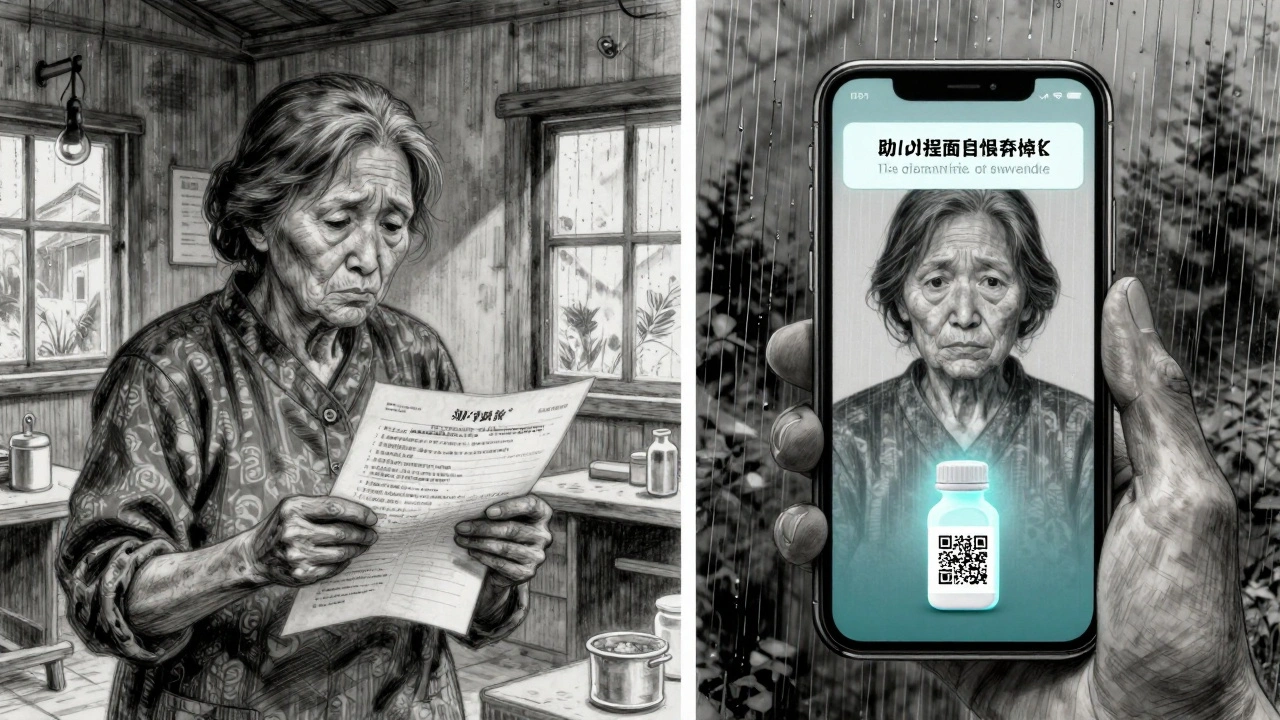
Ollie Newland
December 4, 2025 AT 15:02QR codes on meds? Honestly, this is long overdue. In the UK, we’ve been using them in NHS hospitals since ’21 and the drop in medication errors is insane. Pharmacists aren’t just handing out leaflets anymore-we’re having actual conversations because patients actually understand what they’re taking. The video demos for complex regimens? Game changer. No more ‘I thought I was supposed to take it with food’ after a 3am panic.
Michael Feldstein
December 5, 2025 AT 08:58Love this. My grandma finally got her meds right after I showed her the QR code video-it walked her through each pill like a TikTok tutorial. She’s 78, doesn’t use apps, but scanning a code? She gets it. The printed summary on the box keeps it simple, and the QR gives depth. Perfect combo. We should be pushing this everywhere, not just in fancy cities.
Pavan Kankala
December 5, 2025 AT 09:55Oh wow, so now Big Pharma wants us to scan our pills like we’re unlocking a secret menu at Starbucks? Next they’ll be embedding microchips. This isn’t safety-it’s surveillance. Who’s maintaining the server? What if the government forces them to hide side effects? What if your scan data gets sold to insurers? They say ‘no personal data’-yeah, right. They say that before they start tracking your bowel movements too.
jagdish kumar
December 6, 2025 AT 11:13Technology is the new god. We worship it. We scan. We trust. But who wrote the code? Who decided what’s ‘safe’? The same people who told us cigarettes were fine.
Ben Choy
December 7, 2025 AT 22:42Just scanned my blood pressure med QR code-turned out they added a new warning about grapefruit juice! I had no idea. Also, the audio version in Spanish popped up automatically since I live near a Latino neighborhood. So cool. 🙌
Joe Lam
December 8, 2025 AT 18:34Of course this is happening. The FDA’s been asleep at the wheel for decades. Meanwhile, Europe’s already ahead because they don’t let pharma lobbyists dictate everything. This isn’t innovation-it’s damage control. And don’t even get me started on how the VA’s the only one in the U.S. with common sense. Pathetic.
Jenny Rogers
December 9, 2025 AT 19:11While the technological implementation may appear superficially beneficial, one must interrogate the underlying epistemological assumptions: that information accessibility equates to health equity. The digital divide is not a technical issue-it is a moral failure. To mandate QR codes without universal smartphone access is to institutionalize pharmaceutical apartheid. This is not progress. It is exclusion dressed in binary.
Rachel Bonaparte
December 11, 2025 AT 07:20Okay, but what if the QR code gets hacked? I mean, think about it-what if someone injects a fake warning into the system and causes mass panic? Or worse-what if they replace it with a subliminal ad for a competing drug? I read a paper last year where researchers showed how QR codes in China were used to redirect people to phishing sites disguised as government portals. And now we’re putting them on LIFE-OR-DEATH MEDS? No. No. No. The FDA is being reckless. This isn’t a feature-it’s a vulnerability waiting to be exploited by foreign actors, corporate spies, or maybe even AI bots trained to confuse elderly patients. I’m not paranoid. I’ve done the research.
Scott van Haastrecht
December 12, 2025 AT 18:55This is a PR stunt wrapped in tech jargon. You think patients are actually scanning these? Nah. They’re throwing the leaflets away and googling ‘side effects of lisinopril’ on their phones anyway. The whole system is a tax write-off for pharma companies trying to look ‘innovative’ while their profit margins stay the same. And don’t even get me started on the server costs-someone’s paying for those cloud bills. Probably you, through your insurance premiums. This isn’t healthcare. It’s a corporate performance review dressed as a safety upgrade.