Psoriasis: Plaque, Guttate, and Systemic Treatment Options Explained
 Mar, 31 2026
If you've been told you have psoriasis, the reaction might range from confusion to exhaustion. It's more than just dry patches; for the roughly 125 million people globally living with it, this is a relentless immune system issue that demands constant management. As we move further into 2026, the landscape of treatment has shifted dramatically. Gone are the days when strong creams were the only option for severe cases. Today, we have precise systemic therapies that target the exact inflammatory pathways causing the flare-ups. Understanding the difference between your type of psoriasis-be it the stubborn plaques most people see or the raindrop-shaped guttate lesions-is the first step toward picking the right weapon.
The Psoriasis Types You Need to Know
Not all psoriasis looks the same, and treating them often requires different strategies. When doctors talk about Plaque Psoriasis, they are referring to the thick, red patches with silvery scales that cover large areas of the body. This form accounts for about 80-90% of all diagnoses. It is chronic, meaning it stays with you long-term, flaring up periodically due to stress, weather changes, or infections.
In contrast, Guttate Psoriasis typically appears as small, drop-like spots scattered across the trunk or limbs. It affects about 8-10% of patients and is often triggered by a strep throat infection earlier in life. While it can sometimes resolve on its own, many patients find it settles into a chronic pattern similar to plaque psoriasis. Identifying which variant you have matters because it influences how quickly you respond to certain systemic treatments.
Beyond Creams: What Are Systemic Therapies?
For mild cases involving less than 10% of the body surface area, topical steroids remain effective. However, for moderate-to-severe disease, doctors now turn to Systemic TreatmentsMedications taken orally or via injection that affect the entire body. Unlike creams that work only where applied, these therapies travel through your bloodstream to calm the immune fire deep within the skin.
Recent data from late 2025 shows that newer agents achieve skin clearance (PASI 75 to 90) in up to 90% of patients, a massive leap compared to traditional drugs from the past decade. If your quality of life score (DLQI) is high, indicating you struggle with daily tasks due to your skin, guidelines suggest skipping straight to these stronger options.
The Oral Revolution: Small Molecule Drugs
Before jumping to injections, many providers consider oral medications. MethotrexateA long-standing synthetic drug used for psoriasis has been the gold standard for decades, working by suppressing cell growth. It gets about half of patients to near-clear skin but requires regular blood tests to monitor liver health.
Newer targets have improved convenience and safety. Drugs like ApremilastAn oral medication targeting PDE4 enzymes (Otezla) offer a non-immunosuppressive route, helping reduce inflammation without the heavy monitoring of methotrexate. Even newer is DeucravacitinibA selective TYK2 inhibitor tablet (Sotyktu), which showed impressive results in 2025 trials. About 59% of users hit significant skin clearance marks at 16 weeks, making it a potent choice for those terrified of needles who want a modern alternative to older pills.
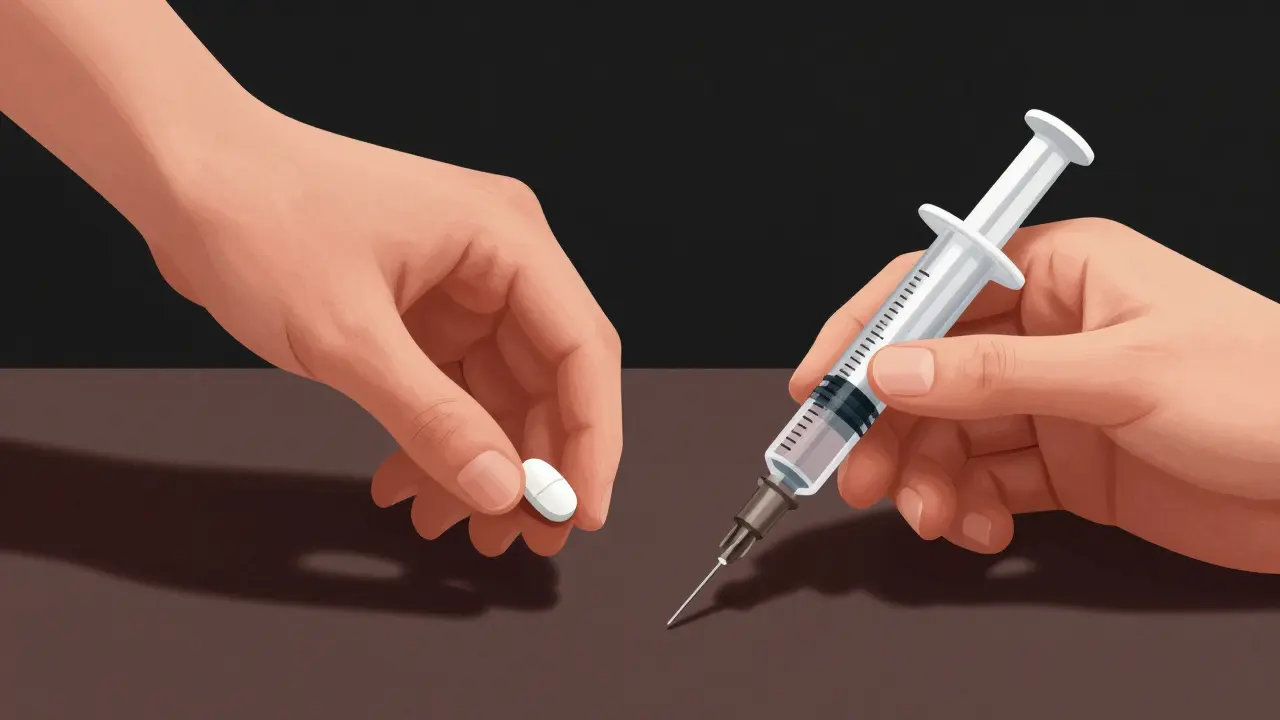
Biologics: Targeting the Root Cause
When pills aren't enough, or for very severe disease, biologic medications take center stage. These are proteins that block specific cytokines-the signaling messengers driving inflammation. The three main classes dominating the market in 2026 are:
- TNF Inhibitors: The original wave of biologics. They work well but require frequent dosing.
- IL-17 Inhibitors: Block interleukin-17. These act fast, often clearing skin within weeks.
- IL-23 Inhibitors: Currently leading the pack in durability. By targeting IL-23 higher up the chain, they stop the production of other bad actors like IL-17.
Dr. Robert Rissmann presented at ESDR 2025 highlighting that switching to endotype-specific therapy is crucial. If you fail one biologic, simply trying another in the same class rarely helps. Instead, switching targets (e.g., from TNF to IL-23) is the smarter clinical play.
Choosing Between IL-17 and IL-23
This is the most common debate in dermatology clinics today. Class Example Dosing Frequency Clearance Rate (PASI 90) Best Suited For Guselkumab (IL-23) Every 12 weeks 84.1% Maintenance, Comorbidities Risankizumab (IL-23) Every 12 weeks 86.0% Long-term Persistence Secukinumab (IL-17) Every 4 weeks 79.3% Fast Onset (Nail/Joint) Adalimumab (TNF) Every 2 weeks 78.3% Patient Safety Profile
If speed is your priority-perhaps before a wedding or job interview-IL-17 inhibitors like secukinumab often show improvement faster, sometimes within two weeks. However, if you hate frequent shots, IL-23 inhibitors like guselkumab allow quarterly dosing. Long-term persistence data favors IL-23, with nearly 78% of patients still on risankizumab after a year. Another critical factor is comorbidity. If you have inflammatory bowel disease, avoid IL-17 inhibitors, as they can trigger Crohn's disease flares; stick with IL-23 or TNF blockers instead.

Navigating Costs and Support
We cannot ignore the financial reality. A study from GoodRx noted annual costs ranging from $7,200 for apremilast to over $34,000 for top-tier biologics. In many healthcare systems, however, patient assistance programs have evolved significantly. If you qualify based on income, out-of-pocket costs can drop to zero. Navigating prior authorization remains a hurdle; expect a 4-6 week delay while insurance verifies medical necessity. Using electronic prior authorization systems has helped reduce this time to under a week in major practices.
Practical tips from the community are also vital. Applying steroid foams under occlusion (wrapping plastic film over them) boosts effectiveness on stubborn plaques. Using humidifiers during winter prevents drying that triggers flares. Finally, join online communities where sharing experiences helps manage the psychological burden of a chronic condition.
Frequently Asked Questions
Is psoriasis curable?
There is no known cure yet, but functional clearance is achievable. With advanced biologics, many patients reach 100% skin clearance and may pause treatment under strict medical supervision.
Can guttate psoriasis go away completely?
Guttate psoriasis can resolve spontaneously, especially after the initial viral trigger resolves. However, it frequently evolves into chronic plaque psoriasis requiring maintenance treatment.
What is PASI 75?
PASI stands for Psoriasis Area and Severity Index. A score of 75 indicates a 75% reduction in severity, including redness, thickness, and scaling, considered clinically significant success.
Are biologic treatments safe?
Yes, they are monitored closely. The primary risk involves increased susceptibility to infections. Vaccinations should be updated before starting therapy, and screening for tuberculosis is mandatory.
How quickly does Otezla work?
Apremilast usually takes 12 to 16 weeks to show full effect, though some improvement is visible within the first few weeks of dosing.
Julian Soro
March 31, 2026 AT 22:40I am really glad to see this breakdown of the treatment landscape finally being discussed openly.
Rod Farren
March 31, 2026 AT 23:11It is essential to note that TYK2 inhibition represents a paradigm shift in pharmacodynamics compared to traditional methotrexate protocols. The specificity reduces systemic toxicity while maintaining high efficacy rates on the Psoriasis Area and Severity Index metrics.
Jenny Gardner
April 2, 2026 AT 01:08Wow!!!!! This is exactly what we needed!!!!!! The details on IL-23 inhibitors are so clear!!!! Thank you for posting this!!!!
Molly O'Donnell
April 2, 2026 AT 17:48The price difference between biologics and older pills makes my stomach turn just thinking about it!
Cara Duncan
April 4, 2026 AT 04:38That is completely understandable :((( We have to advocate for ourselves to get on the right path :( Hope things improve soon for everyone :)
Eleanor Black
April 5, 2026 AT 13:09This information regarding systemic therapies is incredibly useful for those navigating the chronic nature of the condition. It is often difficult to understand the distinction between plaque and guttate presentations without medical guidance. The mention of PASI scores provides a concrete metric for tracking progress over time. Many patients overlook the importance of monitoring liver health when considering traditional oral medications. Methotrexate remains a viable option despite newer developments in the pharmaceutical market. Regular blood work ensures that organ function is maintained during aggressive immunosuppressive treatments. Biologics represent a significant shift in how dermatologists approach severe skin manifestations. Targeting specific cytokines like interleukin allows for precise control of the immune response. Patients with comorbidities such as inflammatory bowel disease must carefully select their therapeutic pathway. Avoiding certain inhibitors can prevent triggering dangerous flare-ups elsewhere in the body. Insurance approval processes remain a substantial barrier even with evolving patient assistance programs. Prior authorization delays can disrupt the timeline for achieving skin clearance goals. Electronic systems have improved efficiency significantly within major healthcare practices recently. Community support groups offer necessary psychological buffering against the stress of diagnosis. Humidifiers and topical occlusion techniques provide low-cost relief alongside expensive prescription interventions. Managing expectations realistically helps sustain motivation throughout the treatment journey. Functional clearance is a wonderful milestone to strive for with modern biologic agents.
We should all keep sharing our experiences to help one another succeed.
Owen Barnes
April 5, 2026 AT 21:14I aggree with teh long coment abouut costs. It is realll hard to pay for meds when u dont have insurence. Hoper the gov fixes this soon.
Arun Kumar
April 6, 2026 AT 12:02You are absolutely right about the financial barriers facing many patients today. We need to explore local grants that might assist with copays specifically for these new drugs. Please do not lose hope if insurance says no initially. Keep appealing the claim until you find success.
Russel Sarong
April 8, 2026 AT 09:42The fear of needles is so real!!!!!!!! I have tried everything to avoid injections!!!!!!!!!! Does anyone else feel this way??????
Christopher Beeson
April 9, 2026 AT 06:37Your anxiety highlights the psychological toll of chronic management which is often ignored by clinical studies. The dependency on injections creates a cycle of dread that undermines mental wellness. Society must address the needle phobia before demanding compliance.
Callie Bartley
April 10, 2026 AT 06:14Biologics are too expensive for normal people anyway.
James DeZego
April 10, 2026 AT 11:20Many clinics have navigated this perfectly with patient access cards! :D Coverage varies by region so check your state database.