Prednisone vs Prednisolone Side Effects: Short-Term and Long-Term Risks
 Jun, 22 2026
Prednisone Risk & Management Planner
Your Treatment Profile
Risk Assessment Results
Enter your treatment details and click "Assess My Risk" to see your personalized risk profile and management plan.
Side Effect Knowledge Check
Click on the cards below to learn about common side effects and their severity levels.
Daily Management Checklist
Track your daily steroid management tasks. Click items to mark them complete.
You’ve been prescribed a steroid to calm down inflammation, fight an autoimmune flare, or treat a severe allergy. The doctor hands you a bottle of Prednisone or Prednisolone. You take the first pill, and within hours, you feel different. Maybe better. But then the insomnia hits. Or the hunger. Or the mood swings that make you want to punch a wall.
These two drugs are medical powerhouses. They save lives in acute crises like giant cell arteritis or severe asthma attacks. But they come with a heavy price tag in side effects. The good news? Most short-term issues vanish when you stop taking them. The bad news? Long-term use can permanently alter your body’s chemistry, bone density, and immune function.
This guide cuts through the medical jargon. We’ll break down exactly what happens to your body on these drugs, how to tell if it’s Prednisone or Prednisolone (spoiler: it matters less than you think), and most importantly, how to manage the fallout without suffering in silence.
The Core Difference: It’s All About Your Liver
Before we get into the side effects, you need to understand why there are two names for essentially the same drug. This distinction is critical for safety, especially if you have liver issues.
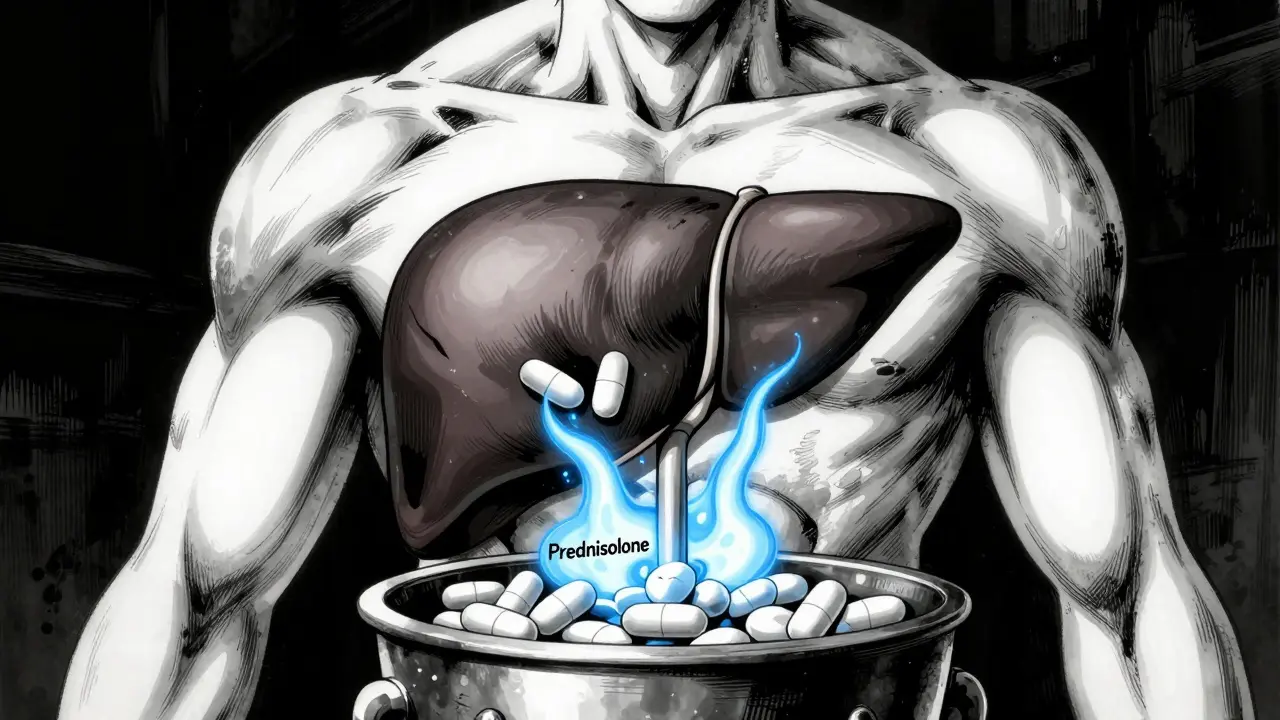
Prednisone is a prodrug, meaning it is inactive until your liver converts it into its active form, prednisolone. It was first synthesized in 1950 and approved by the FDA in 1955 under the brand name Deltasone. Because it requires hepatic conversion, patients with severe liver impairment may not get the full therapeutic effect.
Prednisolone is the active metabolite that directly suppresses inflammation and the immune system. Developed in 1948 and approved as Prelone in 1960, it does not require liver activation. This makes it the preferred choice for patients with cirrhosis or hepatitis, where conversion rates can drop below 30%.
In healthy individuals, the difference is negligible. A 2019 study in the *Journal of Clinical Pharmacology* showed prednisolone reaches blood levels 1.8 times faster, but the end result is nearly identical. For 95% of patients, 5mg of Prednisone equals 5mg of Prednisolone. If you have normal liver function, don’t stress over which one you’re taking. Focus instead on the dose and duration, which are the real drivers of side effects.
| Attribute | Prednisone | Prednisolone |
|---|---|---|
| Active Form? | No (Prodrug) | Yes |
| Liver Conversion Required? | Yes | No |
| Common Brand Names | Deltasone, Rayos | Prelone, Orapred ODT |
| Typical Cost (30 tabs, 5mg) | $4 - $20 | $4 - $20 |
| Best For Liver Disease? | No | Yes |
Short-Term Side Effects: The First Few Weeks
If you’re taking steroids for a short burst-say, 5 to 14 days for a severe allergic reaction or a sports injury-the side effects are usually annoying rather than dangerous. They peak while you’re on the drug and typically resolve within two weeks of stopping.
Here is what you can expect based on data from thousands of patient reviews and clinical trials:
- Insomnia and Restlessness: This is the number one complaint. Steroids mimic cortisol, your body’s natural “wake up” hormone. Taking your dose after 2 PM is like drinking three espressos at once. A Mayo Clinic trial found that restricting doses to before 2 PM reduced sleep disturbances from 68% to 29%. Stick to morning dosing.
- Increased Appetite and Weight Gain: You might find yourself craving sugar and carbs. This isn’t just psychological; steroids increase insulin resistance and sodium retention. Expect some water weight gain (fluid retention) and maybe a pound or two of fat if you’re not careful. Limit sodium to under 2,000mg daily to help with the bloating.
- Mood Swings and Anxiety: Known colloquially as “roid rage,” this affects about half of users. You might feel euphoric one hour and irritable the next. In high doses (above 40mg), some people experience paranoia or even psychosis. If you feel like you’re losing grip on reality, call your doctor immediately.
- Gastrointestinal Distress: Stomach upset, heartburn, and nausea are common. Prednisolone tends to cause slightly more GI distress (28% of patients) compared to Prednisone (24%). Doctors often prescribe a proton pump inhibitor (like omeprazole) if you’re on steroids for more than four weeks to prevent ulcers.
- Facial Swelling (“Moon Face”): Fluid retention often shows up in the face first. Parents of children on steroids frequently report this as the most distressing visual change. It looks dramatic but resolves quickly-usually within 10 days of stopping treatment.
These symptoms are transient. They are the cost of doing business for acute inflammation control. The key is management: eat low-sodium, high-protein meals, exercise lightly to combat fatigue, and prioritize sleep hygiene.

Long-Term Side Effects: The Hidden Dangers
When doctors say “long-term,” they mean anything longer than three months. This is where the risk profile shifts from “annoying” to “life-altering.” Chronic steroid use suppresses your adrenal glands, weakens your bones, and compromises your immune system.
According to the American College of Rheumatology guidelines, the risk of serious adverse events increases exponentially above 7.5mg daily equivalent for more than 3 weeks. Here are the major long-term risks you must monitor:
1. Osteoporosis and Fractures
Steroids interfere with calcium absorption and bone formation. After two years of use, 63% of patients develop osteoporosis. This isn’t just about feeling fragile; it’s about silent fractures in the spine and hips. If you’re on steroids long-term, you need bone density scans (DEXA scans) every year. Calcium and Vitamin D supplements are non-negotiable, and many patients require bisphosphonates (bone-strengthening drugs) to prevent breaks.
2. Adrenal Suppression
Your body naturally produces cortisol. When you flood it with synthetic steroids, your adrenal glands shut down production because they think the job is done. If you stop steroids abruptly, your body has no cortisol to handle stress. This leads to acute adrenal insufficiency, a life-threatening condition characterized by vomiting, low blood pressure, and shock. This is why you must taper off slowly over weeks or months, never quit cold turkey.
3. Eye Problems
Long-term use significantly raises the risk of cataracts and glaucoma. Data from the Autoimmune Registry shows 41% of long-term users required cataract surgery. Regular eye exams are essential. If you notice blurred vision or halos around lights, see an ophthalmologist immediately.
4. Metabolic Changes
Steroids cause insulin resistance, leading to steroid-induced diabetes. In a study of non-diabetics taking >20mg daily, 54% developed hyperglycemia (high blood sugar). You will need regular blood glucose monitoring. Additionally, steroids redistribute fat, leading to a characteristic pattern: thin arms and legs, but a round face and a fatty hump on the upper back (Cushing’s syndrome).
5. Immune Suppression
The whole point of the drug is to suppress the immune system, but this means you’re more susceptible to infections. Common colds can become pneumonia. Fungal infections thrive. Avoid crowds during flu season, wash your hands rigorously, and stay up to date on vaccines (though live vaccines are generally contraindicated while on high-dose steroids).
How to Manage Side Effects: A Practical Checklist
You can’t eliminate all side effects, but you can mitigate them. Here is a protocol used by rheumatologists and endocrinologists to keep patients safe:
- Take Your Dose Early: Always take your steroid in the morning, ideally with breakfast. This mimics your body’s natural cortisol rhythm and reduces insomnia.
- Monitor Blood Pressure and Sugar: Buy a home blood pressure cuff and a glucometer. Check your numbers weekly. Hypertension affects nearly half of long-term users.
- Eat Smart: High protein, low sodium, moderate potassium. Potassium helps counteract the hypokalemia (low potassium) caused by fluid retention. Aim for 4,700mg of potassium daily through foods like bananas, spinach, and avocados.
- Exercise for Bone Health: Weight-bearing exercises (walking, light jogging, resistance bands) preserve bone mineral density. A 2022 study showed a 22% higher preservation rate in patients who exercised regularly while on steroids.
- Never Miss a Dose, Never Double Up: Missing a dose can trigger an adrenal crisis. Doubling up causes toxicity. Set alarms. Use a pill organizer. Consistency is king.
- Taper Slowly: Work with your doctor to create a tapering schedule. Reducing by 5mg every week is common, but slower tapers are needed for long-term users. Listen to your body; joint pain and fatigue may return as you lower the dose.

Special Considerations: Children and Liver Patients
Children: Steroids are tricky in kids. Dr. Megan Clowry of Nationwide Children’s Hospital notes that growth velocity decreases by 1.2 cm/year for every 0.2mg/kg/day of prednisolone. Height must be monitored every three months. Pediatricians often prefer Prednisolone liquid formulations (like Pediapred) for precise dosing. The goal is always the lowest effective dose for the shortest time.
Liver Disease: As mentioned, Prednisone requires liver conversion. If you have Child-Pugh class C cirrhosis or severe hepatitis, your conversion rate drops by 67%. In these cases, doctors will prescribe Prednisolone directly to ensure you get the anti-inflammatory effect you need. Do not switch between the two without consulting your hepatologist.
When to Call the Doctor Immediately
While most side effects are manageable, some are red flags. Seek emergency care if you experience:
- Severe abdominal pain: Could indicate pancreatitis or a perforated ulcer.
- Black, tarry stools: Sign of gastrointestinal bleeding.
- Confusion or hallucinations: Signs of steroid psychosis.
- Signs of infection: Fever, chills, persistent cough. Your immune system may not mount a typical response, so infections can escalate quickly.
- Severe muscle weakness: Could indicate steroid myopathy, which affects the thighs and shoulders.
Is Prednisone stronger than Prednisolone?
No, they are equipotent. 5mg of Prednisone is considered clinically equivalent to 5mg of Prednisolone. The difference lies in bioavailability and liver conversion, not strength. Prednisolone acts slightly faster in the bloodstream, but the overall anti-inflammatory effect is the same for patients with healthy livers.
How long does it take for side effects to go away after stopping steroids?
Short-term side effects like insomnia, appetite changes, and mood swings typically resolve within 1 to 2 weeks after discontinuation. However, long-term effects like osteoporosis, adrenal suppression, and cataracts do not reverse quickly. Adrenal function may take months to fully recover, which is why tapering is essential.
Can I drink alcohol while taking Prednisone?
It is strongly advised to avoid or strictly limit alcohol. Both steroids and alcohol irritate the stomach lining, significantly increasing the risk of peptic ulcers and gastrointestinal bleeding. Alcohol also adds stress to the liver, which is already working hard to process the medication.
What is the safest way to taper off Prednisone?
There is no one-size-fits-all taper. It depends on your dose and duration. Generally, doctors reduce the dose by 5-10% every 1-2 weeks. For long-term users, the taper becomes much slower (e.g., reducing by 1mg every few weeks) as you approach physiological doses. Never stop abruptly; always follow your doctor’s specific schedule.
Does Prednisone cause permanent weight gain?
Most weight gained during short-term use is water retention and resolves after stopping. However, long-term use can lead to fat redistribution (Cushing’s syndrome) and increased appetite-driven fat gain. While some fat loss occurs after stopping, it may not fully reverse without dietary and exercise interventions. Muscle wasting from steroids also contributes to a weaker metabolism post-treatment.