Medication Safety at Home: How to Build a No-Mistake System That Actually Works
 Dec, 27 2025
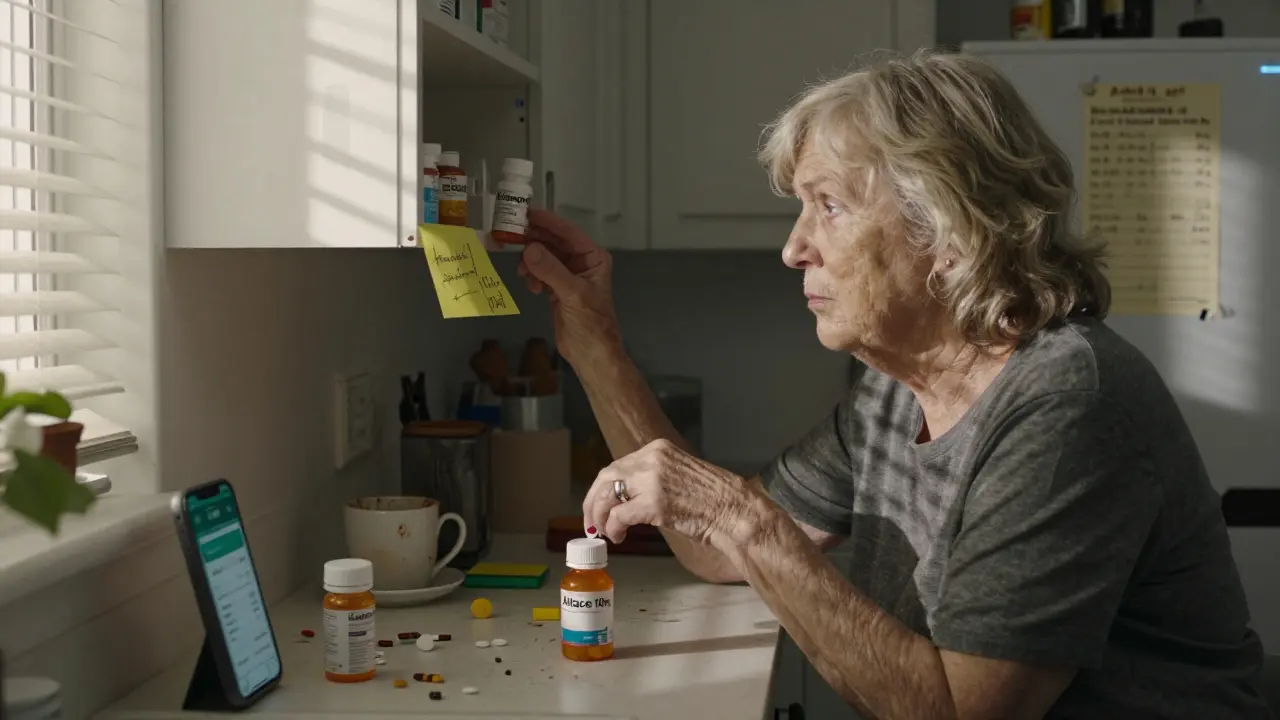
Every year, thousands of people end up in the hospital because they took the wrong pill, at the wrong time, or didn’t take it at all. It’s not because they’re careless-it’s because managing medications at home is messy, confusing, and often overwhelming. If you or someone you care for is on five, seven, or even ten different medications, you know how easy it is to mix things up. A missed dose. An extra pill. A supplement that clashes with a prescription. These aren’t just small mistakes-they’re dangerous. And the good news? You don’t have to live with that risk.
Start with the List That Saves Lives
The CDC says the single most important thing you can do for medication safety is keep an accurate, up-to-date list of everything you take. Not just prescriptions. Not just the ones your doctor knows about. Everything. That includes over-the-counter painkillers, sleep aids, herbal supplements, vitamins, and even eye drops or patches. Write it down. Or better yet, use a free app or printable template from your pharmacy. Keep it in your wallet, on your fridge, and share it with every healthcare provider you see.Why does this matter? Because when you’re rushed in an emergency room or during a home visit, no one can guess what you’re taking. A 78-year-old in Dunedin was admitted last year after collapsing-turns out she’d been taking two different blood pressure pills because she didn’t realize both were the same drug under different names. Her list was outdated. That’s preventable.
Don’t Rely on Pill Organizers Alone
You’ve probably seen those plastic boxes with compartments for morning, afternoon, evening, and night. They’re cheap-$5 to $25-and they look helpful. But here’s the truth: they’re not enough.They don’t remind you when to take your pills. They don’t tell you if you’ve already taken one. They don’t warn you if a new medication interacts with what you’re already on. And if your regimen changes-say, your doctor adds a new pill or removes one-you have to manually repack the whole thing. That’s a recipe for error.
These are fine for someone on a simple, stable routine. But if you’re juggling multiple medications, especially with memory issues or vision problems, you need more.
Smart Dispensers: The Real Game-Changer
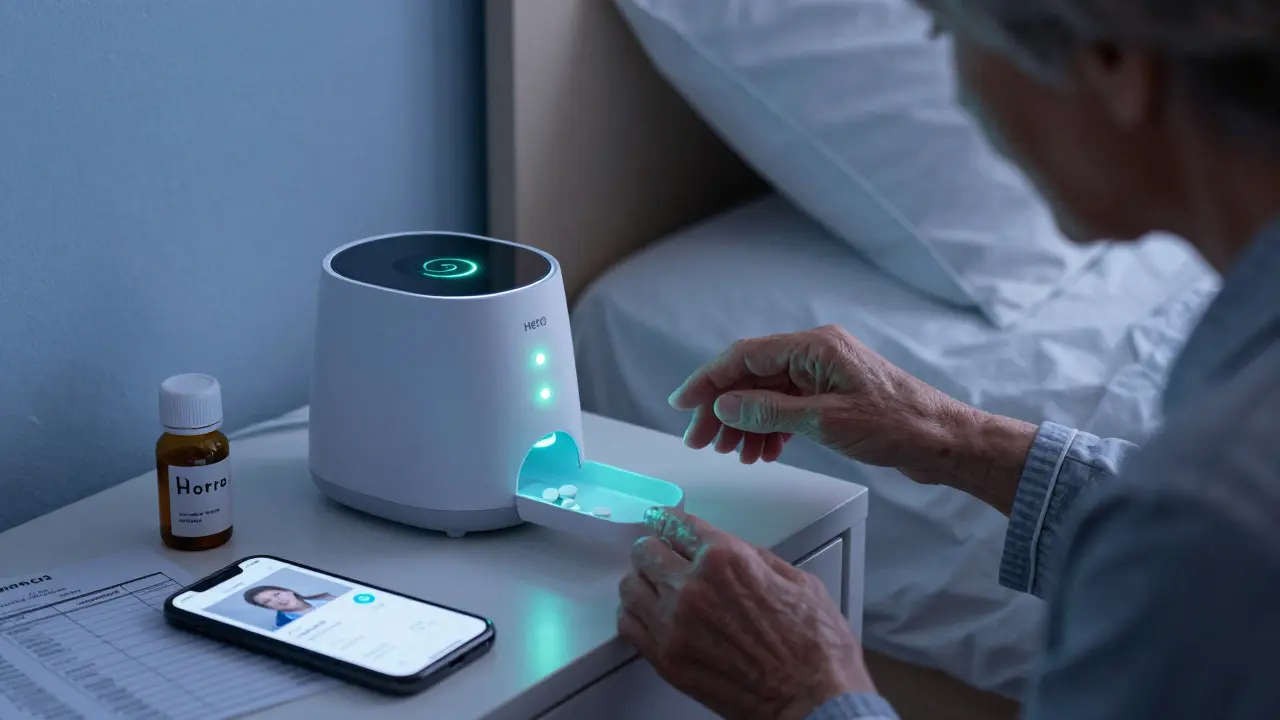
Smart dispensers like Hero, MedMinder, or similar models are the closest thing to a personal medication nurse. These devices hold your pills in pre-loaded trays and release them only at the right time. They beep, flash lights, and send alerts to your phone or a family member’s if you miss a dose.Research from the NIH shows that when used correctly, these devices boost adherence to 98%. That’s not just a number-it means fewer hospital visits, fewer falls, fewer confused mornings. One user in Auckland reported her mother’s missed doses dropped from 30% to under 5% after switching to a Hero dispenser. The catch? Setup takes time. You’ll need help-maybe from a pharmacist, home care worker, or tech-savvy relative-to load the pills correctly and connect it to Wi-Fi.
Costs range from $150 to $300 upfront, plus $15 to $50 a month for service. It’s not cheap. But compared to the $37.6 billion annually spent in the U.S. on preventable medication errors, it’s a bargain. And in New Zealand, some community health programs and aged care providers now offer subsidies or rentals for seniors on low incomes.
Digital Platforms That Do the Heavy Lifting
If you or your loved one sees a home health nurse or pharmacist regularly, ask about digital platforms like HomeMeds. Launched in 2024 and set to get even smarter in Fall 2025, this system lets healthcare workers scan your pill bottles with a smartphone camera. It auto-fills your medication list, flags potential interactions, and spots duplicates or outdated prescriptions-all in half the time it used to take.It’s not designed for daily use by patients. It’s designed for professionals who visit your home. But here’s the win: if your care team uses it, your list stays accurate, your meds are reviewed regularly, and you’re less likely to be prescribed something that clashes with what you’re already taking.
And it’s not just for seniors. Anyone on complex regimens-like someone managing diabetes, heart disease, and depression with multiple daily pills-can benefit from having a professional double-check everything every few months.
What About As-Needed Medications?
Here’s where most systems stumble. What about your painkiller you only take when your knee flares up? Or your nitroglycerin tablet you keep in your pocket for chest discomfort? Or your sleep aid you use only on bad nights?Smart dispensers can’t handle these well. They’re built for scheduled doses. So you still need a clear, visible system for as-needed meds. Keep them in a separate, labeled container. Write down exactly when to use them: “Take only if pain is 7/10 or worse.” “Don’t take within 4 hours of your blood pressure pill.” Stick that note right on the bottle.
And never mix as-needed meds with your daily pills. That’s how people accidentally take two doses in one day.
Human Help Isn’t Optional
Technology helps. But it doesn’t replace human oversight. A 2023 study from the Joint Commission found that systems with both smart tech and regular check-ins from a pharmacist or nurse had the best outcomes. The NIH study showed 98% adherence-but only when a pharmacist reviewed the regimen every 30 to 90 days.Ask your GP or community pharmacy if they offer a free or low-cost medication review. In New Zealand, Pharmac and some district health boards support these services for older adults. Even one review a year can catch a dangerous interaction, a redundant prescription, or a pill that’s no longer needed.
And if you’re a caregiver, don’t wait for a crisis. Set a monthly reminder to sit down with the person you’re helping. Go through the list. Check the bottles. Ask: “Are you still taking this?” “Do you know why?” “Has anything changed?”

What You Need to Make It Work
Setting up a no-mistake system isn’t a one-time task. It’s a habit. Here’s what you need:- A complete, current medication list (include dosages and times)
- A smart dispenser (if on multiple daily meds)
- A clear system for as-needed meds (separate container + written instructions)
- Wi-Fi and smartphone access (for smart devices and alerts)
- Regular check-ins-every 30 to 90 days-with a pharmacist or nurse
- Someone you trust who knows your meds (in case you can’t answer a question)
Don’t try to do it all at once. Start with the list. Then add one tool. Then schedule one review. Small steps build safety.
The Future Is Here-But It’s Not Perfect
New tech is coming fast. By 2027, some dispensers will use AI to warn you if a new prescription might clash with your current meds. By 2028, some may use fingerprint or voice recognition to make sure the right person is taking the right pill. Voice-activated systems are being tested for people with vision loss.But here’s the reality: tech won’t fix everything. If someone doesn’t understand why they’re taking a pill, or if they’re afraid to ask questions, or if they can’t afford the device, the system fails. That’s why education and access matter just as much as gadgets.
And if you’re on a tight budget? Don’t give up. Talk to your pharmacist. Ask about free or subsidized programs. Many community health centers in Dunedin and across New Zealand offer medication safety support at no cost. You don’t need the fanciest gadget to stay safe. You just need a plan, a list, and someone to help you stick to it.
What’s the most common mistake people make with home medications?
The biggest mistake is assuming they know what they’re taking. Many people don’t know the names, doses, or reasons for their meds. They mix up similar-looking bottles. They stop taking something because they feel better. They add a new supplement without telling their doctor. That’s why a written, updated list is the first and most critical step.
Can I use a regular pill organizer if I only take a few pills?
Maybe-but only if your regimen is simple and never changes. If you take one pill in the morning and one at night, and your doctor hasn’t changed your meds in over a year, a basic organizer might be fine. But if you’ve ever had a new prescription added or an old one removed, you’re at risk. Even small changes can lead to errors. A smart dispenser or digital reminder is safer long-term.
Are smart dispensers hard to set up?
They can be, especially if you’re not tech-savvy. Most require Wi-Fi, smartphone pairing, and careful loading of pills into the right compartments. That’s why it’s best to get help-ask your pharmacist, a family member, or a home care worker. Setup usually takes 2 to 4 hours. But once it’s done, it runs on its own. The time investment pays off in fewer mistakes and less stress.
What if I can’t afford a smart dispenser?
You still have options. Start with a written medication list and a calendar reminder on your phone. Ask your pharmacist if they offer free medication reviews. Some community health programs in New Zealand provide subsidized or loaned dispensers for seniors on low incomes. Don’t assume you can’t get help-just ask. Many services are available but underused.
How often should I review my meds?
At least once every three months. Even if nothing seems to have changed, your body changes. Your kidneys, liver, and metabolism slow with age, which can affect how your body handles meds. A pharmacist can spot duplicates, interactions, or pills you no longer need. Many people realize they’re taking something they were told to stop years ago. Regular reviews catch those quietly.
Can medication errors cause falls or confusion?
Yes-often. The Partners in Care Foundation found that 27% of older adults experience falls, dizziness, or confusion linked to their medications. Common culprits include sedatives, blood pressure drugs, and painkillers taken in excess. These effects aren’t always obvious until it’s too late. A medication review can reduce these risks by identifying and adjusting problematic drugs.
Next Steps: What to Do Today
You don’t need to fix everything right now. But you can start today:- Grab every pill bottle, supplement container, and patch in your medicine cabinet.
- Write down the name, dose, time, and reason for each one.
- Call your pharmacist or GP and ask: “Can we do a full medication review?”
- If you’re on more than four daily meds, ask about smart dispensers-see if your health provider offers one for rent or subsidy.
- Put your list on your fridge and share it with one trusted person.
Medication safety isn’t about perfection. It’s about reducing risk. One small step today can mean avoiding a hospital trip tomorrow.
Payton Daily
December 29, 2025 AT 11:35Look, I get it-people forget pills. But let’s be real: if you can’t remember to take your meds, maybe you shouldn’t be living alone. I’ve seen grandmas on five meds, no smart box, no app, just a cereal box with sticky notes. And they’re fine. It’s not the system-it’s the person. Stop outsourcing responsibility to gadgets.
Kelsey Youmans
December 30, 2025 AT 18:24Thank you for this thoughtful and meticulously researched piece. The emphasis on human oversight alongside technological tools is both compassionate and clinically sound. I have shared this with our local senior services coordinator, as we are currently evaluating similar initiatives for our community outreach program. The data cited is both compelling and actionable.
Sydney Lee
December 31, 2025 AT 18:09Let me be blunt: the entire premise of this article is dangerously naive. You think a $300 box is going to fix a society that’s medicated its way into oblivion? We’ve turned healthcare into a consumer product-pills for boredom, pills for sadness, pills for forgetting you took your last pill. The real problem? We don’t teach people to think anymore. We just hand them a dispenser and call it ‘safety.’
And don’t get me started on ‘Pharmac’ and ‘district health boards.’ You’re trusting bureaucrats with your life because you’re too lazy to read the label? Pathetic.
My mother took six pills a day for 12 years. No app. No Wi-Fi. Just a notebook, a clock, and a will to live. You want safety? Build character. Not convenience.
oluwarotimi w alaka
January 1, 2026 AT 23:06USA always wanna sell you gadgets. In Nigeria we use our eyes and our hands. My aunty take her medicine every morning after she pray. She no need phone or box. You people too soft. Too much tech make you forget how to be human. Even the pills you take now come from China or India. Who really know what inside? Maybe the whole system is a lie.
Debra Cagwin
January 3, 2026 AT 19:15This is such an important conversation-and you’ve broken it down so kindly. If you’re reading this and feeling overwhelmed, please know: you’re not alone. Start with one step. Just one. Write down one medication. Call your pharmacist. That’s enough for today. Progress, not perfection. You’ve got this. 💪❤️
Hakim Bachiri
January 4, 2026 AT 09:23Smart dispensers? Please. The government’s pushing this because they don’t want to pay for ER visits. It’s a cost-cutting scam disguised as ‘safety.’ And don’t tell me about ‘subsidies’-those are just loopholes so they can charge you later. I’ve seen it happen. They give you the box… then raise your premiums. Classic. And don’t even get me started on ‘HomeMeds’-that’s just another data harvest tool. Your pills, your habits, your health-sold to insurers. Wake up.
Celia McTighe
January 5, 2026 AT 11:30Love this so much!! 🙌 I’m a nurse and I see this every single day. The list? The fridge? The trusted person? That’s the magic combo. No fancy tech needed. I had a patient last week-84, blind, lives alone-she uses a Braille labeler and her granddaughter calls her every night at 7 to remind her. That’s love. That’s safety. Tech helps, but connection saves lives. ❤️
Ryan Touhill
January 7, 2026 AT 11:15Interesting. But I must point out a critical oversight: none of these systems account for the psychological dependency on medication. Many patients take pills not because they’re medically necessary, but because they’ve been conditioned to believe they need them. The real solution isn’t better boxes-it’s better education. And better doctors who aren’t incentivized to prescribe. The pharmaceutical industry is the elephant in the room, and no one wants to talk about it. But I will.
Ask yourself: why do so many people take statins, antidepressants, and sleep aids simultaneously? Is it medicine-or corporate marketing? The smart dispenser doesn’t ask that question. And that’s the problem.
Teresa Marzo Lostalé
January 8, 2026 AT 02:27My grandma used to keep her pills in a mason jar with a Sharpie on the lid. 'Blue for morning, red for night.' No app. No Wi-Fi. Just her and her memory. She lived to 97. Maybe the answer isn’t tech-it’s routine, and love.
ANA MARIE VALENZUELA
January 9, 2026 AT 11:46Everyone’s acting like this is some groundbreaking revelation. Newsflash: this is basic. If you can’t manage your meds, you’re not ready for independent living. Stop romanticizing 'simple lists' and 'family help.' This is a failure of personal responsibility-and you’re letting it be someone else’s problem. The system isn’t broken. You are.
Bradly Draper
January 10, 2026 AT 04:11I just started helping my dad with his meds. I didn’t realize how many he was taking until I counted them. Now I make a list every Sunday. It’s not perfect, but it’s better than before. Thanks for the reminder that even small steps matter.