Manufacturing Challenges for Biosimilars: Why Copying Biologics Is Far Harder Than Generics
 Jan, 12 2026
When you think of a generic drug, you probably imagine a small pill that looks different but works just like the brand-name version. That’s easy to understand. But what if the drug isn’t a pill at all? What if it’s a living molecule - a complex protein made inside living cells, with sugars attached in precise patterns, folded just right, and shaped like a delicate snowflake? That’s a biologic. And copying it? That’s not making a generic. That’s making a biosimilar. And the manufacturing challenges are orders of magnitude harder.
The Big Difference: Chemical vs. Biological
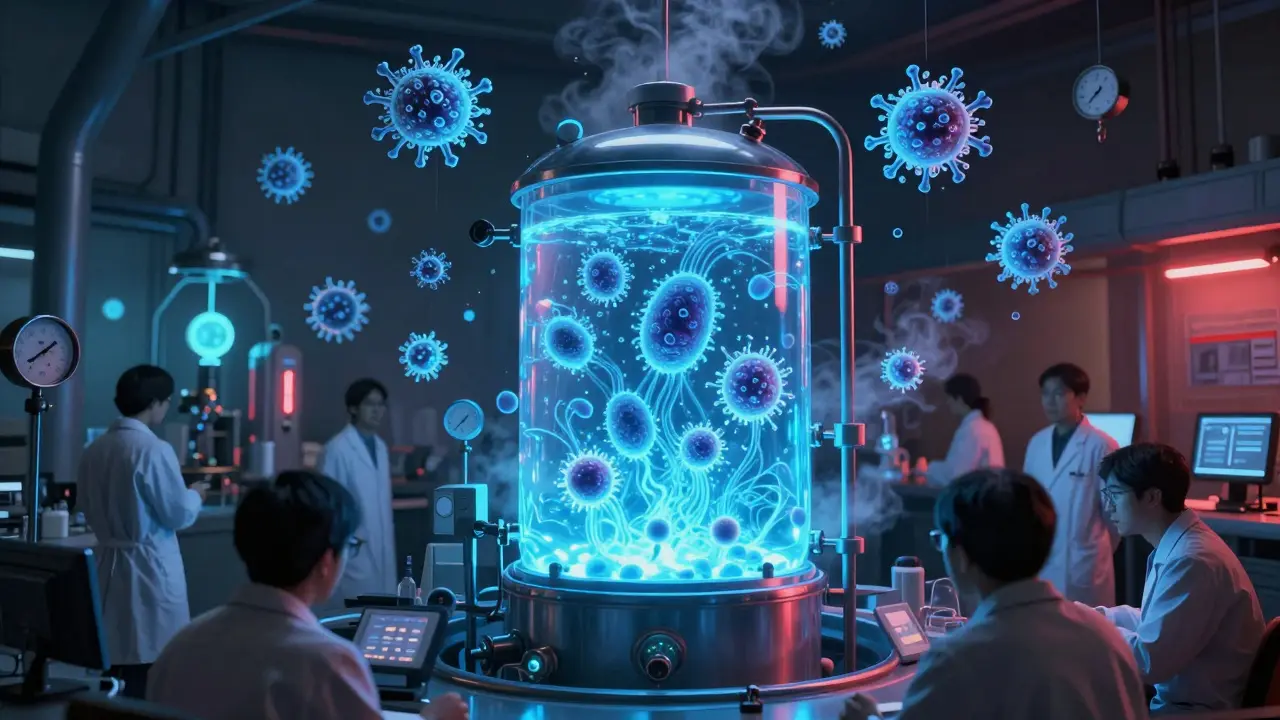
Generics are made by mixing chemicals in a lab. The formula is simple: replicate the exact molecular structure. If you get the atoms in the right order, you get the same drug. It’s like baking a cake from a recipe you found online. You use the same flour, sugar, and eggs - you get the same cake. Biosimilars? They’re not made that way. They’re grown. Inside living cells - usually Chinese hamster ovary cells or yeast - in giant tanks called bioreactors. These cells are like tiny factories. They take in nutrients, breathe oxygen, and spit out a protein that’s supposed to match a reference biologic - like Humira, Enbrel, or Remicade. But here’s the catch: no two batches are ever identical. Even the same manufacturer, using the same process, can’t make two batches that are 100% the same. That’s biology. It’s messy. It’s variable. And that’s why biosimilars can’t be called generics. They’re highly similar, not identical.Process Defines the Product
This is the golden rule of biosimilar manufacturing: the process defines the product. If you change the temperature of the bioreactor by half a degree, or tweak the pH of the nutrient broth, or swap out a single ingredient in the feed, you change the final molecule. Not just a little. Potentially enough to affect how the drug works in the body. Take glycosylation. That’s the fancy word for the sugar chains attached to the protein. These sugars aren’t just decoration. They control how long the drug lasts in your bloodstream, how well it binds to its target, and whether your immune system reacts to it. A small change in glycosylation can turn a safe, effective drug into one that’s cleared too fast - or worse, triggers an immune response. But here’s the kicker: biosimilar makers don’t know how the original drug was made. The originator company guards its process like a trade secret. So biosimilar developers have to reverse-engineer a molecule they can’t fully see. It’s like trying to recreate a Picasso painting by only having a blurry photo - and not knowing what brushes, paints, or techniques were used.Scale-Up: Bigger Tanks, Bigger Problems
Getting a biosimilar to work in a 10-liter lab bioreactor is hard. Getting it to work in a 2,000-liter commercial tank? That’s a whole new level of difficulty. In small tanks, everything mixes evenly. Oxygen flows smoothly. Temperature stays constant. In big tanks? Not so much. The center might be warmer than the edges. The bottom might get more nutrients than the top. Cells in different parts of the tank grow differently. That means the protein they produce isn’t uniform. One batch might have 15% more of a certain glycan variant than another. That’s a red flag for regulators. And it’s not just about size. The equipment matters too. Mixing impellers, spargers (for oxygen), and sensors have to be perfectly calibrated. Many smaller manufacturers don’t have the budget for high-end, scalable systems. That’s why only big players - or those with deep pockets - can really compete.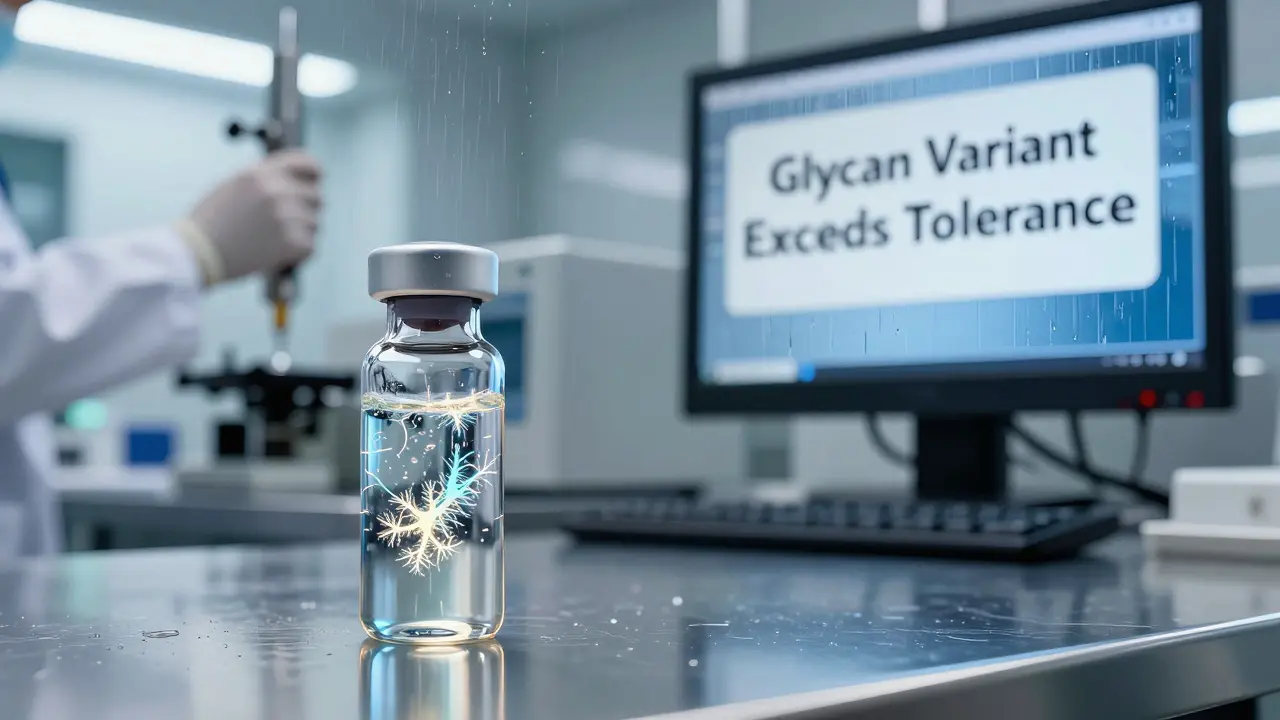
The Cold Chain Nightmare
Biologics are fragile. They don’t like heat. They don’t like shaking. They don’t like being left out of the fridge. Even a short break in the cold chain - during transport, storage, or filling - can break down the protein structure. That’s not just a quality issue. It’s a safety issue. Filling vials or syringes with a biosimilar is like threading a needle while riding a rollercoaster. One misstep, one leaky bag, one temperature spike, and an entire batch worth millions of dollars is ruined. And unlike pills, you can’t just re-manufacture it overnight. These processes take weeks.Batch-to-Batch Consistency: The Holy Grail
Chemical drugs have near-perfect batch consistency. Two tablets from different batches? Same weight, same active ingredient, same dissolution rate. Biosimilars? Each batch is a unique biological event. The goal isn’t perfection - it’s consistency within tight limits. Regulators demand that every batch stays within a narrow window of critical quality attributes (CQAs): purity, potency, structure, glycosylation, aggregation levels, and more. To do that, manufacturers need hundreds of analytical tests. Mass spectrometry. Chromatography. NMR. Cell-based assays. These aren’t basic lab tools. They’re million-dollar machines run by PhDs. And they have to be used consistently, day after day, batch after batch. One lab’s data doesn’t match another’s? That’s a regulatory nightmare.Regulatory Hurdles: A Moving Target
Getting a biosimilar approved isn’t like submitting a generic application. It’s a marathon. The FDA, EMA, and other agencies require a mountain of data:- Extensive analytical comparisons - hundreds of tests showing the biosimilar matches the reference product in structure and function
- Preclinical studies - animal tests to show similar pharmacokinetics and toxicity
- Clinical trials - usually a phase 3 study showing no meaningful difference in safety or effectiveness
Pankaj Singh
January 13, 2026 AT 18:52This is why I hate when people call biosimilars 'generics'-it’s not just inaccurate, it’s dangerously misleading. The regulatory agencies know this, but the public? They think it’s just a cheaper pill. No. It’s a biological masterpiece that takes years, millions, and a team of PhDs to even get close. And even then, it’s never perfect. Stop oversimplifying science.
jefferson fernandes
January 13, 2026 AT 23:08Let me just say-this is one of the clearest explanations I’ve ever read on biosimilars. Seriously. The Picasso analogy? Brilliant. The cold chain nightmare? Absolutely real. I’ve seen labs lose entire batches because someone left a vial on a loading dock for 45 minutes. It’s not just money-it’s patient safety. Kudos to the teams who make this work.
Trevor Davis
January 14, 2026 AT 07:02Wow. Just… wow. I work in pharma logistics, and let me tell you-this article nailed it. The glycosylation part? That’s the silent killer. One day you’re fine, the next, your batch has 8% more sialic acid and the FDA pulls it. No warning. No second chance. It’s like trying to bake a soufflé in a hurricane. And yet, people act like this is easy. It’s not. It’s art. And science. And pure, unadulterated hell.
Acacia Hendrix
January 15, 2026 AT 17:32One must acknowledge the ontological epistemological dissonance inherent in the biosimilar paradigm. The reference biologic is not merely a molecular entity-it is a phenomenological construct, emergent from a proprietary cellular microenvironment that cannot be fully replicated due to the Heisenbergian uncertainty of post-translational modification dynamics. To presume equivalence is to commit a category error of the highest order.
Rosalee Vanness
January 17, 2026 AT 01:55I’ve spent the last decade working in bioprocessing, and I can tell you-this isn’t just technical. It’s emotional. Every time you run a batch, you’re holding your breath. You’ve poured your soul into this. You’ve slept in the lab. You’ve missed birthdays. You’ve begged your team not to change the filter. And then, when the analytics come back? You’re not hoping for perfection-you’re hoping for ‘within spec.’ That’s the quiet victory. That’s the real win. And no one outside this world ever sees it. But I see you. And I honor you.
Scottie Baker
January 17, 2026 AT 18:28Who the hell cares? It’s still cheaper than the brand. If the FDA says it’s safe, then it’s safe. Stop overcomplicating everything. People need medicine, not a PhD lecture. I don’t care if it’s made by robots or unicorns-just give me the damn drug.
Anny Kaettano
January 18, 2026 AT 14:41This is why I love this field. Every single step-from the cell line to the final vial-is a dance between chaos and control. And the fact that we can even get close to matching these molecules? That’s human ingenuity at its finest. We’re not just making drugs-we’re rewriting the rules of biology. And yeah, it’s hard. But we’re doing it. Together.
Jesse Ibarra
January 20, 2026 AT 12:43It’s not just hard-it’s immoral. Big Pharma hides their processes like they’re protecting state secrets. Meanwhile, patients die waiting for affordable drugs. And now, even the biosimilar makers are playing the same game? Who’s really protecting the public? Not you. Not them. Not anyone. Just greed, wrapped in a lab coat.
Randall Little
January 22, 2026 AT 12:00So… if biosimilars aren’t identical, and we can’t reverse-engineer the process, how do we even know they work the same? Are we just… guessing? Because if the answer is ‘we test it in humans,’ then that’s not science-that’s roulette with people’s lives. And someone’s gonna lose.
John Tran
January 22, 2026 AT 22:13you know what this reminds me of? like… imagine you’re trying to recreate your grandma’s lasagna but you only have a blurry photo of the plate and you don’t know if she used fresh basil or dried, if the ricotta was homemade or store bought, if the noodles were boiled for 8 minutes or 10… and then you have to make 1000 plates and every single one has to taste exactly the same… and if one tastes off, the whole batch gets thrown out and you lose $2 million… and your grandma’s ghost is watching you… and she’s disappointed… that’s biosimilars. and i’m crying now.
Robin Williams
January 24, 2026 AT 00:18it’s funny how we think of medicine as this clean, precise science-like math with syringes. but biology? it’s messy. it’s alive. it’s breathing. it’s changing. and we’re trying to copy a living thing with machines that don’t understand what life even means. maybe the real problem isn’t the science-it’s that we keep trying to control the uncontrollable.
Kimberly Mitchell
January 25, 2026 AT 03:59Why is this even a thing? If you can’t replicate it exactly, why are we spending billions? Just let the originators keep their patents. Let them make the money. Patients will pay. It’s not that hard. This whole biosimilar mess is just corporate theater.
Angel Molano
January 25, 2026 AT 21:15Stop pretending this is hard. It’s just expensive because they want it to be. Fix the regulations. End the secrecy. Make it simple. Done.
Vinaypriy Wane
January 26, 2026 AT 03:38I’ve seen this in India too-small labs trying to make biosimilars with outdated equipment, and then the batches fail. It’s heartbreaking. But also… hopeful. We’re learning. Slowly. With sweat, tears, and a lot of coffee. This isn’t just science. It’s dignity. And we’re fighting for it.