In Vivo vs In Vitro Bioequivalence Testing: When Each Is Used
 Nov, 29 2025
When a generic drug hits the shelf, you might assume it’s just a cheaper copy of the brand-name version. But behind that simple label is a complex science designed to prove it works the same way in your body. That’s where bioequivalence testing comes in. It’s not about whether the pill looks the same - it’s about whether your body absorbs and uses it the same way. And there are two main ways to prove that: in vivo and in vitro testing. One happens inside living people. The other happens in a lab dish. Knowing which one is used - and why - can help you understand why some generics are approved faster, cheaper, or with more scrutiny.
What In Vivo Bioequivalence Testing Really Means
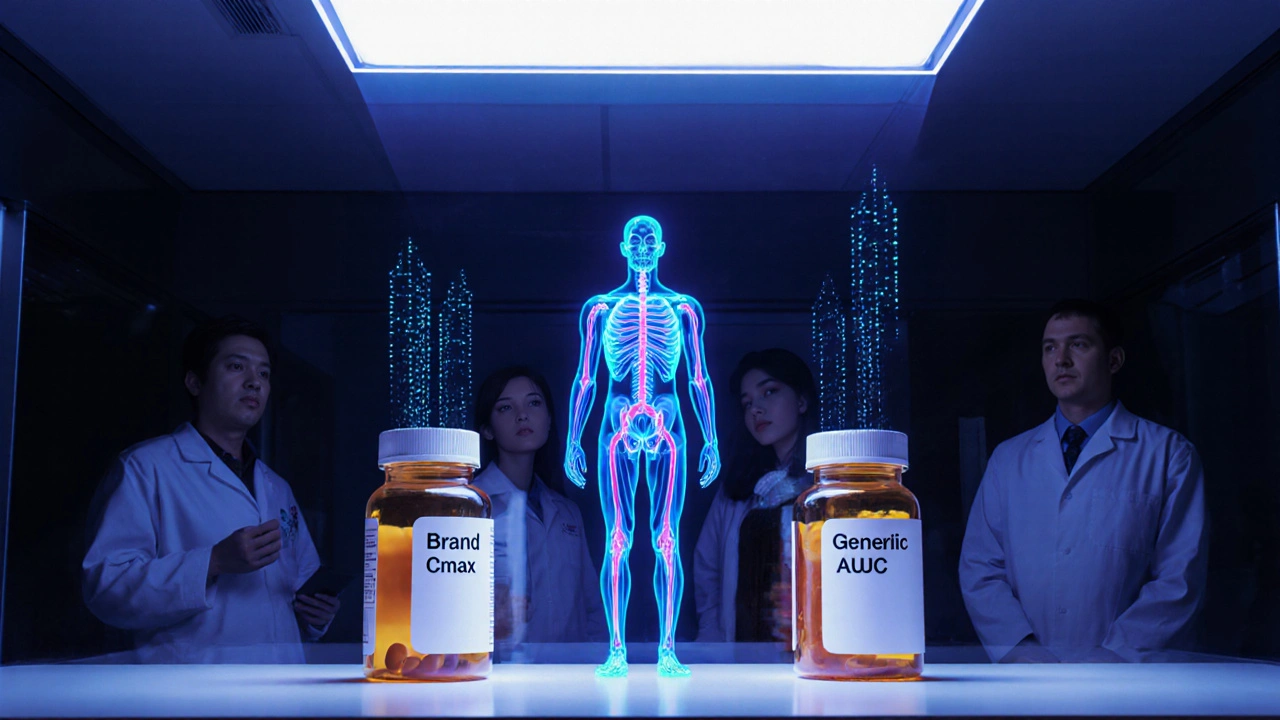
In vivo bioequivalence testing means testing the drug in real human beings. It’s the gold standard. Here’s how it works: 24 healthy volunteers take the brand-name drug and the generic version, each in a separate period, after an overnight fast. Blood samples are taken over 24 to 72 hours to measure how much of the drug enters the bloodstream and how fast. Two key numbers are tracked: Cmax (the highest concentration reached) and AUC (how much total drug is absorbed over time). For the generic to be approved, the 90% confidence interval for both values must fall between 80% and 125% of the brand-name drug. That’s the FDA’s rule. For drugs with a narrow therapeutic index - like warfarin or levothyroxine - the window tightens to 90% to 111.11% because even small differences can be dangerous.This method is direct. It shows what your body actually does with the drug. But it’s expensive. A single study can cost between $500,000 and $1 million. It takes months to set up - recruiting people, getting ethics board approval, running the clinical site, collecting and analyzing data. And it requires human subjects. That’s why regulators and manufacturers want to avoid it when possible.
What In Vitro Bioequivalence Testing Actually Is
In vitro means "in glass." No people. No blood draws. Just lab equipment. This testing looks at the physical and chemical properties of the drug - how it dissolves, how big the particles are, how evenly the dose is delivered. For a pill, that means dissolving it in fluids that mimic stomach and intestinal conditions at different pH levels. For an inhaler, it’s measuring droplet size with laser diffraction or using cascade impactors to see how much drug lands in the lungs. For a nasal spray, it’s testing how much comes out with each puff and whether it stays stable over the life of the container.The big advantage? Control. In a lab, you can repeat the test hundreds of times. The variation is low - often under 5% - compared to 10-20% in human studies where metabolism, diet, and even stress can change results. In vitro testing is faster too. A well-developed method can be completed in 2 to 4 weeks. And it costs a fraction: $50,000 to $150,000. That’s why companies love it when they can use it.

When In Vitro Testing Is Enough - And When It’s Not
Not every drug can be judged by a lab test. The FDA and EMA have clear guidelines on when in vitro methods are acceptable. The most common case is for BCS Class I drugs - those that are highly soluble and highly permeable. These are the easiest to absorb. For these, over 78% of biowaivers (requests to skip human testing) were approved in 2021. Think common drugs like ibuprofen, metoprolol, or ciprofloxacin. If the generic dissolves just like the brand in multiple pH conditions - and the particle size matches - regulators accept that the body will handle it the same way.Another strong case is for locally acting drugs. If a drug is meant to work in the nose, lungs, or skin - and doesn’t need to enter the bloodstream - then measuring plasma levels makes no sense. For example, inhaled corticosteroids like budesonide. In 2022, the FDA approved the first generic budesonide nasal spray based solely on in vitro data. That was a turning point. It showed regulators are willing to trust lab results when they’re tied to real-world performance.
But here’s where it gets tricky. In vitro testing fails for drugs with complex absorption patterns. If a drug only absorbs in a narrow part of the intestine, or if food changes how it’s absorbed, or if it’s metabolized differently by gut enzymes - then a lab test won’t catch it. That’s why drugs like levothyroxine or cyclosporine still require in vivo testing. Even if the dissolution looks perfect, the body might handle it differently. A 2018 study found in vitro methods predicted bioequivalence correctly for 92% of BCS Class I drugs, but only 65% of BCS Class III drugs (low solubility, high permeability). That gap matters.
Why Some Companies Push for In Vitro - And Why Regulators Are Listening
Cost and speed aren’t the only reasons. There’s also reliability. Human studies are messy. One volunteer might have a stomach bug. Another might have taken coffee before the test. These things skew results. In vitro methods remove that noise. Plus, they’re more precise. Dissolution profiles can be matched down to the last percentage point. That’s why experts like Dr. Gordon Amidon, who helped create the Biopharmaceutics Classification System, say in vitro tests can sometimes be more accurate than human studies for simple oral drugs.Regulators are responding. The FDA’s 2020-2025 Strategic Plan explicitly says it wants to expand in vitro methods. The European Medicines Agency approved 214 biowaivers in 2022 - up 27% from 2020. The International Council for Harmonisation (ICH) now has consistent rules across the U.S., EU, and Japan for BCS Class I drugs. That’s global alignment.
But it’s not a free pass. Developing a reliable in vitro method takes time - 4 to 12 weeks - and serious expertise. You need specialized equipment like USP Apparatus 4 flow-through cells, which cost $85,000 to $120,000. You need scientists trained in biopharmaceutics, analytical chemistry, and regulatory science. And you need to prove your method is predictive. That’s where IVIVC - in vitro-in vivo correlation - comes in. If you can show a strong statistical link (r² > 0.95) between your lab results and real human data, regulators are far more likely to approve it. That’s been done successfully with modified-release theophylline and other complex products.

The Real-World Trade-Offs: When In Vitro Backfires
It sounds perfect, right? Cheaper, faster, no humans. But there’s a catch. Sometimes, in vitro testing misses what the body does.A regulatory affairs manager from Viatris shared a cautionary story on LinkedIn in early 2023. Their topical antifungal cream was approved based on in vitro data. But after it hit the market, patients reported it wasn’t working as well as the brand. A post-marketing in vivo study was launched. It showed real differences in skin absorption. The company had to spend $850,000 and delay expansion for 11 months. The in vitro test passed - but it didn’t predict what happened in real skin.
That’s why the FDA still requires in vivo testing for many complex products. Nasal sprays, for example. Even though 65% of metered-dose inhalers are approved via in vitro methods, 63% of nasal spray applications in 2022 still needed both in vitro and in vivo data. Why? Because the nose is complicated. Mucus, airflow, deposition patterns - all vary between people. A lab test can’t fully capture that.
What’s Next for Bioequivalence Testing?
The future isn’t just in vitro or in vivo. It’s a blend. The FDA is already using physiologically based pharmacokinetic (PBPK) modeling - computer simulations that predict how a drug behaves in the body based on chemistry, anatomy, and physiology. In 2023, the agency approved a modified-release generic using PBPK modeling instead of human data. That’s a big deal.The Generic Drug User Fee Amendments (GDUFA) IV plan (2023-2027) promises two new guidances on in vitro testing for complex products by December 2025. The goal? To make in vitro the default for most generics - except the high-risk ones.
So what does this mean for you? If you’re taking a generic version of a common painkiller or antibiotic, it’s likely the company skipped human testing and used in vitro methods. That’s safe. It’s been proven. But if you’re on a narrow-therapeutic-index drug - like thyroid medicine or blood thinners - the regulator still requires human data. That’s not because they don’t trust science. It’s because your health depends on precision.
For the industry, the message is clear: invest in better lab methods. For patients, the message is simple: generics work. But the science behind them is smarter than ever.
Can in vitro testing replace in vivo testing completely?
No, not yet. In vitro testing works well for simple, highly soluble drugs (BCS Class I) and locally acting products like inhalers or nasal sprays. But for drugs with narrow therapeutic windows, food-dependent absorption, or complex release patterns, in vivo testing is still required. Regulators use in vitro methods when they’re proven to reliably predict how the body will respond. For now, in vivo remains the safety net for high-risk drugs.
Why is in vitro testing cheaper than in vivo?
In vitro testing doesn’t need human volunteers, clinical sites, or long-term monitoring. It’s done in a lab with standardized equipment. Costs are mostly for materials, calibration, and skilled personnel. In vivo studies require recruiting 24+ healthy people, paying for medical staff, running a certified clinical unit, collecting blood samples over days, and analyzing pharmacokinetic data - all under strict regulatory rules. That adds up fast: $500,000 to $1 million versus $50,000 to $150,000.
What’s the difference between BCS Class I and Class III drugs?
The Biopharmaceutics Classification System (BCS) groups drugs by solubility and permeability. Class I drugs are highly soluble and highly permeable - they’re easily absorbed, no matter the formulation. That’s why in vitro testing works for them. Class III drugs are highly permeable but poorly soluble - meaning they might dissolve slowly in the gut. Even if they’re absorbed well, the rate matters. In vitro tests often can’t predict how well a generic will dissolve under real stomach conditions, so in vivo testing is usually required.
How do regulators decide which method to require?
Regulators look at the drug’s properties: Is it highly soluble? Does it absorb quickly? Is it used locally or systemically? Is it a narrow-therapeutic-index drug? They also check if there’s a validated in vitro-in vivo correlation (IVIVC). If the lab test has been proven to match human results in multiple studies, they’ll allow it. Otherwise, they default to in vivo testing. The goal is always to use the most sensitive, accurate, and reproducible method available.
Is in vitro testing less reliable than in vivo?
Not necessarily - it depends on the drug. For simple oral drugs, in vitro testing is often more consistent and precise because it removes human variability. But for complex drugs, in vivo testing is more reliable because it captures the full biological picture: stomach acid, enzymes, food effects, gut motility. The problem isn’t the method - it’s whether the method matches the drug’s behavior. A good in vitro test is more reliable than a poorly run in vivo study. But a bad in vitro test can miss real differences.
Peter Axelberg
November 29, 2025 AT 14:41Man, I never realized how much science goes into generics. I just thought they were cheaper pills with different colors. Turns out, it’s not just about matching the pill - it’s about making sure your body treats it like the real thing. The whole in vivo vs in vitro thing is wild. One’s got people fasting, getting blood drawn for days. The other’s just a lab machine dissolving pills in fake stomach juice. And somehow, both are legal? I’m impressed. The FDA’s got rules for everything - 80% to 125% for most drugs, even tighter for warfarin. That’s not a guess, that’s a math problem with lives on the line.
And then there’s the BCS classes. I had to look that up. Class I drugs? Soluble and permeable - easy. Class III? Permeable but stubbornly insoluble. That’s where the lab tests start to glitch. You can have a perfect dissolution profile, but if your gut’s got a bad day, the generic might as well be chalk. No wonder they still need human trials for thyroid meds and blood thinners. I’d rather have the expensive test than end up in the ER because my generic didn’t absorb right.
Also, the cost difference is insane. Half a million bucks for a human study versus a tenth of that for a lab test. No wonder big pharma pushes for in vitro. It’s not just greed - it’s logistics. But when a nasal spray gets approved on lab data and then patients say it doesn’t work? That’s when the system cracks. That Viatris story? Oof. $850k and 11 months later, they find out the cream didn’t penetrate right. Lab tests don’t feel skin. They don’t sweat. They don’t have oily faces or eczema. Real people do. And that’s where the science falls short.
Still, I’m glad they’re moving toward PBPK modeling. Computer simulations that predict how your body handles drugs? That’s sci-fi becoming policy. If we can simulate metabolism, absorption, enzyme activity - all without a single volunteer - that’s the future. But until then, I’ll take the blood draws. At least I know someone’s been watching my body’s reaction, not just a beaker’s.
Bernie Terrien
November 30, 2025 AT 17:32In vitro = lab magic. In vivo = human chaos. Pick your poison.
Jennifer Wang
December 2, 2025 AT 03:29While the distinction between in vivo and in vitro bioequivalence testing is well-articulated, it is imperative to underscore that regulatory acceptance of in vitro methods is contingent upon rigorous validation, including the establishment of a robust in vitro-in vivo correlation (IVIVC) with statistical significance (r² > 0.95). The Biopharmaceutics Classification System (BCS) provides a scientifically sound framework, yet its application must be contextualized with drug-specific pharmacokinetic behavior. For instance, while BCS Class I agents may be eligible for biowaivers, the assumption of equivalence must be continuously re-evaluated with post-marketing surveillance. The FDA’s strategic expansion of in vitro methodologies reflects a commitment to science-based regulation, not cost-cutting. Patient safety remains paramount, and regulatory decisions must be grounded in reproducible, predictive models - not convenience.
Subhash Singh
December 2, 2025 AT 20:26This is an excellent breakdown. However, I am curious about the global applicability of these standards. The FDA and EMA have aligned on BCS Class I biowaivers, but what about countries with less developed regulatory infrastructure? In many low-resource settings, generics are the only accessible option. If in vitro testing is cheaper and faster, does that mean countries without advanced labs are approving drugs based on incomplete data? Or are they still forced to rely on in vivo studies - which they cannot afford? There’s a real equity issue here. We celebrate scientific progress, but we must ask: who benefits, and who is left behind? The cost savings for manufacturers shouldn’t come at the expense of global patient safety.
Geoff Heredia
December 2, 2025 AT 21:44Let’s be real - this whole in vitro thing is a corporate shell game. They don’t want to test on humans because humans are unpredictable. But what if the system’s rigged? What if the lab conditions don’t match real life? I read somewhere that some companies tweak the dissolution media to make their generic look perfect. And regulators? They’re too busy approving 200+ biowaivers a year to check if the method was validated on actual people. And don’t get me started on PBPK modeling - that’s just fancy math pretending to be science. Who’s funding these models? Big pharma. Who’s validating them? The same companies that made them. This isn’t progress. It’s a backdoor to let cheaper, untested drugs into the market. One day, someone’s going to die because a generic ‘passed’ a lab test but failed in a real body. And then we’ll all wonder why we trusted machines over medicine.
Tina Dinh
December 4, 2025 AT 19:47OMG this is so cool!!! 🤯 I had NO IDEA generics were this scientific!! Like, I thought they just copied the pill and sold it cheaper 😅 But now I’m obsessed - in vitro = lab wizards, in vivo = human guinea pigs 🧪👨⚕️ And PBPK modeling?? That’s like a digital twin of your body!! I need to tell my pharmacist!! This is the future and I’m here for it!! 💪💊 #GenericScience #BioequivalenceIsLit
Joy Aniekwe
December 5, 2025 AT 00:34Oh, so now we’re pretending that dissolving a pill in a beaker is equivalent to a human body? How quaint. The fact that you’re calling this ‘science’ while ignoring the fact that gut microbiomes, genetic variations, and metabolic quirks can’t be replicated in a controlled environment is either willfully ignorant or deeply cynical. You say ‘in vitro is more precise’ - precise at what? At lying to regulators? At saving money? At pretending that biology is just chemistry with a pulse? The Viatris case proves it: a lab test passed. Real people suffered. And now you’re celebrating this as ‘progress’? How many more will be the collateral damage before someone admits that human biology isn’t a spreadsheet?
Latika Gupta
December 5, 2025 AT 22:53I’ve been on levothyroxine for 12 years. I’ve switched generics three times. Two felt fine. One made me feel like I was slowly turning into a zombie. I didn’t know why. Now I do. The lab test said it was ‘bioequivalent.’ But my body didn’t agree. I had to go back to the brand. I pay $150 a month for it. I can’t afford that forever. Why isn’t there a database where patients can report which generics actually work? Why do we trust machines more than our own bodies? I just want to know which one won’t make me feel like I’m drowning in slow motion.
Sohini Majumder
December 7, 2025 AT 18:34Okay so like… I read this whole thing and I’m just like… whyyyy?? Why do we even have two systems?? Like, if the lab test works, why not just use it?? And if it doesn’t, why are we even trying?? And why do we care about ‘BCS classes’?? Like, is that like a drug version of Hogwarts houses?? 😭 And why is everyone so obsessed with ‘correlation’?? I just want my pill to work, not have a PhD in pharmacokinetics!! Also, who decides what’s ‘highly soluble’?? Some guy in a lab coat with a ruler?? I’m just saying… maybe we’re overcomplicating this. Just test it on people. Every time. Problem solved. 💅
Matthew Higgins
December 9, 2025 AT 10:16Bro. I just take my generic blood pressure pill. I don’t care if it’s tested in a beaker or a body. It works. I’m alive. That’s the whole point. I don’t need to know about Cmax or AUC or BCS classes. I just need it to not kill me. And honestly? If it’s cheaper and the FDA says it’s good - I’m not gonna complain. People act like this is some conspiracy. Nah. It’s just science being efficient. Let the nerds in the lab do their thing. I’ll take my $5 pill and go about my day. 🤷♂️
Brandy Johnson
December 10, 2025 AT 17:56It is deeply concerning that the United States, as a global leader in pharmaceutical regulation, is increasingly relying on in vitro methods that have not been universally validated across diverse populations. The assumption that BCS Class I drugs behave identically in all ethnic groups is not only scientifically unfounded but ethically negligent. Genetic polymorphisms in CYP450 enzymes, dietary differences, and gut microbiota variation - particularly in non-Caucasian populations - are not accounted for in these models. The FDA’s push for biowaivers is not innovation - it is regulatory capture. The EMA’s alignment does not equate to safety. We must demand in vivo testing for all systemic drugs, regardless of classification. Patient safety cannot be outsourced to a dissolution apparatus.
Monica Lindsey
December 11, 2025 AT 19:53Of course the industry loves in vitro. It’s cheaper, faster, and lets them avoid accountability. But don’t pretend this is about science. It’s about profit. And patients are the ones paying the price - literally and figuratively. If you think a lab test can capture how your body reacts to a drug after eating greasy food, drinking coffee, or having a bad night’s sleep - you’re not just naive. You’re complicit.
jamie sigler
December 13, 2025 AT 08:33I used to think generics were fine. Then I took one that made me feel like my brain was wrapped in cotton. Took me three months to figure out it wasn’t my depression - it was the pill. I went back to the brand. Cost me $200 a month. Worth every penny. Now I just Google the manufacturer before I refill. If it’s not the same company as the brand? I skip it. Not because I’m rich. Because I’m tired of being a guinea pig for cost-cutting.
Peter Axelberg
December 13, 2025 AT 22:24Actually, I just read about a new FDA draft guidance on in vitro testing for nasal sprays. They’re now requiring not just dissolution, but also particle size distribution AND aerodynamic performance - all in multiple humidity and temperature conditions. Turns out, the nose isn’t just a tube. It’s a maze. And if your spray doesn’t hit the right spot, it’s useless. That’s why 63% of nasal spray generics still need human trials. Even the lab nerds admit: some things just need flesh and blood. Maybe we’re not as far from in vivo as we think.