How to Take Bisphosphonates and Calcium: Avoiding Critical Interactions
 Apr, 25 2026
Bone Medication Timing Planner
How to use: Set your wake-up time and medication times below to check if your schedule follows the safety guidelines (30-60 minute gap, fasting, and upright posture).
- Overnight Fast
- 30-60 Minute Gap
- Avoids Interaction
Quick Reminder:
Imagine taking a medication to save your bones from breaking, only to find out that the supplement you're taking to support those same bones is actually blocking the medicine from working. It sounds like a contradiction, but for millions of people treating osteoporosis, this is a daily reality. The interaction between bisphosphonates and calcium supplements is one of the most common-and most avoidable-mistakes in bone health care.
The core problem isn't that calcium is bad for you; in fact, you need it to make the medicine effective. The problem is timing. If you take them too close together, they clash in your gut, and your body absorbs almost none of the medication. To get the most out of your treatment, you need to understand exactly why this happens and how to schedule your day to avoid it.
The Essentials: Quick Guide to Bone Medication Timing
If you're staring at your pill organizer and feeling overwhelmed, here are the non-negotiable rules for using these medications together:
- The Fast: Take your bisphosphonate after an overnight fast.
- The Fluid: Use plain water only. No juice, no coffee, no mineral water.
- The Gap: Wait at least 30 to 60 minutes before eating, drinking, or taking any other pills-especially calcium.
- The Position: Stay upright (don't lie down) until after your first meal or drink to protect your esophagus.
What are Bisphosphonates and How Do They Work?
To understand the interaction, we first need to look at what these drugs actually do. Bisphosphonates are a class of synthetic compounds designed to stop bone loss. They have a special chemical structure-a phosphorus-carbon-phosphorus bond-that gives them a high affinity for the minerals in your bone. Essentially, they act like a magnet, sticking to the bone surface.
Once they are in place, they target osteoclasts, which are the cells responsible for breaking down old bone. By inhibiting these cells, the drug preserves your skeletal mineral density. Common examples you might recognize include Alendronate (Fosamax), Risedronate (Actonel), and Zoledronic Acid (Reclast).
These medications are incredibly effective. Research shows they can reduce the risk of vertebral fractures by 40-50% and hip fractures by 20-25%. However, there's a catch: oral bisphosphonates are notoriously difficult for the body to absorb. Even under perfect conditions, only about 1% of the drug makes it into your bloodstream. This makes any interference in the gut a huge deal.
The Calcium Conflict: Why Timing is Everything
Here is the irony: you must have enough calcium in your system for bisphosphonates to work. Without it, your body can't build the new bone structure the medicine is trying to protect. Most doctors recommend 500 to 1,000 mg of supplemental calcium daily on top of what you eat.
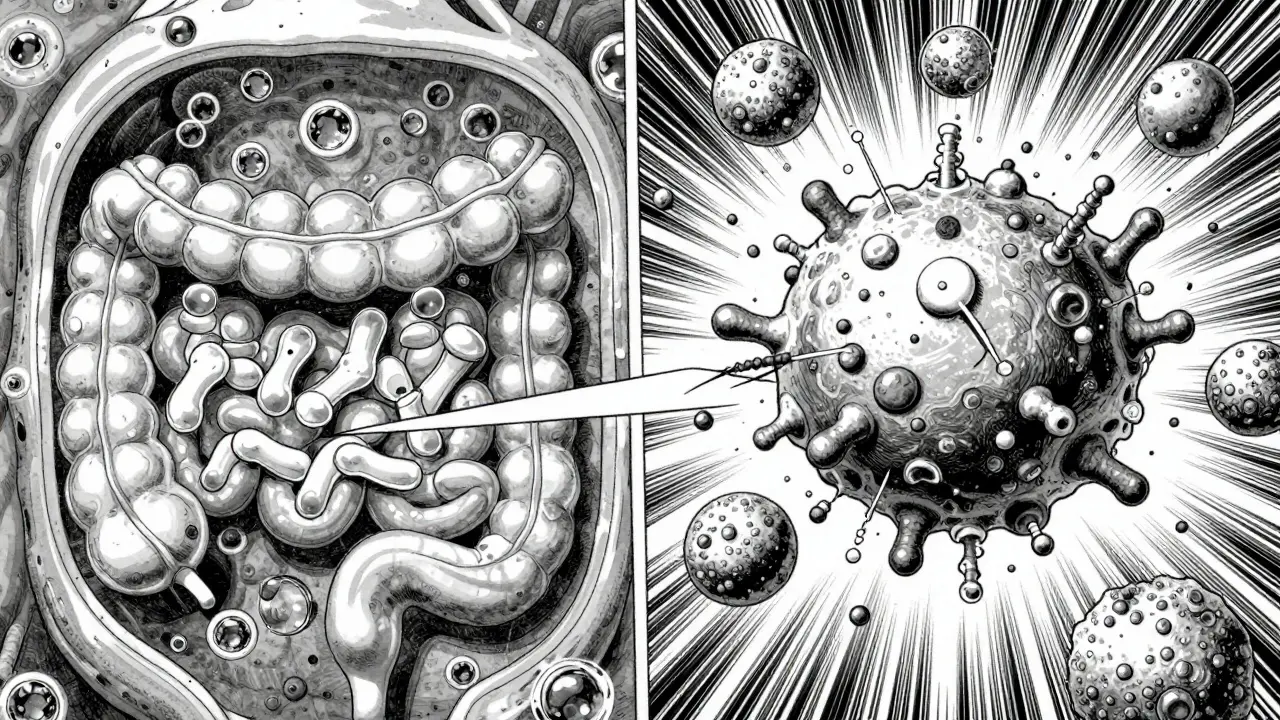
The disaster happens when Calcium is present in the stomach at the same time as the bisphosphonate. Calcium ions bind to the drug, creating insoluble complexes. In simple terms, the calcium "clumps" the medicine together, making it too large or chemically unstable to pass through the intestinal wall. Pharmacokinetic studies have shown that taking these together can slash the drug's bioavailability by up to 90%.
| Factor | Ideal Condition | Poor Condition | Impact on Efficacy |
|---|---|---|---|
| Stomach Content | Empty (Overnight Fast) | Food or Beverages | High Interference |
| Supplement Timing | 30-60 min gap | Taken simultaneously | Up to 90% reduction in absorption |
| Liquid Used | Plain Water | Juice, Tea, or Coffee | Reduced Bioavailability |
| Posture | Upright / Sitting | Lying down | Esophageal Irritation Risk |
Managing the Routine: Real-World Challenges
If this sounds like a lot of rules, you're not alone. Many patients struggle with this regimen. In some surveys, nearly 40% of people admitted to taking their calcium and bone meds at the same time. Others find the "no lying down" rule difficult, which can lead to esophageal irritation-a common complaint in patient groups.
To help with this, some pharmaceutical companies created integrated packaging. For example, certain Risedronate packs come with the medication and the calcium supplements separated into different slots to act as a visual reminder. This simple change has been shown to improve dosing accuracy by nearly 30%.
If you find the morning routine too hard, talk to your doctor about intravenous (IV) options. Zoledronic Acid is given once a year via infusion, completely bypassing the gut and the calcium interaction problem altogether.
Balancing Calcium: The "Too Much" Problem
While getting enough calcium is vital, there is a ceiling. Some experts, including researchers at the University of California, San Diego, warn that pushing your total calcium intake (food + supplements) beyond 1,200 mg per day might be counterproductive. Excessive supplementation has been linked to increased cardiovascular risks in some patients.
The goal is a "Goldilocks" zone: enough to support bone mineralization, but not so much that it affects your heart. This is why Vitamin D is so important. Vitamin D helps your body absorb the calcium you already have, meaning you might not need as many high-dose supplements to get the same benefit. A daily dose of 800-1,000 IU of Vitamin D is generally recommended to keep this balance.
Risk vs. Reward: Is the Hassle Worth It?
When you hear about rare side effects like osteonecrosis of the jaw (ONJ) or atypical femur fractures, it's easy to feel nervous. But it's important to look at the actual numbers. The risk of a hip fracture is a massive deal-mortality rates can hit 20-24% within a year of a hip break.
In contrast, the risk of ONJ in osteoporosis patients is incredibly low, often estimated at less than 0.1%. When you compare the "number needed to treat" to prevent a hip fracture (about 44 high-risk patients) against the "number needed to harm" for rare complications (thousands of patient-years), the benefit of the medication clearly outweighs the risks for most people.
Most clinicians recommend a reevaluation every 3 to 5 years. Depending on your current bone density, you might be a candidate for a "drug holiday," where you stop the bisphosphonates for a while to let your bone remodeling cycle reset while continuing your calcium and vitamin D support.
Can I take my calcium supplement 30 minutes after my bisphosphonate?
Yes, a 30-to-60-minute gap is generally recommended. This window allows the bisphosphonate to pass through the stomach and begin absorption before the calcium enters the system and potentially binds to the medication.
What happens if I accidentally take them together?
If it happens once, don't panic, but don't make it a habit. Because calcium can reduce the absorption of bisphosphonates by up to 90%, taking them together consistently means you are essentially getting almost no benefit from your medication, leaving your bones vulnerable to fractures.
Why can't I take my bone medication with orange juice?
Orange juice, coffee, and mineral water contain ions and acids that interfere with the drug's absorption, similar to how calcium does. Plain water is the only liquid that doesn't disrupt the chemistry needed for the drug to enter your bloodstream.
How long should I stay upright after taking these pills?
You should remain sitting or standing until after your first meal or drink of the day. Lying down can cause the pill to move slowly or reflux back into the esophagus, leading to severe irritation or chemical burns in the throat.
Do I need Vitamin D if I'm already taking calcium?
Yes. Calcium is the building block, but Vitamin D is the "key" that unlocks the door to let calcium into your bloodstream. Without adequate Vitamin D (usually 800-1,000 IU), your body cannot efficiently absorb the calcium supplements you are taking.
Next Steps for Your Bone Health
If you've been taking your supplements and medications together, the first step is to adjust your schedule immediately. Start your day with a glass of water and your bisphosphonate, then set a timer for 60 minutes before taking your calcium and eating breakfast.
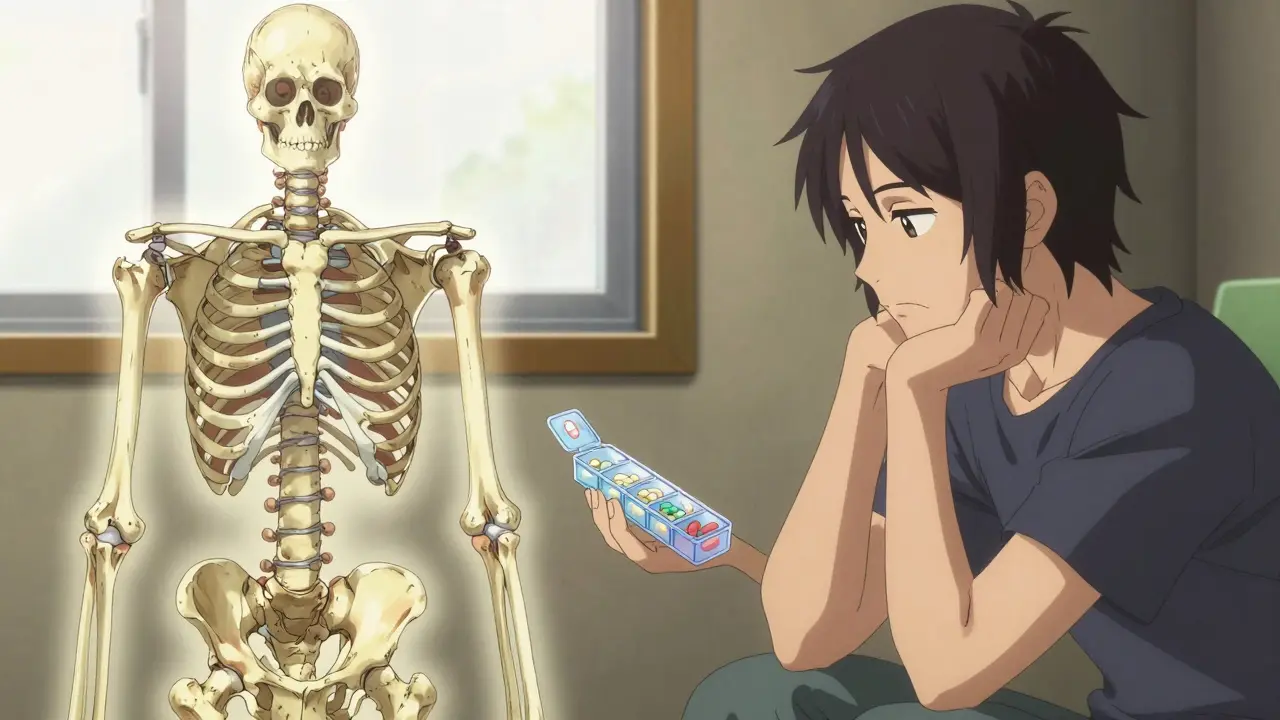
For those who struggle with morning consistency, consider using a pill organizer that visually separates "fasting meds" from "with-meal meds." If the routine feels unsustainable, schedule an appointment with your provider to discuss whether an annual IV infusion is a better fit for your lifestyle. Finally, always ensure your doctor has your total daily calcium intake-including food-to ensure you stay within the safe range for your heart and bone health.
Andre Ojakäär
April 26, 2026 AT 15:37this is basic stuff like literally common sense but people still mess it up anyway. its a total disaster when you realize youve been wasting meds for months because you couldnt wait an hour for a snack. absolute madness
Jon Moss
April 28, 2026 AT 09:40That sounds like a really stressful way to start the morning. I can see why people would struggle to keep it all straight.
Eric Mwiti
April 30, 2026 AT 00:39Oh great, so we have to treat our stomachs like a high-security vault just to keep our bones from turning into chalk. Truly a pinnacle of modern medicine.
Majestic Blue Band
April 30, 2026 AT 05:15It is absolutely typical that the medical establishment wants us on these synthetic compounds that fundamentally alter our bone chemistry while simultaneously telling us to take supplements that they know will clash if the timing isn't precisely orchestrated by their strict guidelines, and frankly, I find it suspicious that they push these bisphosphonates so aggressively when the long-term effects on the jaw and femur are often downplayed by the very people paid by the pharmaceutical companies to write the studies, so maybe we should be looking at why the system is designed to make us dependent on a regimen that requires a timer and a stopwatch just to function, because once you start seeing the patterns of how they control the narrative around 'bioavailability' and 'mineral density,' you realize it's all just a way to keep us in a cycle of medication and supplementation without ever addressing the root cause of bone loss which is likely tied to environmental toxins they refuse to acknowledge.
Edwin Perez
April 30, 2026 AT 22:40Typical big pharma nonsense. They tell you to take a pill, then tell you it doesn't work if you eat a piece of toast. Just another way to push the expensive IV version once you get tired of the rules.
Beena Garud
May 1, 2026 AT 18:16The dichotomy between the necessity of calcium and the inhibitory nature of its timing presents a profound paradox of physiological maintenance. One must contemplate the fragility of the human biological system when such a minute temporal shift can render a potent pharmaceutical agent utterly inert.
Hayley Redemption
May 3, 2026 AT 11:46The analysis here is rudimentary at best. Anyone with a basic understanding of pharmacology knows that chelating agents and polyvalent cations like calcium interfere with drug absorption. It's hardly a revelation, though I suppose it's necessary for the layman who can't be bothered to read a package insert.
Gauri Parab
May 3, 2026 AT 20:37Honestly, the fact that people even need a 'quick guide' for this is just embarrassing. If you can't manage a simple fasting window, perhaps you shouldn't be managing a complex medication regimen. The sheer lack of basic health literacy in this conversation is staggering, and quite frankly, the suggestion of using 'integrated packaging' is a pathetic concession to human incompetence.
Carol Yang
May 4, 2026 AT 12:14Just stay positive everyone! You'll get the hang of the routine!
Vijay AGarwal
May 4, 2026 AT 23:14LISTEN UP! This is the most critical part of your treatment! If you don't respect the 60-minute gap, you are basically throwing your money down the drain! Your bones are your foundation-don't let a calcium tablet ruin your structural integrity!
suresh kumar
May 5, 2026 AT 13:11My cousin tried this and he said his stomach felt like a volcano exploded in there! Absolute chaos! Why don't they just give us a magic potion that works instantly without all this fancy-schmancy timing nonsense!
Karyn Tindall
May 6, 2026 AT 08:39I am absolutely terrified of the esophageal irritation part! The thought of a chemical burn in my throat just because I leaned back too far is genuinely horrifying!
Kristen O'Neal
May 7, 2026 AT 11:17I'm curious about the Vitamin D part. Since it's the 'key' for calcium, maybe that's why some of us feel we need way more supplements than others? It seems like a really efficient way to handle things if we just focus on the D first.
Michael Chukwuma
May 9, 2026 AT 02:41I totally agree with the idea of using a pill organizer. It takes the guesswork out of it and makes the whole process feel a lot less overwhelming for people.
sachin singh
May 9, 2026 AT 10:04It is most encouraging to see such detailed guidelines. I shall certainly ensure that my morning routine is strictly adhered to for maximum efficacy.