How to Report Adverse Drug Reactions to FDA MedWatch
 Jan, 6 2026
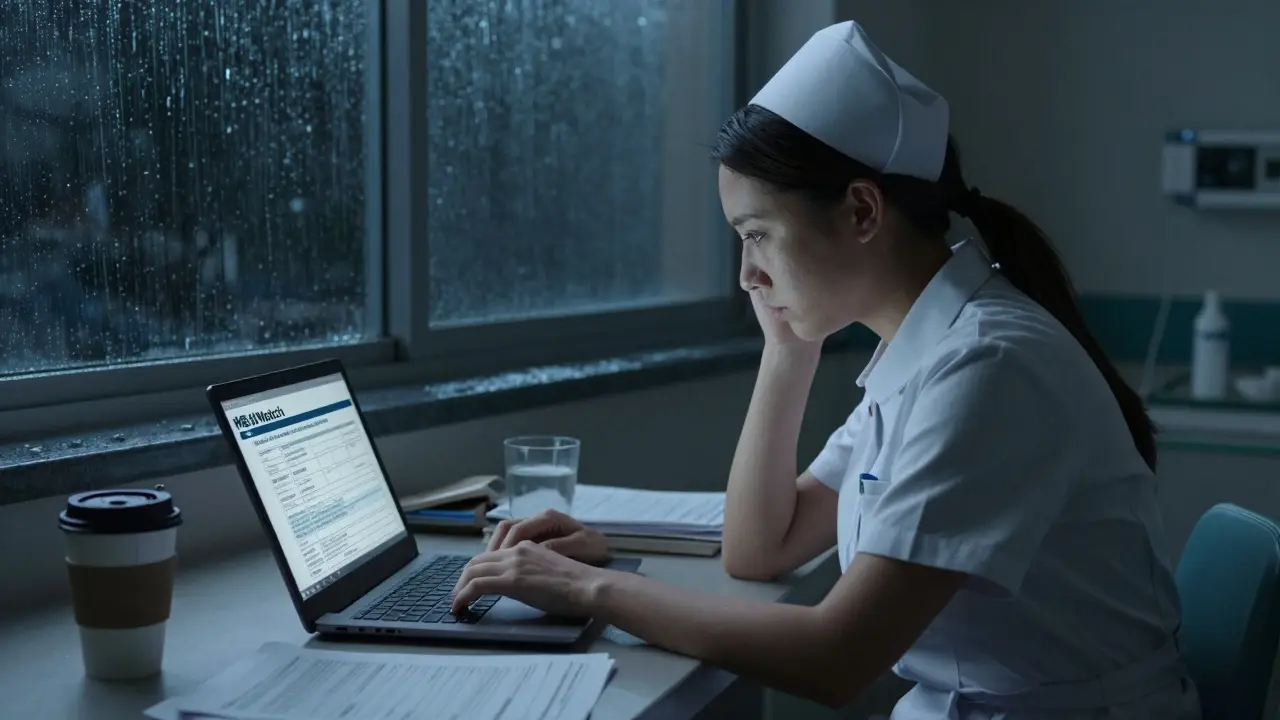
Every year, over 1.3 million reports of adverse drug reactions pour into the FDA’s MedWatch system. Most of them come from drug companies. But the rest? They come from people like you - doctors, pharmacists, nurses, and patients who noticed something wrong after taking a medication. The problem? Only about 6% of serious side effects ever get reported. That means for every 100 bad reactions, 94 go silent. And those silent ones? They’re the ones that could have warned others before someone died.
What Is MedWatch, Really?
MedWatch isn’t just a website. It’s the U.S. Food and Drug Administration’s main tool for catching drug dangers after they’ve hit the market. Clinical trials can’t catch everything. Too few people. Too short a time. Too controlled an environment. Real life is messy. People take five pills at once. They have kidney problems. They’re 78 years old. That’s when side effects show up - and that’s when MedWatch matters. The system started in 1993 and has since become the backbone of drug safety in America. It collects reports on prescription drugs, over-the-counter medicines, medical devices, dietary supplements, even foods that cause severe allergic reactions. It’s not perfect. But without it, we’d be flying blind.Who Should Report?
You don’t need to be a scientist. You don’t need to prove causation. You just need to suspect something happened because of a medicine.- Healthcare professionals: Doctors, nurses, pharmacists - if you saw a patient have a strange reaction, report it. Even if you’re not sure.
- Patients and caregivers: You took the pill. You felt sick. You went to the ER. That’s enough. Report it.
- Manufacturers and pharmacies: They’re legally required to report. But they don’t always do it well. Public reports help fill the gaps.
The FDA says this clearly: “Report these problems even if you’re not sure the product was the cause.” You’re not diagnosing. You’re sounding an alarm.
What Counts as a Reportable Event?
Not every little side effect needs reporting. The FDA defines a serious adverse event as one that leads to:- Death
- Hospitalization (or prolonging an existing hospital stay)
- Disability or permanent damage
- Life-threatening condition
- Birth defect (if the patient is pregnant)
- Requires medical or surgical intervention to prevent one of the above
Examples: A 62-year-old man on blood pressure meds develops severe swelling in his throat and ends up in the ICU. A woman on a new diabetes drug gets pancreatitis. A teenager takes an OTC painkiller and has a rare skin reaction called Stevens-Johnson syndrome. All of these are reportable.
Even if the reaction isn’t listed on the drug label - especially if it’s new - report it. That’s how new risks get found.
How to Report: The Three Forms
There are three ways to report, depending on who you are.Form 3500 - For Healthcare Professionals
This is the most common form. It’s online, free, and designed for medical staff. You’ll need:- Patient’s age, sex, and initials (no full name needed)
- Drug name, dose, route, and start/end dates
- Exact description of the reaction - be specific
- Time between taking the drug and the reaction
- Outcome: Did they recover? Die? Get worse?
- Any lab results, imaging, or biopsies
- Other meds they were taking
It takes about 15-20 minutes. Most doctors say it’s easier than writing a prescription note.
Form 3500B - For Patients and Consumers
This version is simpler. Less jargon. Available in English and Spanish. You can fill it out on your phone. You don’t need to know medical terms. Just describe what happened.Example: “I started taking lisinopril for high blood pressure. After two weeks, my face swelled up. I couldn’t breathe. Went to the ER. They said it was angioedema. I’ve never had that before.” That’s enough.
Form 3500A - For Manufacturers and Facilities
These are mandatory. Drug companies must report serious events within 15 days. Hospitals and pharmacies must report device failures immediately. But this form isn’t for the public.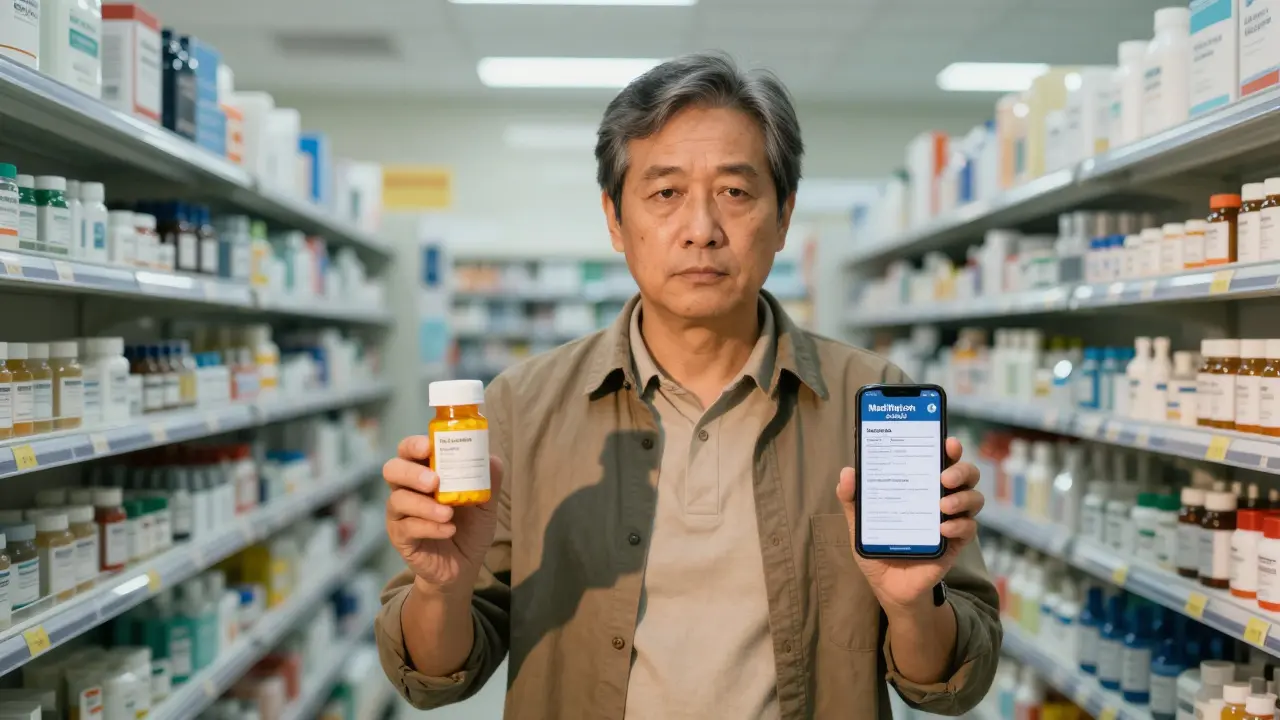
Where to Submit
Go to the official MedWatch website: www.fda.gov/medwatch- Click “How to Report”
- Choose your form
- Fill it out online - it saves your progress
- Submit
You can also download PDFs and mail or fax them. But online is fastest. And you’ll get a confirmation email.
There’s also a mobile option. The FDA launched MedWatch Plus in 2023 to make reporting easier from smartphones. Some hospitals are starting to integrate it directly into their electronic health records - so when a nurse documents a reaction, it auto-fills a MedWatch form. That’s the future.
What Happens After You Submit?
Nothing. That’s the hard truth.You won’t get a call. You won’t get a letter. Eighty-seven percent of reporters say they never hear back. That doesn’t mean your report didn’t matter.
MedWatch collects reports into a giant database called FAERS - the FDA Adverse Event Reporting System. Analysts mine it for patterns. If 10 people report the same rare reaction to a new drug, that’s a signal. If 50 do? The FDA might issue a warning. Change the label. Pull the drug.
Here’s the real power: In 2017, reports of severe liver damage from a popular weight-loss supplement led to a FDA safety alert. In 2020, a spike in reports of heart rhythm issues from a common antibiotic triggered a black box warning. These didn’t come from clinical trials. They came from patients and doctors who said, “This isn’t right.”
Why Don’t More People Report?
A 2023 survey of 1,200 U.S. physicians found that 68% rarely or never report to MedWatch. Why?- Time: “It takes too long.” But the average report takes less than 15 minutes.
- Doubt: “I’m not sure it was the drug.” But you don’t have to be sure.
- Uncertainty: “I don’t know how.” The website has videos and step-by-step guides.
- Helplessness: “No one ever responds.” But your report might be the one that saves someone else’s life.
It’s not about you getting credit. It’s about the next person who takes that same pill.

How MedWatch Compares to Other Systems
Europe has EudraVigilance. Canada has the Canada Vigilance Program. But MedWatch is the biggest. It gets 1.3 million reports a year. EudraVigilance gets about half that.But here’s the catch: The U.S. relies more on voluntary reporting. In Europe, hospitals are required to report. In the U.S., only manufacturers are. That’s why the FDA is pushing for better integration with electronic health records - to make reporting automatic, not optional.
And while big pharma uses AI to scan their own data, MedWatch still depends on humans typing in stories. That’s why underreporting is the system’s biggest weakness.
What You Can Do Right Now
If you’ve ever had a weird reaction to a drug - even if it was years ago - go to www.fda.gov/medwatch. Find Form 3500B. Fill it out. It’s quick. It’s anonymous. It’s free.If you’re a healthcare worker: Make it part of your routine. After every serious side effect, pause. Ask: “Should I report this?” Then do it.
There’s no reward. No badge. No thank-you note. But if your report helps stop a dangerous drug before it kills someone else - that’s the kind of quiet heroism that keeps people safe.
What’s Next for MedWatch?
The FDA’s 2023-2027 plan includes AI tools to sort through the 1.3 million reports faster. They want to find patterns before people die. They’re also expanding reporting to include more dietary supplements and combination products.By 2027, they expect 1.8 million reports a year. But if reporting rates don’t rise, even AI won’t help. The system only works if people use it.
The future of drug safety isn’t in labs. It’s in the hands of the people who take the pills - and the professionals who see what happens after.
Alex Danner
January 8, 2026 AT 07:38Had a friend go into anaphylaxis after a new antibiotic. Docs said it was "rare" and to "just avoid it next time." But I filed a MedWatch form anyway. Three months later, the FDA updated the label. That’s the power of one report.
Don’t wait for someone to die before you speak up.
Paul Mason
January 9, 2026 AT 06:07Look, if you’re not reporting side effects, you’re basically letting Big Pharma get away with murder. I mean, come on. These companies care about profits, not your kidneys. The fact that only 6% of serious reactions get reported? That’s a crime.
And no, you don’t need to be a doctor. If your toe turned purple after a pill, REPORT IT. Simple.
LALITA KUDIYA
January 9, 2026 AT 15:44My mom took a new blood pressure med and got dizzy every morning. We didn’t think much of it till she fell and broke her hip
Now I report everything. No big deal. Takes 10 mins. Could save someone’s life 😊
Poppy Newman
January 10, 2026 AT 06:52Just submitted my first MedWatch report after my niece got that weird rash from the OTC allergy pill. Took me 8 minutes on my phone. No stress. No jargon. Just: "She broke out in red bumps, couldn’t stop scratching, ER said it was rare."
Feels good to do something small that might help someone else 💪❤️
Anastasia Novak
January 10, 2026 AT 19:30Let’s be real - MedWatch is a dumpster fire of bad data. 90% of reports are garbage. Patients don’t know what they’re talking about. "I took Tylenol and felt sad" - that’s not a serious adverse event, Karen.
And don’t get me started on the FDA’s outdated system. It’s 2024. We have AI that can predict stock prices, but we’re still relying on 70-year-old doctors typing in PDFs?
Meanwhile, the EU’s system is actually functional. But hey, at least we have more reports than anyone. Quantity over quality, right?
Jonathan Larson
January 12, 2026 AT 03:13There is a profound moral obligation in the act of reporting. Not because it guarantees immediate change - it rarely does - but because it affirms the dignity of human experience in the face of institutional inertia.
Each report is a whisper against the silence of systemic neglect. It is not about recognition. It is about legacy. The next life saved may owe its survival to the quiet courage of someone who took five minutes to type what they saw.
Let us not underestimate the weight of testimony.
- Jonathan Larson, MD, retired
Elen Pihlap
January 13, 2026 AT 12:23Wait so if I report my weird headache after ibuprofen… does that mean I get a free pill next time?? Or like, a gift card??
Also I’m kinda mad I didn’t know about this before. Why isn’t this on TV??
Can I report my cat’s sneezing after she licked my skin cream??
Also why do I feel guilty now??
Sai Ganesh
January 14, 2026 AT 23:31In India, we don’t have this system. People just stop taking the medicine or go to a local doctor. No one reports. No one follows up.
But I read this and I think - maybe we need this. Not just for drugs, but for everything. If we don’t speak up, nothing changes.
I’ll share this with my cousin who’s a nurse in Delhi. She needs to know.
Katrina Morris
January 16, 2026 AT 21:35just filed my report after my cousin got that scary reaction to her diabetes med… took like 12 mins on my phone and i didnt even know what half the words meant but i just wrote what happened
hope it helps someone
also why is the website so clunky like its 2005 😅
steve rumsford
January 17, 2026 AT 22:20bro i took a new vitamin and my pee turned neon green
was i supposed to report that
also i think the website is down
or maybe i just suck at computers
Andrew N
January 19, 2026 AT 00:56Most reports are useless. You need to know the difference between correlation and causation. People report everything - headaches, fatigue, mood swings - but 99% of the time it’s placebo or coincidence.
And don’t get me started on the lack of data validation. The FDA’s system is a joke. It’s just a bucket of noise.
Real science requires controlled studies. Not some guy in Ohio typing "I felt weird after taking X."
Anthony Capunong
January 19, 2026 AT 04:04Why are we trusting some foreign government agency to monitor our drugs? This is America. We should have our own system, not some half-baked FDA thing.
And why are we letting foreigners report? You think a guy in India knows what a proper adverse reaction is?
MedWatch is a globalist scam. Report your own damn stuff - in English - and stop letting the world tell us what’s safe.
Ayodeji Williams
January 19, 2026 AT 18:09yo i reported my aunt’s reaction to that weight loss tea and guess what? nothing happened
so now i just ignore all this stuff
why should i care if some big pharma exec gets a bad review? they got money anyway 😎