How to Prevent Drug-Drug Interactions in Elderly Patients: A Complete Guide
 Apr, 18 2026
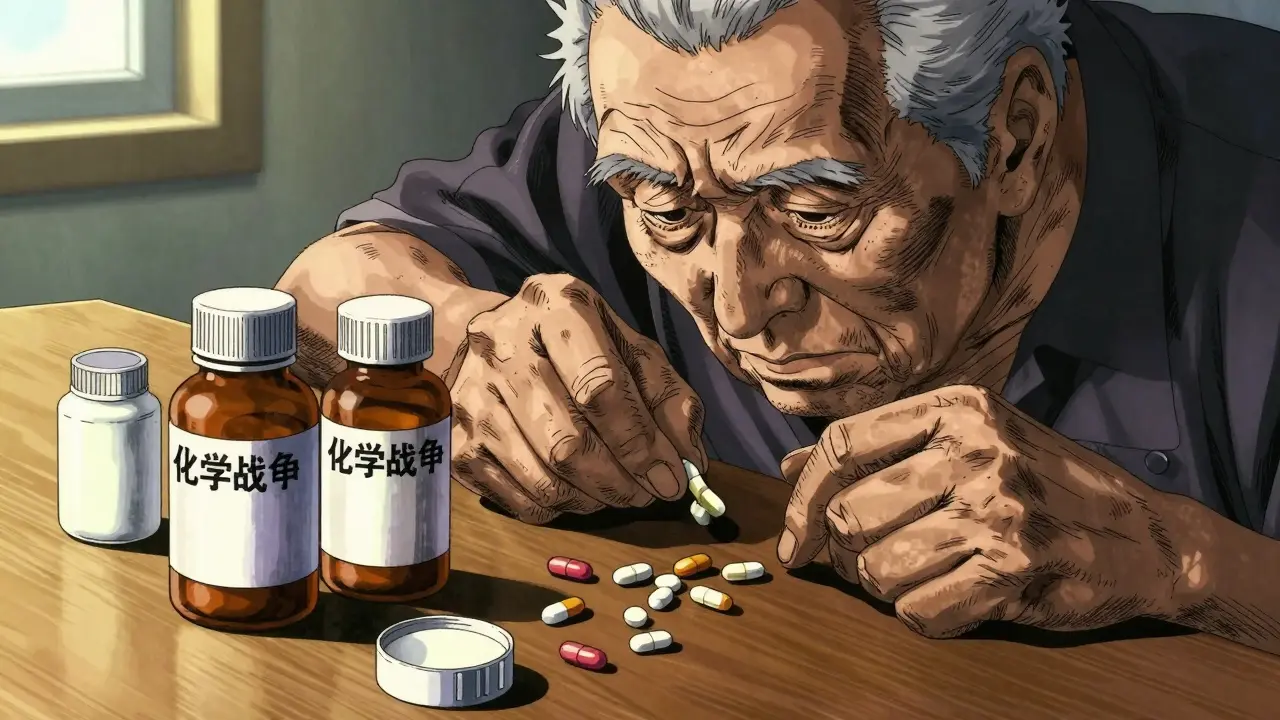
Imagine a typical morning for a senior: a blood pressure pill for the heart, a statin for cholesterol, something for joint pain, and a few vitamins. On the surface, it looks like a well-managed health routine. But inside the body, these chemicals are fighting for the same space. When two or more medications clash, they can either cancel each other out or create a toxic cocktail that leads to a sudden fall or a trip to the emergency room. For older adults, this isn't just a possibility-it's a significant risk because the body doesn't process medicine the same way at 80 as it does at 30.
The real danger is that preventing drug-drug interactions is the process of identifying and mitigating adverse effects that occur when multiple medications are taken concurrently. It's not just about avoiding a "bad match"; it's about managing how a changing body handles chemistry. In fact, some seniors are up to 50% more susceptible to adverse drug events than younger people due to natural physiological shifts. If you're managing meds for a parent or yourself, the goal isn't just to follow the prescription, but to actively audit the entire medicine cabinet.
Why Seniors are More Vulnerable to Medication Clashes
Aging changes the "machinery" of the body. One of the biggest culprits is the Cytochrome P450 a family of enzymes primarily found in the liver that metabolize the vast majority of clinically used drugs (CYP450). As we age, the activity of these enzymes often drops. When you take multiple drugs that rely on the same enzyme pathway, they start competing. This can cause a medication to build up in the bloodstream to toxic levels because the liver simply can't clear it out fast enough.
It's not just the liver. The kidneys-responsible for filtering waste-often slow down, leading to decreased renal clearance. Combine this with changes in body composition (like having less muscle mass and more body fat), and you have a scenario where drugs linger longer and hit harder. When a person is dealing with Polypharmacy the concurrent use of five or more medications by a single patient, the mathematical probability of a clash skyrockets. Roughly 40% of older adults in the U.S. deal with polypharmacy, making the risk of a bad interaction a daily reality.
The Red Flags: High-Risk Medication Areas
Not all drug interactions are created equal. Some systems are far more prone to "chemical warfare" than others. Research shows that the most serious interactions typically happen within two specific areas: the cardiovascular system and the central nervous system. Cardiovascular drugs, which account for nearly 39% of serious interactions, often clash with diuretics or blood thinners. Meanwhile, CNS drugs-like sleep aids or anxiety medications-make up about 29% of serious cases.
To help doctors spot these, experts use a few gold-standard toolkits. You might hear your doctor mention the Beers Criteria a guideline developed by the American Geriatrics Society listing medications that are potentially inappropriate for older adults. This list isn't just a suggestion; it identifies 30 classes of drugs that seniors should generally avoid and 40 that need strict dose adjustments based on kidney function. Using these criteria has been shown to cut hospitalizations by over 17%.
| Tool | Primary Focus | Best Use Case | Key Benefit |
|---|---|---|---|
| Beers Criteria | Potentially inappropriate meds | General prescribing / Routine visits | Prevents use of high-risk drug classes |
| STOPP Criteria | Patient-specific appropriateness | Hospital discharge / Complex cases | High sensitivity (94%) for adverse events |
| NO TEARS | Holistic medication review | Comprehensive medication audit | Addresses cost, admin, and self-management |

Practical Steps to Audit Your Medication Regimen
Preventing a crisis starts with a systematic review. You can't just rely on a quick chat at the end of a 15-minute appointment. A real medication audit requires a deep dive. One effective framework is the NO TEARS tool a seven-component framework used by clinicians to reduce polypharmacy and optimize drug therapy. If you're advocating for a loved one, use these seven checkpoints:
- Need: Is this medication still necessary? (Some drugs prescribed years ago for a temporary issue are often forgotten).
- Optimization: Is this the right dose for the patient's current weight and kidney function?
- Trade-offs: Do the benefits of this drug actually outweigh the risk of side effects?
- Economics: Is the medication too expensive? (Financial stress leads to skipped doses).
- Administration: Is the patient actually able to take it? (e.g., can they swallow a giant pill?).
- Reduction: Can any of these be stopped safely?
- Self-management: Does the patient actually understand why they are taking this?
Another critical rule of thumb: never start two new medications at the same time. If a senior starts a new blood pressure med and a new sleep aid on the same day and then becomes dizzy, it's nearly impossible to tell which drug is causing the problem. By spacing out new prescriptions, you eliminate the guesswork during a reaction.
Dealing with the "Fragmented Care" Trap
The biggest hurdle to safety isn't usually the medicine itself-it's the communication. Many seniors see three or more different doctors. The cardiologist doesn't always talk to the rheumatologist, and the rheumatologist might not know what the primary care doctor prescribed last month. This "fragmented care" is where the most dangerous overlaps happen.
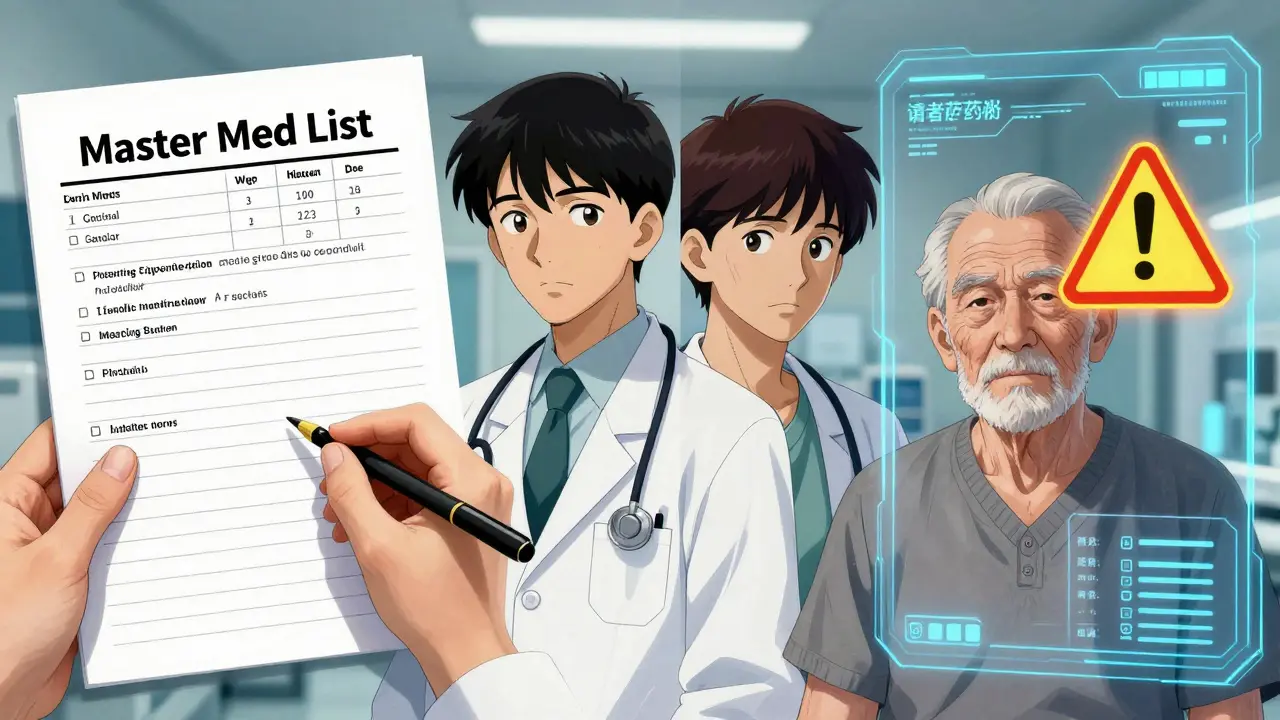
To break this cycle, you need to take control of the data. Don't assume the electronic health records are synced. Instead, maintain a "Master Med List." This list should include not only prescriptions but also over-the-counter (OTC) meds and herbal supplements. This is a huge blind spot: about 68% of older adults fail to disclose herbal supplements to their doctors. A seemingly harmless St. John's Wort supplement, for example, can drastically reduce the effectiveness of critical heart medications.
When visiting a new specialist, demand a dedicated medication review. Experts suggest that for patients on five or more drugs, a doctor should spend at least 15 to 20 minutes just reviewing the list. If the visit is rushed, the risk of a missed interaction increases.
The Future of Safety: AI and Better Trials
For a long time, the medical world had a blind spot: older adults were rarely included in clinical trials. In some Phase 3 trials, seniors made up less than 5% of participants, even though they were the primary users of the drug. This meant doctors were prescribing meds based on data from 30-year-olds. Thankfully, the FDA the U.S. Food and Drug Administration, which regulates medication labeling and clinical trial standards has started pushing for more geriatric-specific pharmacokinetic data.
We're also seeing a rise in AI-powered clinical decision support systems. Instead of a doctor having to memorize thousands of possible interactions, software now flags potential clashes in real-time during the prescribing process. Adoption of these systems in hospitals has jumped from 22% to 47% in just three years, providing a digital safety net that catches errors before the pill even reaches the pharmacy.
What is the most dangerous type of drug interaction for seniors?
The most serious interactions typically occur with medications affecting the cardiovascular system and the central nervous system. These include blood thinners, beta-blockers, and sedatives, which can lead to severe complications like internal bleeding or extreme cognitive impairment.
How can I tell if my loved one is experiencing a drug interaction?
Watch for sudden changes in behavior, unexpected dizziness, increased confusion, or new physical symptoms like rashes or digestive issues. Because seniors often have multiple chronic conditions, these "side effects" are sometimes mistaken for aging or the progression of a disease.
Are herbal supplements safe if they aren't prescriptions?
No. Many herbal supplements interact strongly with prescription drugs. For example, some supplements can thin the blood further if taken with anticoagulants or interfere with how the liver processes other medications. Always list supplements on your Master Med List.
What should I do if I suspect a medication clash?
Do not stop taking any medication abruptly, as this can cause withdrawal or a health crisis. Instead, contact your primary care physician or a pharmacist immediately and provide them with your full list of medications and supplements for a professional review.
Why does the 'Beers Criteria' matter?
The Beers Criteria provides a scientifically backed list of medications that are specifically risky for people 65 and older. It helps doctors identify "potentially inappropriate medications" that might work for a younger person but cause severe adverse effects in a senior.
Next Steps for Caregivers
If you are managing medications for a senior, start by consolidating. Use a single pharmacy for all prescriptions to help the pharmacist spot interactions across different doctors' orders. Next, schedule a "Brown Bag Review": put every single pill bottle, vitamin, and cream in a bag and take them to a pharmacist or primary doctor for a thorough audit using the STOPP or NO TEARS frameworks. Finally, keep a digital copy of the medication list on your phone so you can provide accurate info instantly during an emergency room visit.
dallia alaba
April 19, 2026 AT 21:12The 'Brown Bag Review' is honestly a game changer for caregivers. It's wild how often a doctor forgets a pill that was prescribed by a specialist three years ago, and seeing the actual bottles on the table forces a level of accountability that a digital list sometimes misses.
Lynn Smith
April 19, 2026 AT 21:25This is so helpful! I'm definitely going to try the Master Med List for my dad.
Brigid Prosser
April 21, 2026 AT 14:59Absolute chaos when you've got three different doctors playing telephone with prescriptions. It's a total circus. Get that Master Med List sorted or you're basically gambling with your folks' health. Don't let some rushed GP just nod and wave you out the door; pin them down until they actually look at the chemistry involved.
Tokunbo Elegbe
April 23, 2026 AT 05:19The point about herbal supplements is critical... so many people assume 'natural' means 'safe'!!! It's a dangerous misconception... especially with blood thinners...
Mike Beattie
April 24, 2026 AT 01:47The systemic failure here is rooted in the lack of integrated pharmacokinetic monitoring. Most clinicians just eyeball the dose without considering the actual glomerular filtration rate (GFR) in real-time. It's a rudimentary approach to a complex biological problem. We're basically treating 80-year-olds like 20-year-olds because the healthcare infrastructure is stuck in the 90s. It's an absolute shambles of a methodology if you actually look at the data.
Tanya Rogers
April 25, 2026 AT 09:40How quaint that we believe a simple 'list' can mitigate the inherent fragility of the human condition. The obsession with 'optimizing' pharmacological intake is merely a facade for our collective terror of senescence. One does not simply 'audit' the decline of the liver and expect a curated result.
Truman Media
April 26, 2026 AT 16:07It is truly wonderful to see AI stepping in to help our elders live more safely. Technology serves as a bridge to better care for all of us :) 🌟
Aman Tomar
April 27, 2026 AT 09:25I realy feel for the families struggling with this. It is so heartbraking when a loved one gets confused just because of a drug clash and everyone thinks they have dementia. The emotional toll is just too much to bear!
Olushola Adedoyin
April 28, 2026 AT 01:21Don't trust the 'AI' systems! They just want to track every single pill we take so the big pharma companies know exactly how to tweak the formulas to keep us hooked. It's a digital leash, plain and simple! They'll tell you it's for 'safety' while they're actually just harvesting your biological data to sell to the highest bidder in some secret lab!
Bob Collins
April 28, 2026 AT 07:24Keeping the pharmacy consistent is the best advice here. My local pharmacist actually caught a double-prescribing error last year that two different specialists missed. Those guys are the unsung heroes of the medical world.
Lucy Kuo
April 29, 2026 AT 02:53It is a most harrowing realization that the very medicines intended to sustain life may, through tragic confluence, lead to such profound distress. The fragmentation of care is a catastrophe of the highest order, leaving the most vulnerable among us to navigate a labyrinth of chemical peril!
Don Drapper
April 29, 2026 AT 19:52The sheer incompetence of the clinical trial process described here is a monumental failure of ethics. To exclude the primary demographic of a drug's end-user is not merely a 'blind spot'-it is a grotesque dereliction of professional duty that borders on the criminal. The industry prioritizes speed and profit over the actual biological reality of the aging population, and the results are predictably disastrous.