How to Prevent Diabetic Kidney Disease, Neuropathy, and Eye Damage
 Mar, 14 2026
Living with diabetes doesn’t mean you’re destined for kidney failure, nerve pain, or vision loss. The truth is, diabetic complications like kidney disease, neuropathy, and eye damage aren’t inevitable - they’re preventable. In fact, over the last 20 years, rates of these serious problems have dropped significantly in countries with strong diabetes care systems. The reason? People aren’t just focusing on their blood sugar anymore. They’re tackling multiple risks at once - and it’s working.
Why These Three Complications Happen
High blood sugar doesn’t just make you feel tired or thirsty. Over time, it damages your blood vessels and nerves. That’s how it leads to three major problems:
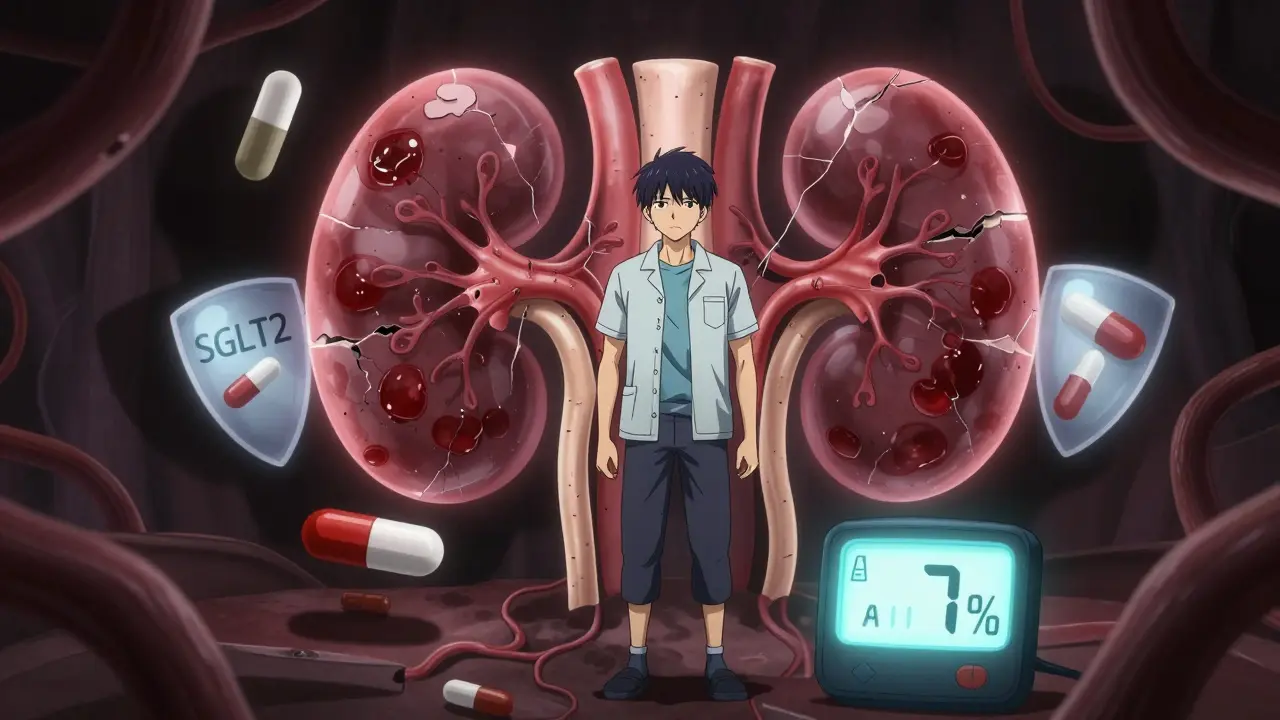
- Kidney disease (diabetic nephropathy): Your kidneys filter waste from your blood. When sugar levels stay too high, the tiny filters get clogged and leak protein. Left unchecked, this can lead to kidney failure.
- Nerve damage (diabetic neuropathy): Nerves in your feet, hands, and organs get damaged by excess glucose. You might feel tingling, burning, or numbness - or worse, lose feeling entirely. That’s why foot injuries often go unnoticed until they turn into ulcers.
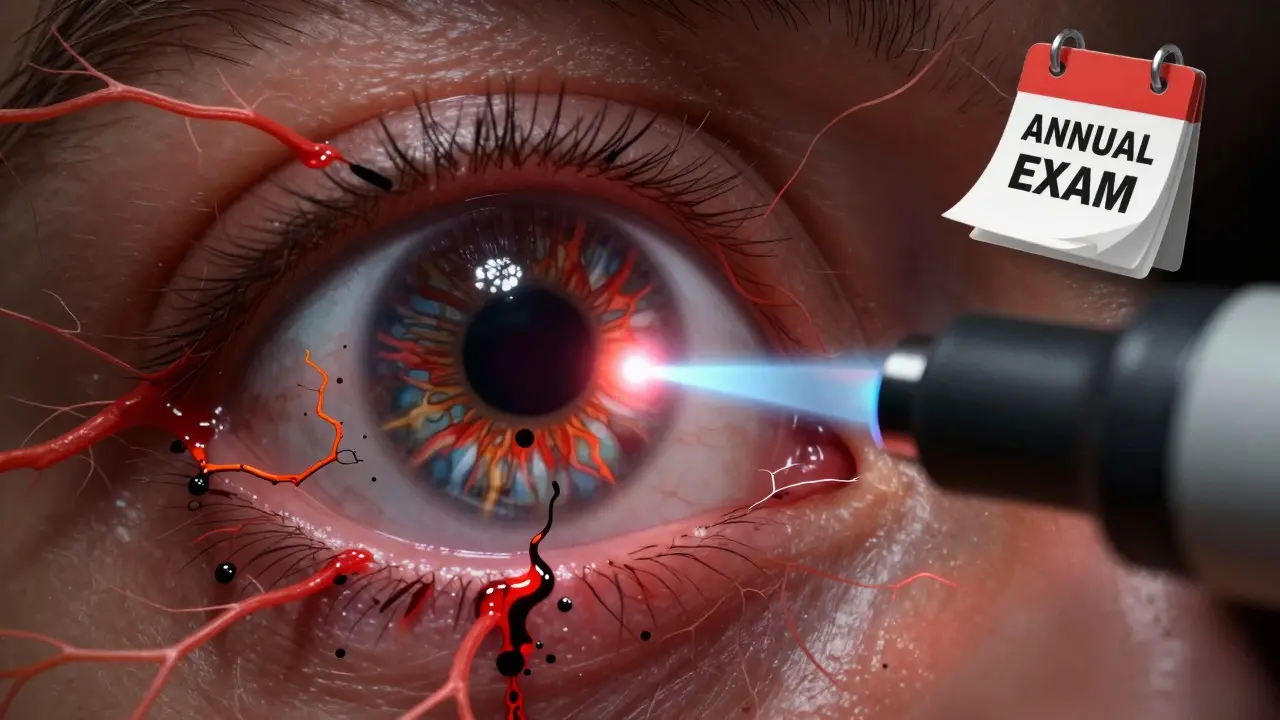
- Eye damage (diabetic retinopathy): The blood vessels in your retina swell, leak, or close off. New abnormal vessels may grow, but they’re fragile and can bleed into your eye. Without early detection, this can lead to permanent vision loss.
These aren’t rare outcomes. About 1 in 3 adults with diabetes will develop kidney disease. Up to 50% will have some form of nerve damage. And while blindness isn’t common, it’s preventable - if you catch it early.
The ABCs of Prevention
The CDC calls it the ABCs - simple, measurable goals that make a huge difference:
- A1C below 7% - This measures your average blood sugar over 3 months. For most people, staying under 7% cuts the risk of kidney, nerve, and eye damage in half. Some may need a higher or lower target based on age or other health issues.
- Blood pressure under 140/90 mm Hg - High pressure crushes the delicate filters in your kidneys and damages blood vessels in your eyes and nerves. Medications like ACE inhibitors or SGLT2 inhibitors help protect your kidneys even if your blood pressure is normal.
- Cholesterol under control - LDL (bad) cholesterol builds up in blood vessels, making them stiff and narrow. This speeds up damage to your heart, kidneys, and eyes.
Meeting these targets isn’t about perfection. It’s about consistency. One study showed that people who kept all three under control reduced their risk of kidney disease by 50% and eye damage by 60%.
Medications That Do More Than Lower Sugar
For years, doctors thought controlling blood sugar was the main way to prevent complications. Now we know it’s not enough. Two classes of newer diabetes drugs are changing the game:
- SGLT2 inhibitors - These include drugs like empagliflozin and dapagliflozin. Originally designed to help the kidneys flush out extra sugar, they also reduce pressure in the kidneys, lower blood pressure, and cut heart failure risk by up to 30%.
- GLP-1 receptor agonists - Drugs like semaglutide and liraglutide help you feel full longer, promote weight loss, and reduce inflammation. Studies show they cut the risk of kidney disease progression by 30-40% and major heart events by 20%.
These aren’t magic pills. But when combined with lifestyle changes, they’re some of the most powerful tools we have. If you’re on insulin or metformin and still struggling with complications, talk to your doctor about whether one of these could help.

Foot Care: The Silent Lifesaver
Neuropathy doesn’t just cause pain - it hides danger. If you can’t feel a blister or cut on your foot, it can turn into an infection. And if that infection spreads, amputation becomes a real risk.
Here’s what works:
- Check your feet every single day. Look for redness, swelling, cuts, blisters, or calluses. Use a mirror if you can’t see the bottom of your feet.
- Wash your feet daily with lukewarm water. Dry them thoroughly - especially between the toes.
- Moisturize your skin to prevent cracking. But don’t put lotion between your toes - that invites fungus.
- Never walk barefoot, even indoors. Shoes should be roomy, well-cushioned, and free of seams that rub.
- If a wound doesn’t heal in 2-3 days, see a podiatrist immediately. Don’t wait.
One study found that people who did daily foot checks cut their risk of foot ulcers by 45%. That’s not a small win - it’s life-changing.
Eye Exams: Don’t Wait for Blurry Vision
Diabetic retinopathy often has no symptoms in the early stages. By the time you notice blurry vision, damage may already be advanced.
The fix? Annual dilated eye exams. That’s not optional. It’s mandatory.
- A dilated exam lets your eye doctor see the back of your eye - including the retina - with a special magnifier and light.
- If you have retinopathy, you may need exams every 3-6 months.
- Early treatment with laser therapy or injections can reduce blindness risk by 95%.
Even if your vision feels fine, go. Many people skip these exams because they think, “I can still see fine.” But that’s exactly when damage is happening.
Move More, Eat Better
Exercise isn’t just about weight loss. It improves how your body uses insulin, lowers blood pressure, and reduces inflammation - all of which protect your organs.
- Get at least 150 minutes of moderate activity each week. That’s 30 minutes, 5 days a week. Brisk walking counts. Gardening counts. Dancing counts.
- Strength training twice a week helps too. It builds muscle, which pulls sugar out of your blood.
- Focus on whole foods: vegetables, legumes, whole grains, lean proteins, nuts, and healthy fats. Avoid sugary drinks, processed snacks, and refined carbs.
- Losing just 5-10% of your body weight can improve blood sugar control, lower blood pressure, and reduce kidney strain.
You don’t need a gym membership. You just need to move - consistently.
What You Can’t Control - And What You Can
Some people do everything right - eat well, exercise, take meds, check their feet - and still develop complications. Genetics play a role. So does how long you’ve had diabetes.
But here’s the thing: even if you can’t prevent every single problem, you can delay it by years - or stop it altogether. The CDC reports that between 2000 and 2020, heart attacks in people with diabetes dropped by 50%. Strokes fell by 40%. Kidney failure rates stabilized. These aren’t accidents. They’re results.
The message is clear: prevention works. Not because you’re perfect. But because you’re consistent.
What to Ask Your Doctor
Don’t wait for your annual checkup to bring up complications. Be proactive:
- “What’s my A1C trend over the last year?”
- “Have my kidney function tests (eGFR and UACR) been normal?”
- “Am I on a medication that protects my kidneys or heart?”
- “When was my last dilated eye exam? When’s the next one?”
- “Can you refer me to a diabetes educator or dietitian?”
These aren’t just questions - they’re your rights as a patient. You’re not just managing diabetes. You’re protecting your future.
Can diabetic kidney disease be reversed?
Early-stage kidney damage can sometimes be slowed or even partially reversed with strict blood sugar and blood pressure control, especially when using SGLT2 inhibitors or GLP-1 agonists. But once scarring (fibrosis) sets in, the damage is permanent. That’s why catching it early with annual urine and blood tests is so critical.
Is neuropathy always painful?
No. In fact, the most dangerous form is painless neuropathy. You might not feel numbness, tingling, or burning - but you still lose sensation in your feet. That’s why daily foot checks are more important than waiting for symptoms. Many people don’t realize they have nerve damage until they get a foot injury they never noticed.
Do I need to see an eye doctor even if I don’t wear glasses?
Yes. Diabetic retinopathy has nothing to do with needing glasses. It’s about damage to the blood vessels in your retina - something only a specialist can see during a dilated eye exam. Even if your vision is perfect, you still need that annual checkup. Skipping it is like ignoring a warning light on your car’s dashboard.
Can I prevent complications if I’ve had diabetes for 20+ years?
Absolutely. Research shows that even people with long-standing diabetes can reduce their risk of complications by improving their ABCs. One study found that people who improved their A1C, blood pressure, and cholesterol after 15+ years of diabetes still saw a 40% drop in kidney disease progression. It’s never too late to start protecting your body.
Are SGLT2 inhibitors and GLP-1 agonists only for people with type 2 diabetes?
Most of the evidence is for type 2 diabetes, but some GLP-1 agonists are now approved for type 1 diabetes as well - especially for weight management and reducing insulin doses. Always talk to your doctor. These medications aren’t for everyone, but for many, they’re the missing piece in complication prevention.
Kelsey Vonk
March 15, 2026 AT 12:52Rex Regum
March 15, 2026 AT 13:31Emma Nicolls
March 17, 2026 AT 04:49Richard Harris
March 18, 2026 AT 20:12Devin Ersoy
March 19, 2026 AT 23:26Katherine Rodriguez
March 21, 2026 AT 05:50Rex Regum
March 21, 2026 AT 11:56Shruti Chaturvedi
March 23, 2026 AT 01:00