How to Check Medication Names, Strengths, and Dosage Forms Safely
 May, 23 2026
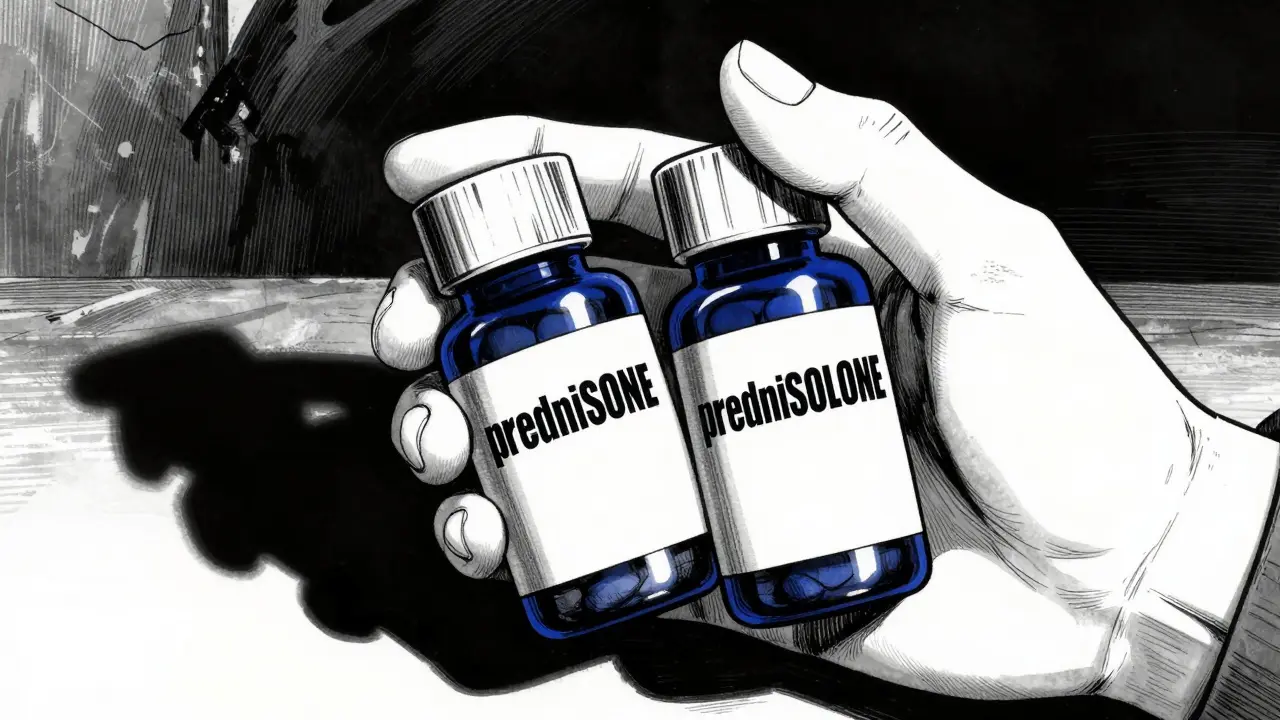
Imagine picking up a bottle of pills. The label says "Prednisone." You take one. But what if the pharmacist meant "Prednisolone"? Or what if the strength is 10 mg instead of the 5 mg you were prescribed? These aren't just hypothetical scenarios; they are real dangers that happen every day. According to the Institute of Medicine, preventable adverse drug events cause at least 1.5 million incidents annually in the United States alone. That translates to roughly $3.5 billion in excess medical costs and, more tragically, an estimated 7,000 deaths each year in U.S. hospitals. The good news? Most of these errors are preventable if we know how to properly verify medication names, strengths, and dosage forms.
You don't need to be a doctor or a pharmacist to protect yourself or your loved ones. Whether you are a patient managing chronic conditions, a caregiver helping an elderly parent, or a healthcare student learning the ropes, understanding the fundamentals of medication safety is a life-saving skill. This guide breaks down exactly how to check these three critical components so you can avoid common pitfalls and ensure you are taking the right medicine, at the right dose, in the right form.
The Three Pillars of Medication Verification
When verifying any medication, you must look at three distinct elements: the name, the strength, and the dosage form. Missing or misinterpreting any one of these can lead to serious harm. Let's break them down individually.
1. Checking the Medication Name
Drug names are the first line of defense, but they are also the most confusing. Many drugs have similar sounding or looking names, known as Look-Alike/Sound-Alike (LASA) drugs. For example, Dopamine is a neurotransmitter used in shock treatment and Dobutamine is a heart stimulant used for heart failure. One letter difference, two very different effects.
To check names safely:
- Compare Generic and Brand Names: Always check both. Sometimes a generic name looks like a brand name of a different drug.
- Use Tall Man Lettering: Many pharmacies now use "Tall Man" lettering to highlight differences, such as predniSONE vs. predniSOLONE. If you see this on a label, pay attention to the capitalized letters-they are there to help you spot the difference.
- Avoid Abbreviations: Never rely on shorthand. "MS" could mean Morphine Sulfate or Magnesium Sulfate. In emergency departments, this abbreviation has led to dangerous mix-ups. Always spell out the full name.
2. Verifying the Strength
Strength tells you how much active ingredient is in each unit of the medication. This is where decimal errors and unit confusion often occur. A misplaced decimal point can turn a safe dose into a toxic one.
Key rules for checking strength:
- Watch the Units: Is it milligrams (mg), micrograms (mcg), or grams (g)? Remember that 1,000 mcg equals 1 mg. Confusing these two can result in a 1,000-fold overdose. The Institute for Safe Medication Practices (ISMP) recommends always writing "mcg" instead of using the Greek symbol μg, which can look like "mg" or "ug".
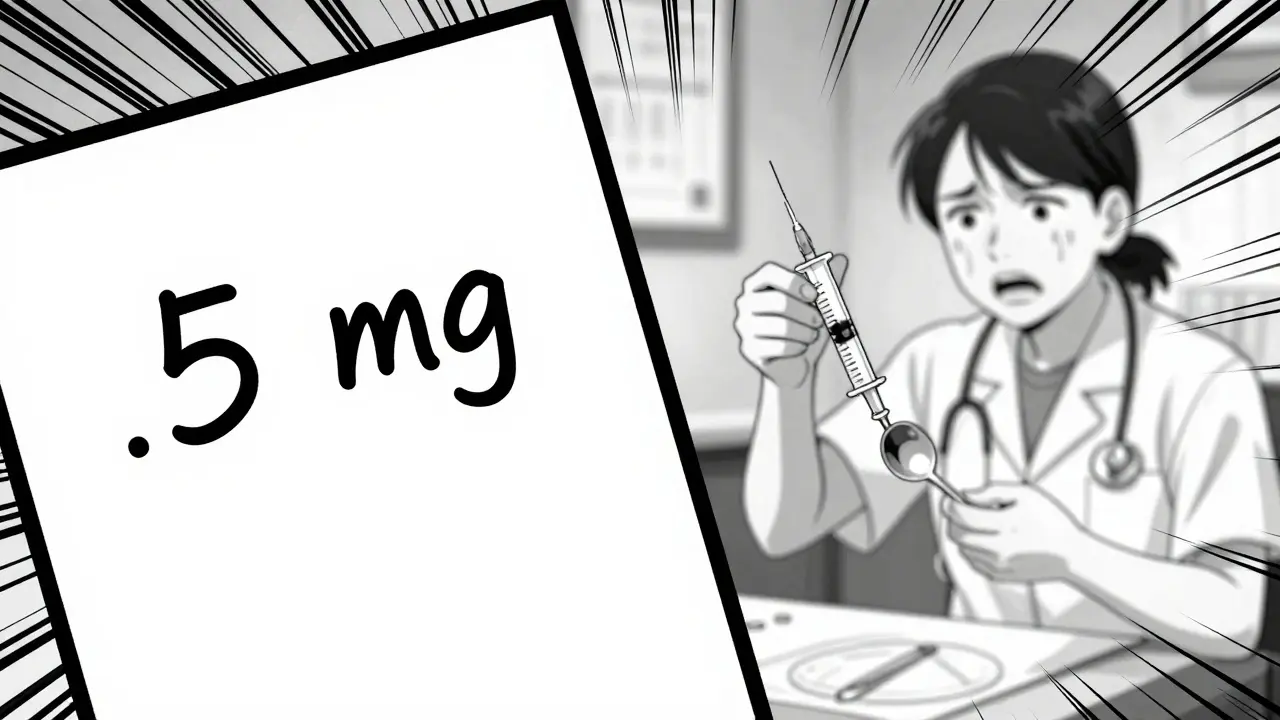
- Use Leading Zeros: For doses less than one, always use a leading zero. Write "0.5 mg," never ".5 mg." The missing zero can be easily overlooked, leading someone to read it as 5 mg.
- Check for Spaces: There should always be a space between the number and the unit. "10mg" can be misread as "10 mg" or even "10 mg" depending on font clarity. The ISMP guidelines explicitly state that omitting this space contributes to approximately 12% of medication errors related to unit misinterpretation.
3. Identifying the Dosage Form
Dosage form refers to the physical form of the medication-tablet, capsule, liquid, cream, injection, etc. Giving the wrong form can be ineffective or dangerous. For instance, applying an oral medication topically or injecting a medication meant for oral use can cause severe tissue damage or systemic toxicity.
When checking dosage forms:
- Match the Prescription: If the prescription says "tablet," do not accept a "capsule" unless specifically instructed by a pharmacist. They may seem similar, but their absorption rates can differ.
- Check for Special Instructions: Some tablets are "extended-release" (ER) or "enteric-coated." Crushing these can release the entire dose at once, causing an overdose. Always verify if the form allows for splitting or crushing.
- Liquids Require Careful Measurement: Oral liquids are measured in volume (mL). Ensure you have the correct measuring device. Household teaspoons are notoriously inaccurate.
The Three-Point Verification Process
Experts from the American Society of Health-System Pharmacists (ASHP) recommend verifying medications at three critical points. You can apply this logic whether you are in a hospital, a pharmacy, or at home.
- When Receiving the Order: Before anything else, check for completeness. Does the order include the drug name, strength with units, dosage form, route, and frequency? If any piece is missing, ask for clarification immediately. Michael Cohen, President of ISMP, notes that the absence of the strength component is one of the most dangerous omissions in medication communication.
- When Preparing the Medication: Compare the physical product against the original order. Read the label on the bottle or vial. Does it match the prescription exactly? This is where barcode scanning helps in professional settings, reducing dispensing errors by up to 83% according to studies. At home, this means visually inspecting the pill shape, color, and imprint code against your reference.
- Immediately Before Administration: Confirm the patient's identity and the medication's appropriateness. Use the "read-back" method: verbally repeat the medication name, strength, and dosage form to yourself or another person. This simple step has been cited as effective in nearly 90% of positive user experiences among nurses.
Common Pitfalls and How to Avoid Them
Even with protocols in place, human error persists. Here are some specific traps to watch out for, based on real-world data from the FDA and ISMP.
| Error Type | Example | Risk | Solution |
|---|---|---|---|
| Decimal Misplacement | .5 mg vs 5 mg | 10-fold overdose | Always use leading zeros (0.5 mg) |
| Unit Confusion | U (unit) vs 0 | 10-fold dosing error | Write out "unit" fully; never use "U" |
| Ratio Misinterpretation | Epinephrine 1:10,000 | Wrong concentration injected | Convert to standard format: 0.1 mg/mL |
| Abbreviation Ambiguity | MS | Morphine vs Magnesium Sulfate | Spell out full chemical names |
| Look-Alike Names | Zyprexa vs Zyloprim | Wrong therapeutic effect | Use Tall Man lettering; double-check spelling |
One particularly dangerous issue involves insulin strengths. In online pharmacy communities, confusion between insulin concentrations accounts for over 37% of reported horror stories. Always check the box and the pen injector for the specific concentration (e.g., U-100 vs U-200). Another frequent issue is the misinterpretation of "U" for unit. Writing "U-100" can look like "0-100," leading to massive dosing errors. The Joint Commission has banned the use of "U" for this reason. Always write "unit."
Technology and Human Factors
Modern healthcare relies heavily on Electronic Health Records (EHR) and Clinical Decision Support systems. Studies show that EHRs with integrated decision support can reduce medication errors by 55%. Systems like Epic and Cerner have built-in checks for look-alike names and strength calculations. However, technology is not infallible.
Dr. Robert Wachter, Chair of UCSF's Department of Medicine, warns of "automation bias." This occurs when clinicians trust the computer system too much and ignore visible discrepancies because the system approved the order. This contributes to about 18% of alert fatigue-related errors. The key is to remain engaged. Do not let the computer do all the thinking. Your eyes and brain are still the final safety net.
For patients, technology can also help. Apps that scan barcodes on medication bottles can provide instant information about names, strengths, and interactions. However, always cross-reference with the physical label and your pharmacist's advice. No app replaces professional verification.

Practical Tips for Patients and Caregivers
If you are managing your own medications or helping someone else, here is a checklist to keep safe:
- Keep a Master List: Maintain an updated list of all medications, including over-the-counter drugs and supplements. Include the name, strength, dosage form, and frequency.
- Ask Questions: If a new medication looks different from the old one (different color, shape, or imprint), ask the pharmacist before taking it. Manufacturers change packaging frequently.
- Use One Pharmacy: Consolidating all prescriptions at one pharmacy allows the pharmacist to check for interactions and duplicates more effectively.
- Review Regularly: Every six months, sit down with your doctor or pharmacist to review all medications. Ask if any can be stopped or adjusted. This "medication reconciliation" process catches errors that accumulate over time.
- Lighting Matters: When reading labels, ensure you have good lighting. Poor contrast on labels is a factor in 23% of medication errors, according to FDA reviews.
Conclusion
Checking medication names, strengths, and dosage forms is not just a bureaucratic step; it is a vital act of self-preservation. By understanding the risks of look-alike names, decimal errors, and dosage form mismatches, you empower yourself to catch mistakes before they cause harm. Whether you rely on high-tech EHR systems or simple visual checks, the principle remains the same: verify, question, and confirm. With the right knowledge and a cautious approach, you can significantly reduce the risk of medication errors and ensure safer health outcomes for yourself and those you care for.
What is the most common cause of medication errors?
The most common causes include look-alike/sound-alike drug names, strength miscalculations (especially involving decimals and units), and incomplete prescriptions. According to the FDA, 34% of reported medication errors involve strength miscalculations, often due to failing to verify the strength against the original prescription.
Why is it important to use leading zeros in medication dosages?
Using a leading zero (e.g., 0.5 mg instead of .5 mg) prevents the decimal point from being missed. If the decimal is overlooked, .5 mg could be read as 5 mg, resulting in a tenfold overdose. This is a critical safety standard recommended by the ISMP.
What does "Tall Man" lettering mean?
Tall Man lettering is a formatting technique used to distinguish between look-alike drug names by capitalizing certain letters to highlight differences. For example, predniSONE and predniSOLONE. This visual cue reduces confusion errors by up to 76%, according to ISMP data.
Can I crush extended-release tablets?
No, you should never crush extended-release (ER) or enteric-coated tablets unless specifically instructed by a healthcare provider. Crushing them destroys the controlled-release mechanism, potentially releasing the entire dose at once and causing an overdose or toxicity.
How can technology help prevent medication errors?
Electronic Health Records (EHR) with clinical decision support can reduce errors by 55% by flagging potential interactions, look-alike names, and incorrect dosages. Barcode scanning in pharmacies and hospitals also significantly reduces dispensing errors by ensuring the right product matches the right order.
What should I do if my medication looks different than usual?
If your medication looks different in color, shape, or imprint, do not take it until you have verified it with your pharmacist. Manufacturers often change suppliers or packaging, but it is crucial to confirm that it is still the correct drug and strength.
Sharon O’Mahonh
May 25, 2026 AT 23:21I hear your frustration Ryan but maybe there's another way to look at this. Education empowers us rather than fear. Understanding the science behind medication safety helps us take charge of our health journey together. We can be advocates for ourselves without assuming malice from every institution. Let's focus on what we can control like reading labels carefully and asking questions when something seems off.
Jonhnnie john13
May 27, 2026 AT 00:53The article is fundamentally flawed in its approach to human error statistics. It ignores systemic failures in hospital staffing ratios which are the primary driver of these incidents. You cannot solve a resource allocation problem with better labeling protocols. This is classic deflection by industry apologists who want to shift blame onto individual practitioners rather than addressing the root cause of understaffing and burnout in healthcare facilities across the globe.
Anthony Padilla
May 27, 2026 AT 23:29I totally get where you are coming from Jonhnnie but i think we need to balance both perspectives here. Yes staffing is huge but patients also have a role to play in their own safety especially when they pick up meds at home. In my culture we always double check everything before taking it because trust is earned not given freely. Maybe combining systemic changes with personal vigilance is the best path forward for everyone involved.
Elizabeth Fandry
May 29, 2026 AT 02:53One must acknowledge that the intellectual capacity required to decipher modern pharmaceutical nomenclature is beyond the average citizen 🧠💊. This guide, while well-intentioned, presupposes a level of literacy and attention to detail that simply does not exist in the masses. Perhaps we should return to an era where physicians were true gatekeepers of knowledge, sparing the layperson the burden of such tedious verification processes. After all, why empower the uninitiated when expertise exists? ✨
Madeline Petes
May 29, 2026 AT 07:23Hey Elizabeth thats kinda rude tbh. Everyone deserves to know whats going into their body regardless of their education level. I personally feel super empowered now that i know about tall man lettering and leading zeros. Its not about being smart its about staying safe. So please dont talk down to people trying to protect themselves and their families from preventable mistakes.
Ramanath Rao
May 29, 2026 AT 18:11This entire post is garbage! In India we handle millions of prescriptions daily with far fewer resources and errors are minimal compared to your bloated western systems. Your reliance on technology and excessive caution shows weakness in your healthcare infrastructure. Stop blaming the patient for systemic incompetence and fix your hospitals instead of writing clickbait articles about checking labels like children!
Russell Russell
May 31, 2026 AT 16:47Ramanath let's channel that energy into constructive dialogue. Every system has strengths and weaknesses. The goal here is universal safety standards that benefit everyone regardless of geography. By sharing best practices like barcode scanning and standardized units we elevate care globally. Let's build bridges not walls through mutual respect and shared learning experiences.
Naresh Chandra
May 31, 2026 AT 23:53I deeply appreciate the comprehensive nature of this guide; it resonates with me on many levels. As someone who cares for elderly relatives; I often find myself overwhelmed by the complexity of modern medications. The section on dosage forms was particularly enlightening; thank you for highlighting the dangers of crushing extended-release tablets. It is heartening to see such detailed information made accessible to the general public.
Cyburg Adeoye
June 1, 2026 AT 07:41Naresh you are absolutely right to value this resource. Patient empowerment is crucial in today's healthcare landscape. I work in community health outreach and seeing patients engage with their medication profiles transforms outcomes significantly. When individuals understand the pharmacokinetics and potential interactions they become active participants rather than passive recipients. Let's continue to support each other in this vital educational journey.
Joseph Teichman
June 1, 2026 AT 21:26Simple advice works best. Check label. Ask pharmacist. Use one pharmacy. Dont overcomplicate it. Most people just need clear steps not essays. Good luck keeping up with all those medical terms though.
Angela Niculescu
June 2, 2026 AT 10:13Actually most medication errors happen because doctors write illegible prescriptions not because patients cant read labels. Blaming the consumer is lazy journalism. Pharmacists are trained professionals who should catch these issues before they leave the counter. If you need a blog post to tell you to check your pills then the real failure is in the training of healthcare providers not the intelligence of the public.
Victoria Mangiapane
June 2, 2026 AT 11:00Boring stuff. Who has time to read all this drivel? Just take the pill and hope for the best. My grandma took her meds wrong once and she's fine so clearly nothing matters anyway. Why are we even discussing this?