How to Avoid Panic and Make Informed Decisions After Drug Safety Alerts
 Dec, 31 2025
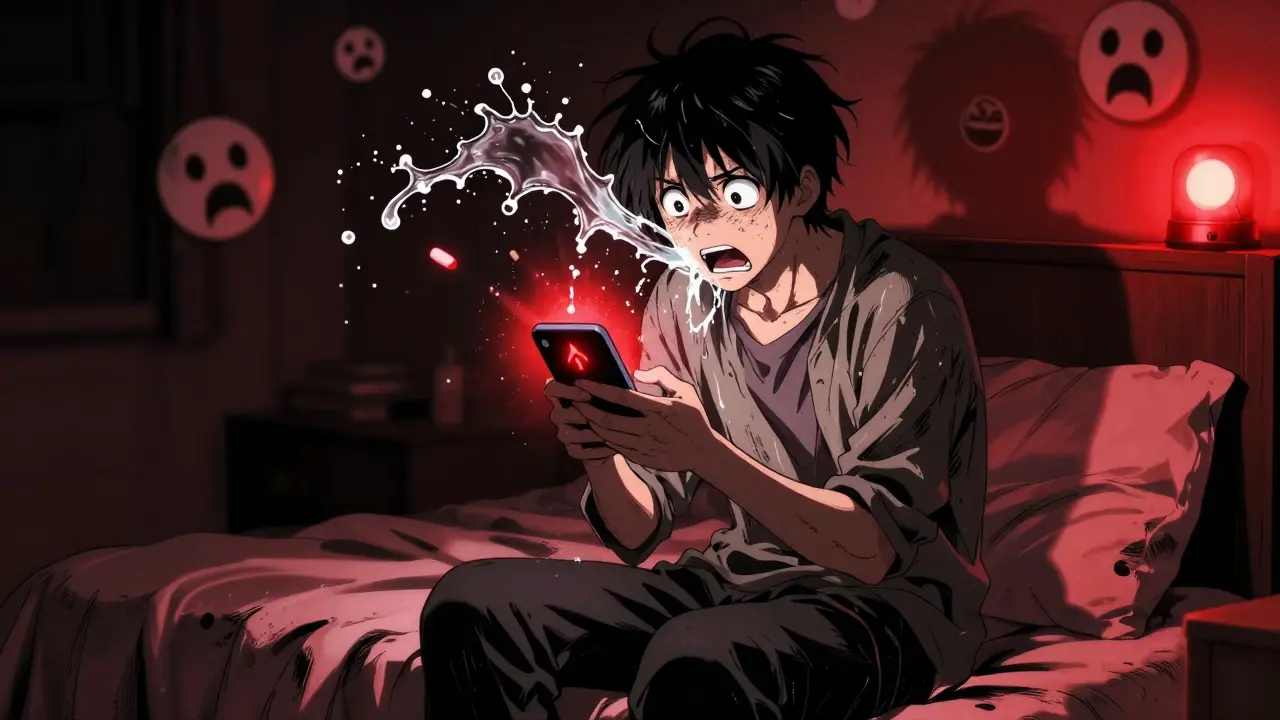
When a drug safety alert pops up-whether it’s a recall notice, a warning about side effects, or a sudden change in dosing guidelines-it’s easy to feel like the ground just dropped out from under you. Your heart races. Your breath gets shallow. Your mind spirals: Is this dangerous? Should I stop taking it now? What if I’ve already been hurt? This isn’t just stress. It’s a biological emergency response, and it’s designed to shut down your thinking brain so you react fast. But in drug safety situations, reacting fast isn’t what you need. You need to think clearly.
Why Panic Makes Drug Safety Decisions Worse
Your brain doesn’t distinguish between a tiger charging at you and a drug alert on your phone. Both trigger the same survival system: the amygdala takes over, the prefrontal cortex-the part that weighs risks, checks facts, and plans-goes offline. Studies show that during panic, your ability to evaluate options drops by up to 67%. You don’t weigh pros and cons. You don’t check the source. You just act. And in drug safety cases, acting on panic can be dangerous. Stopping a medication cold turkey because of an unverified alert can cause withdrawal, rebound symptoms, or even life-threatening complications. On the flip side, ignoring a real warning because you’re too overwhelmed to process it can lead to serious harm.Stop the Panic Before It Stops You
The first step isn’t to find answers. It’s to calm your body. You can’t think clearly if your heart is pounding at 120 beats per minute and your breathing is rapid and shallow. Here’s what works, backed by clinical research:- Temperature shock: Splash cold water (10-15°C) on your face for 15-30 seconds. It triggers the mammalian dive reflex, instantly slowing your heart rate.
- Intense movement: Do 30 seconds of jumping jacks or run in place. This burns off adrenaline and resets your nervous system.
- Paced breathing (4-7-8): Breathe in for 4 seconds, hold for 7, exhale slowly for 8. Repeat three times. This brings your heart rate down from panic levels to calm within 90 seconds.
- 5-4-3-2-1 grounding: Name 5 things you see, 4 you can touch, 3 you hear, 2 you smell, 1 you taste. This forces your brain out of fear mode and back into the present.
These aren’t just ‘relaxation tricks.’ They’re neurobiological interventions. People who use them during drug safety alerts report regaining clear thinking in under two minutes-time enough to pause, breathe, and stop reacting like a startled animal.
What to Do After You’re Calm
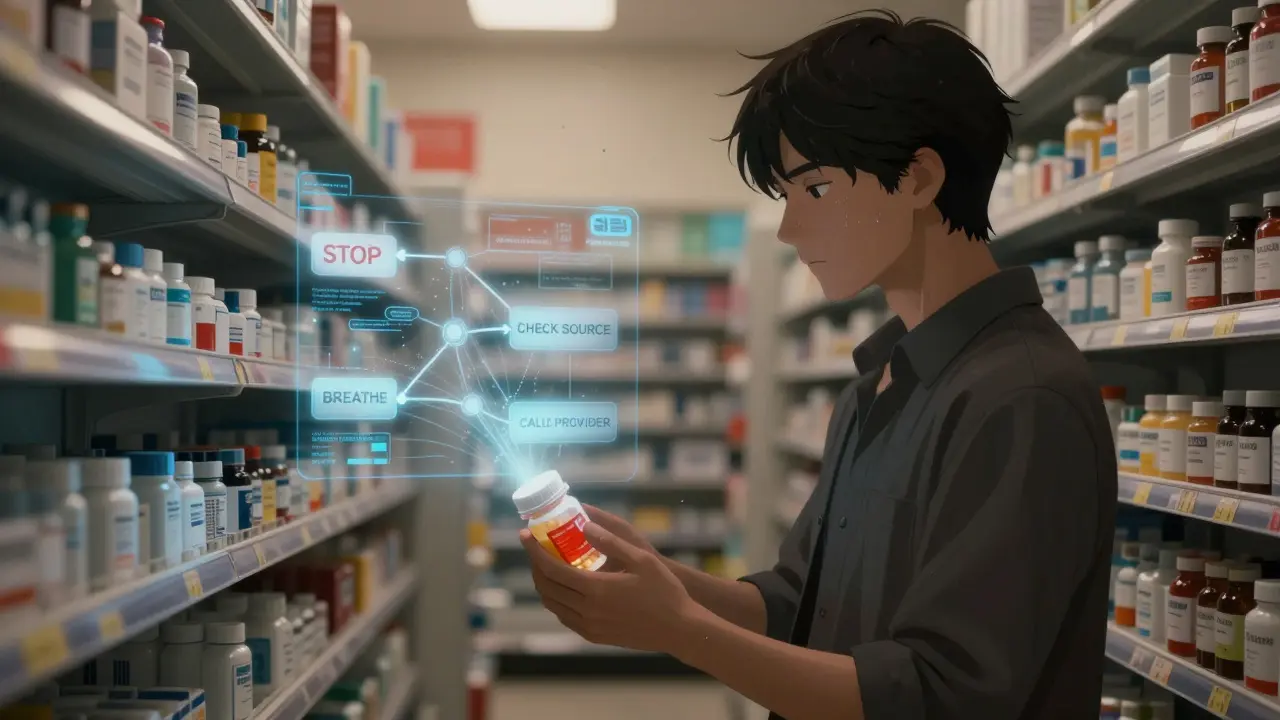
Once your body settles, your brain can come back online. Now it’s time to make a smart decision. Here’s how:- Check the source. Is this from the FDA, MHRA, TGA, or your country’s official drug regulator? Or is it a blog, social media post, or sensational headline? Official alerts have specific identifiers, dates, and links to clinical data. Unofficial ones rarely do.
- Find the real risk. What’s the actual problem? Is it a rare side effect affecting 1 in 10,000? Or a common, mild reaction like dizziness? Is it a new warning for a drug that’s been used safely for 20 years? Context matters.
- Don’t stop without talking to your provider. Most drug alerts don’t mean ‘stop immediately.’ They mean ‘be aware.’ Stopping suddenly can be riskier than continuing. Your doctor knows your history, your other meds, and your health goals. They can help you decide whether to pause, adjust, or continue.
- Use a decision filter. Ask yourself: Does this decision align with my core health values? Is my priority safety? Long-term stability? Symptom control? Letting your values guide you prevents impulsive choices driven by fear.

Prepare Before the Alert Hits
Waiting until an alert happens to learn how to respond is like learning to swim during a tsunami. The most effective people have a system already in place:- Practice daily. Spend 10 minutes a day doing paced breathing or the 5-4-3-2-1 technique. After 30 days, your brain learns to activate these responses automatically-even during panic.
- Build an alert kit. Keep a small folder or digital note with: your doctor’s contact info, a list of your current meds, a printed copy of the 4-7-8 breathing steps, and a simple flowchart: Stop → Breathe → Check Source → Call Provider → Decide Together.
- Limit caffeine. More than 200mg a day (about two cups of coffee) raises baseline anxiety. If you’re prone to panic, cut back. It makes your nervous system less reactive overall.
- Journal your alerts. After each one, write down: What happened? How did you feel? What did you do? What worked? This builds your own personal playbook.
Why This Matters More Than Ever
We’re getting more alerts than ever. The average person now receives 67 system alerts a week-phone notifications, email warnings, app alerts. Drug safety alerts are just one type. And they’re getting more complex. In 2025, the European Union’s DORA law requires healthcare systems to include human psychological response protocols in their alert systems. Hospitals, pharmacies, and insurers are starting to train staff in panic management because they’ve seen too many people make bad decisions under stress.Even tech companies are catching on. Some new drug tracking apps now include built-in breathing prompts when an alert is triggered. Wearables that detect rising heart rate can automatically send a calming message: Pause. Breathe. You’re safe. Check the source. This isn’t science fiction-it’s happening now.
Real People, Real Results
One user on Reddit, who manages a chronic condition with a high-risk medication, shared how she used the 5-4-3-2-1 technique after receiving a false alert about her drug being recalled. She wrote: ‘I was about to throw out my entire month’s supply when I remembered the grounding trick. Took me 90 seconds. Called my pharmacist. Turned out it was a typo. Saved me from withdrawal and a lot of stress.’Another, a nurse in New Zealand, said: ‘I used to freeze every time a drug safety alert came through. Now I have my breathing steps on my phone’s lock screen. I take three breaths before I even open the email. It’s changed everything.’
These aren’t rare stories. They’re the result of preparation. Of practice. Of choosing calm over chaos.
Final Thought: You Don’t Need to Be Perfect
You won’t always get it right. Sometimes you’ll panic anyway. That’s okay. What matters isn’t perfection-it’s progress. The goal isn’t to never feel fear. It’s to not let fear make your decisions for you. Every time you pause, breathe, and check the facts before acting, you’re training your brain to be stronger than your panic. And in drug safety, that’s the most powerful medicine of all.What should I do immediately after receiving a drug safety alert?
First, stop and breathe. Use a grounding technique like the 4-7-8 breathing method or the 5-4-3-2-1 exercise to calm your nervous system. Don’t act on emotion. Wait until your heart rate slows and your thoughts clear. Then, verify the source-only trust alerts from official health agencies like the FDA, TGA, or your national drug regulator. Contact your doctor or pharmacist before making any changes to your medication.
Is it safe to stop my medication right away if there’s an alert?
Almost always, no. Most drug safety alerts indicate a potential risk-not an immediate danger. Stopping suddenly can cause withdrawal symptoms, rebound effects, or worsen your condition. For example, abruptly stopping antidepressants or blood pressure meds can be dangerous. Always consult your healthcare provider before making changes. They know your medical history and can help you weigh the real risk against the potential harm of stopping.
How can I tell if a drug alert is real or fake?
Real alerts come from official sources: government health agencies (like the TGA in Australia, FDA in the US, or Medsafe in New Zealand), your pharmacy, or your prescribing doctor. They include specific drug names, batch numbers, dates, and links to official reports. Fake alerts often come via email, social media, or pop-up ads. They use scary language like ‘IMMEDIATE RECALL’ or ‘DANGEROUS SIDE EFFECTS’ without details. If you’re unsure, search the drug name + ‘safety alert’ + your country’s health authority name. Don’t trust links in unsolicited messages.
Can practicing breathing techniques really help during a drug alert?
Yes, and research shows it. Controlled breathing lowers heart rate from panic levels (110-130 bpm) to calm levels (70-85 bpm) in under 90 seconds. This restores function to your prefrontal cortex, the part of your brain responsible for logic and decision-making. Studies show people who use breathing techniques during alerts make decisions 42% more accurately and respond 37% faster than those who don’t. Regular practice-even just 10 minutes a day-makes these responses automatic, so they kick in even when you’re stressed.
What if I panic every time I get an alert, even after trying these techniques?
You’re not alone. Many people struggle with this. If panic responses are frequent and overwhelming, consider talking to a therapist trained in Cognitive Behavioral Therapy (CBT) or Dialectical Behavior Therapy (DBT). These approaches are proven to reduce panic-related decision impairment by nearly 60%. You can also ask your doctor about a referral to a mental health professional who specializes in health anxiety. There’s no shame in needing extra support-your brain is wired to react this way, and with the right tools, it can learn to respond differently.
LIZETH DE PACHECO
January 1, 2026 AT 12:28Just wanted to say this post saved my life last month. Got an alert about my antidepressant, panicked, almost tossed my whole bottle. Did the 5-4-3-2-1 trick like you said-named my cat, my coffee mug, the sound of the AC, the smell of rain through the window, and the mint gum I had. Took 45 seconds. Called my pharmacist. Turned out it was a typo in a foreign database. I’m still on my med, and I’m alive. Thank you.
Also, I printed the breathing steps and taped them to my fridge. Now my 70-year-old mom uses them too.
Lee M
January 3, 2026 AT 06:57Let’s be real-this whole system is a distraction. The real issue is that Big Pharma and the FDA are intentionally creating panic to push new drugs. Every ‘alert’ is a marketing ploy to get you to switch to something more expensive. They don’t care if you stop your med-they care if you buy their next one. The breathing tricks? Cute. But they’re just keeping you docile while they profit off your fear. Wake up.
They’ve been doing this since the 80s. Ask yourself: who benefits when you panic?
Kristen Russell
January 4, 2026 AT 15:03100% this. I used to cry every time I got an alert. Now I take three breaths. That’s it. No drama. No panic. Just breathe. And then I call my pharmacist. Game changer.
Also, coffee is the enemy. Cut it out. Your nerves will thank you.
Bryan Anderson
January 5, 2026 AT 13:45I appreciate the thoroughness of this guide. The neurobiological explanations are particularly well-supported by recent literature on autonomic regulation during acute stress. I’ve incorporated the 4-7-8 technique into my daily routine, and it has significantly improved my decision-making under pressure-not just with medications, but in high-stakes work scenarios as well.
One minor suggestion: including a link to the FDA’s official alert portal might be helpful for users unfamiliar with how to verify sources. The current text implies familiarity with regulatory bodies without providing direct access points.
Matthew Hekmatniaz
January 7, 2026 AT 00:11As someone who grew up in a culture where medical authority is rarely questioned, this post changed how I see health alerts. Back home, we just do what the doctor says-no questions. But here, learning to pause, verify, and ask-especially with my diabetes meds-felt like learning a new language.
Now I show my family the 5-4-3-2-1 trick. Even my grandma does it when she gets a scary email. It’s not about distrust. It’s about empowerment.
Liam George
January 7, 2026 AT 22:02Of course they want you to ‘breathe.’ That’s the whole point. They don’t want you digging into the actual data. The FDA’s database is buried under layers of red tape. The ‘official alerts’? Mostly PR spin. The real side effects are in the FAERS database-unfiltered, raw, and suppressed. You think your ‘calm breathing’ is helping? It’s just keeping you from seeing the truth.
And that wearable that says ‘you’re safe’? That’s surveillance. They’re tracking your heart rate to predict when you’ll stop taking your drug. It’s not wellness-it’s behavioral control. Wake up. The system doesn’t want you rational. It wants you compliant.
Dusty Weeks
January 9, 2026 AT 11:20bro i just threw out my meds after one alert 😭 i didnt even read it
now im scared to take anything
help?
ps i love u guys
💙
Sally Denham-Vaughan
January 10, 2026 AT 09:40Y’all are overthinking this. I got the alert, took a sip of water, scrolled to my doctor’s number, called, they said ‘keep taking it.’ Done.
My secret? I don’t read the internet before 9am. No alerts before coffee. Life’s better that way.
Richard Thomas
January 11, 2026 AT 19:38What’s fascinating here isn’t just the physiological response to alerts, but the deeper epistemological crisis they expose. We live in a world saturated with information, yet starved of epistemic trust. The amygdala doesn’t just react to danger-it reacts to uncertainty. And in an age where every institution-from pharmaceutical companies to media outlets to government agencies-is perceived as compromised, the panic isn’t irrational. It’s rationalized by systemic betrayal.
The breathing techniques work not because they calm the body, but because they create a micro-space of autonomy-a moment where you, not the algorithm, not the corporation, not the fear-mongering headline, get to choose how to respond. That’s not just medicine. That’s existential resistance.
Paul Ong
January 13, 2026 AT 00:17Stop breathe check call decide
That’s it
Write it on your hand
Do it every time
Even if you think it’s fake
Do it anyway
It’s not about the alert
It’s about you not letting fear run your life
Done
Andy Heinlein
January 13, 2026 AT 18:35I used to freak out every time my blood pressure med had a new alert. Then I started doing the 4-7-8 breathing while waiting for my pharmacist to answer. Now I laugh when I get them. Like, ‘oh cool, another one?’
Also I cut my coffee in half. Big difference. My hands don’t shake anymore. Just sayin’.
Ann Romine
January 13, 2026 AT 21:51As someone who works in global health policy, I’ve seen how these alerts vary wildly across countries. The FDA’s system is robust, but in places like Nigeria or Indonesia, people get alerts via WhatsApp from strangers. The breathing techniques here are brilliant-but they assume access to reliable sources and healthcare providers. What about the millions who don’t? We need global infrastructure to match these psychological tools.
Todd Nickel
January 14, 2026 AT 21:07The empirical validity of the 4-7-8 breathing protocol is well-documented in peer-reviewed literature on vagal tone modulation, particularly in studies by Lehrer et al. (2020) and the American Heart Association’s 2022 guidelines on stress-induced arrhythmia prevention. The grounding technique (5-4-3-2-1) aligns with cognitive behavioral principles of sensory reorientation, which reduces cognitive load during acute stress by engaging the dorsolateral prefrontal cortex.
However, the assumption that all users have equitable access to healthcare providers for verification remains a critical flaw in the proposed framework. Socioeconomic disparities in access to primary care significantly limit the applicability of the ‘call your provider’ step, rendering the entire model potentially elitist in practice. A more inclusive approach would integrate telehealth triage protocols or community health worker networks as fallbacks.
Austin Mac-Anabraba
January 16, 2026 AT 06:20Let’s cut the fluff. You’re not ‘training your brain.’ You’re being manipulated into compliance. The system wants you to believe that breathing is enough because then you won’t demand real accountability. Real safety isn’t found in breathing techniques-it’s found in suing pharmaceutical companies for hiding adverse events, in forcing transparency, in defunding the FDA’s revolving door with Big Pharma. All this ‘calm’ nonsense? It’s a distraction. A sedative for the masses. Don’t be fooled.
Phoebe McKenzie
January 16, 2026 AT 06:27THIS IS WHY PEOPLE ARE DYING. YOU’RE TELLING PEOPLE TO ‘BREATHE’ WHEN THEY SHOULD BE PROTESTING. YOUR ‘ALERT KIT’ IS A TOY. THE REAL PROBLEM IS THAT DRUG COMPANIES KILL PEOPLE AND NO ONE GETS JAIL TIME. YOU WANT TO ‘TRAIN YOUR BRAIN’? TRAIN IT TO DEMAND JUSTICE. NOT TO BREATHE THROUGH THE MURDER.
YOUR ‘DECISION FILTER’ IS A LIE. YOUR VALUES DON’T MATTER WHEN THE SYSTEM IS CORRUPT.
I HOPE YOU’RE HAPPY WITH YOUR BREATHING EXERCISES WHILE YOUR FRIENDS DIE FROM SIDE EFFECTS THEY WEREN’T WARNED ABOUT.
YOU’RE PART OF THE PROBLEM.