How Medicines Work and When They're Safe to Use
 Jan, 5 2026
Ever taken a pill and wondered how it actually works inside your body? It’s not magic. It’s chemistry. Every medicine, whether it’s aspirin for a headache or a daily pill for high blood pressure, is a carefully designed chemical that targets specific spots in your body. But knowing how it works isn’t just interesting-it’s the difference between feeling better and ending up in the hospital.
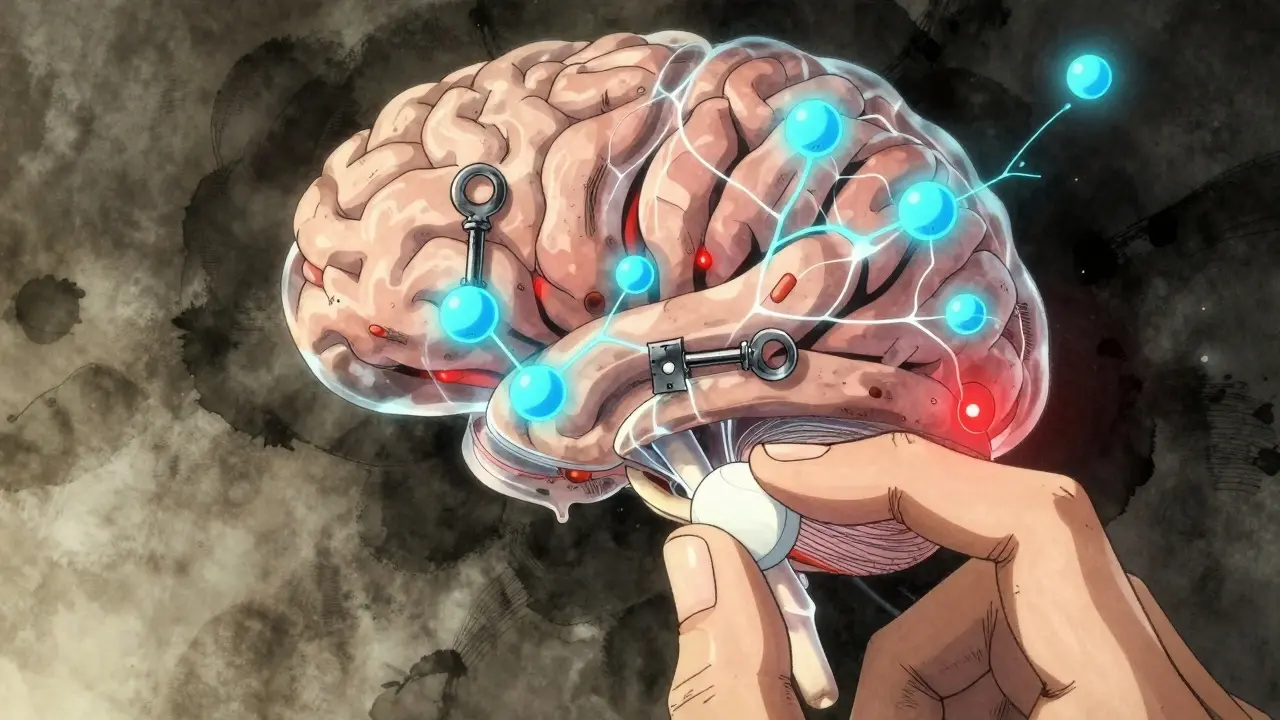
Medicines Are Like Keys and Locks
Your body is full of tiny receptors-protein structures on cells that act like locks. Medicines are the keys. Some keys turn the lock to start something (agonists), like serotonin reuptake inhibitors (SSRIs) that help lift mood by keeping more serotonin active in the brain. Others block the lock (antagonists), like beta-blockers that stop adrenaline from speeding up your heart. This is called the lock-and-key mechanism, and it’s why even small changes in a drug’s structure can turn a lifesaver into a danger.Take thalidomide. In the 1950s, it was sold as a safe sleep aid and morning sickness remedy. But one version of the molecule caused severe birth defects because it interacted with developing fetal tissue in a way scientists didn’t understand. The other version was harmless. Today, we know why. That’s why every new drug now has to be tested for both its intended effect and its unintended ones.
How Medicines Get to the Target
Taking a pill doesn’t mean it instantly works. It has to survive your stomach, get absorbed through your gut, and make it into your bloodstream. That’s called pharmacokinetics-what your body does to the drug. Some drugs, like those for diarrhea, act right in the gut and never enter the blood. Others, like painkillers or antibiotics, need to travel far.Once in the blood, about 95-98% of most drugs stick to proteins, like albumin. That’s important. Only the free, unbound portion can interact with receptors. If you take another drug that also binds to those same proteins-say, a common antibiotic-it can kick the first drug off, suddenly doubling its effect. That’s why warfarin, a blood thinner, can become dangerously strong if you start taking sulfonamides. Your doctor needs to know everything you’re on.
Then there’s the blood-brain barrier. It’s a protective wall that keeps most substances out of your brain. That’s good-your brain doesn’t need random chemicals messing with it. But for Parkinson’s, you need levodopa to get through. So it’s paired with carbidopa, which helps it cross. Without that combo, the drug wouldn’t work at all.
Why Some Drugs Are Riskier Than Others
Not all medicines have clear safety margins. Lithium, used for bipolar disorder, is a perfect example. It works-but the difference between a helpful dose and a toxic one is tiny. Blood levels must stay between 0.6 and 1.2 mmol/L. Too low, and it doesn’t help. Too high, and you get tremors, confusion, even kidney damage. That’s why people on lithium get regular blood tests. It’s not just routine-it’s life-saving.Compare that to statins. They lower cholesterol by blocking HMG-CoA reductase, a key enzyme in liver cholesterol production. Because we know exactly how they work, we can monitor their effect: if your LDL drops, the drug is doing its job. If you get muscle pain, we know it could be a sign of rhabdomyolysis-a rare but serious muscle breakdown. Patients who understand this connection are over three times more likely to report early symptoms, preventing hospitalization.
On the flip side, drugs with unclear mechanisms are riskier. Dimebon, an old Russian antihistamine, showed promise in early Alzheimer’s trials. But because scientists didn’t know how it worked, later large studies failed. No one could predict who would benefit or what side effects might pop up. That’s why the FDA now requires detailed mechanism-of-action (MOA) data for every new drug application-up from 62% in 2015 to 87% in 2023.
When Medicines Are Safe to Use
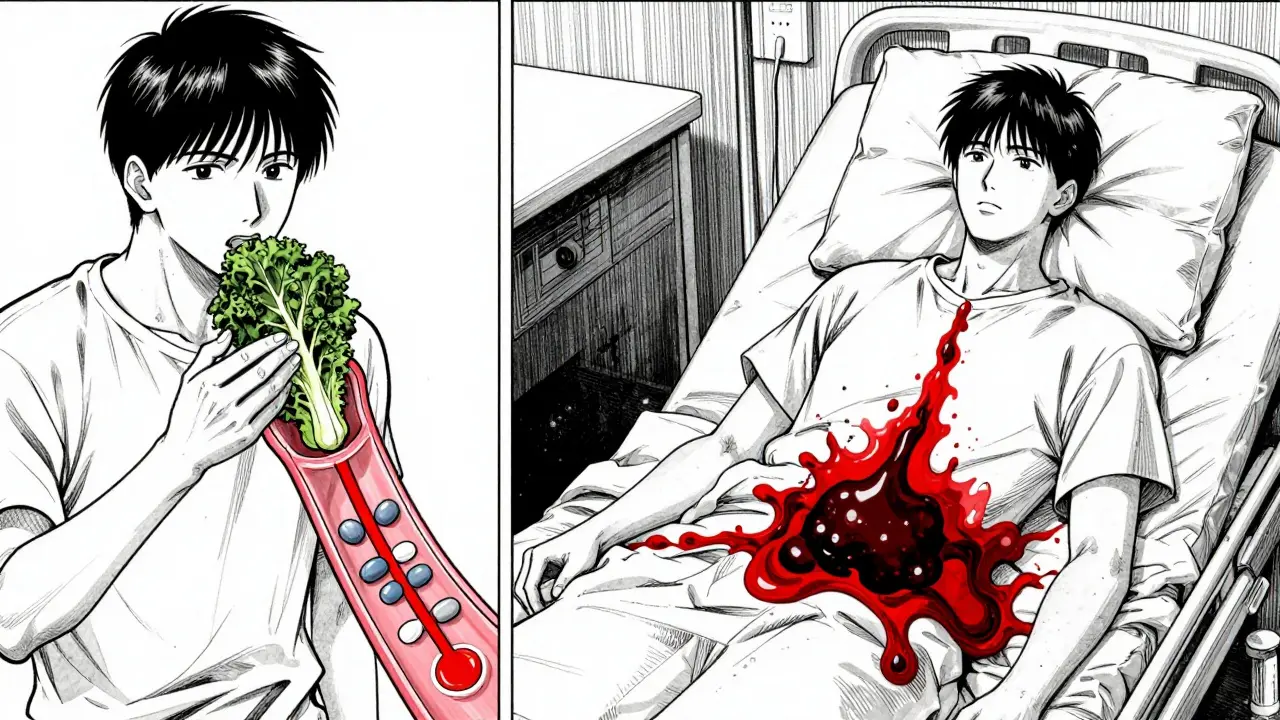
Safety isn’t just about the drug. It’s about you. Your age, your liver, your kidneys, your other meds, even your diet. Warfarin users need to watch vitamin K intake. Leafy greens like kale and spinach have 200-800 mcg per serving. Too much vitamin K can make warfarin less effective, raising your risk of clots. Too little, and you bleed. Patients who understand this can adjust their diet safely. Those who don’t end up in the ER.MAO inhibitors for depression are another example. They block an enzyme that breaks down tyramine, a chemical in aged cheese, cured meats, and tap beer. If you eat those foods while on MAOIs, tyramine builds up and can spike your blood pressure to dangerous levels-sometimes causing stroke. A single ounce of blue cheese has 1-5 mg of tyramine. That’s enough to trigger a crisis if you don’t know.
The FDA’s REMS program requires doctors to get trained before prescribing high-risk drugs like natalizumab for MS. Why? Because it blocks immune cells from entering the brain. Sounds good-until you realize that also lets a rare brain virus, PML, grow unchecked. Knowing the mechanism lets doctors monitor for early signs: headaches, vision changes, weakness. Catch it early, and you can stop the drug before it’s too late.
What You Can Do to Stay Safe
You don’t need a pharmacology degree. But you do need to ask three simple questions:- What is this medicine supposed to do? Is it blocking pain signals? Lowering blood pressure? Killing bacteria?
- What should I watch for? If it affects your liver, you might feel tired or nauseous. If it affects your muscles, you might ache or feel weak. Knowing what’s normal and what’s not helps you act fast.
- What should I avoid? Alcohol? Grapefruit? Antacids? Certain foods? These aren’t random warnings-they’re tied to how the drug is processed or how it interacts with your body.
Many patients say they’d feel safer if they understood how their meds worked. A 2023 survey found that 78% of people on trastuzumab for breast cancer felt more confident after learning it targets HER2 proteins. They could spot heart problems early because they knew the drug could affect heart muscle. Those who didn’t know? Only 29% recognized the signs.
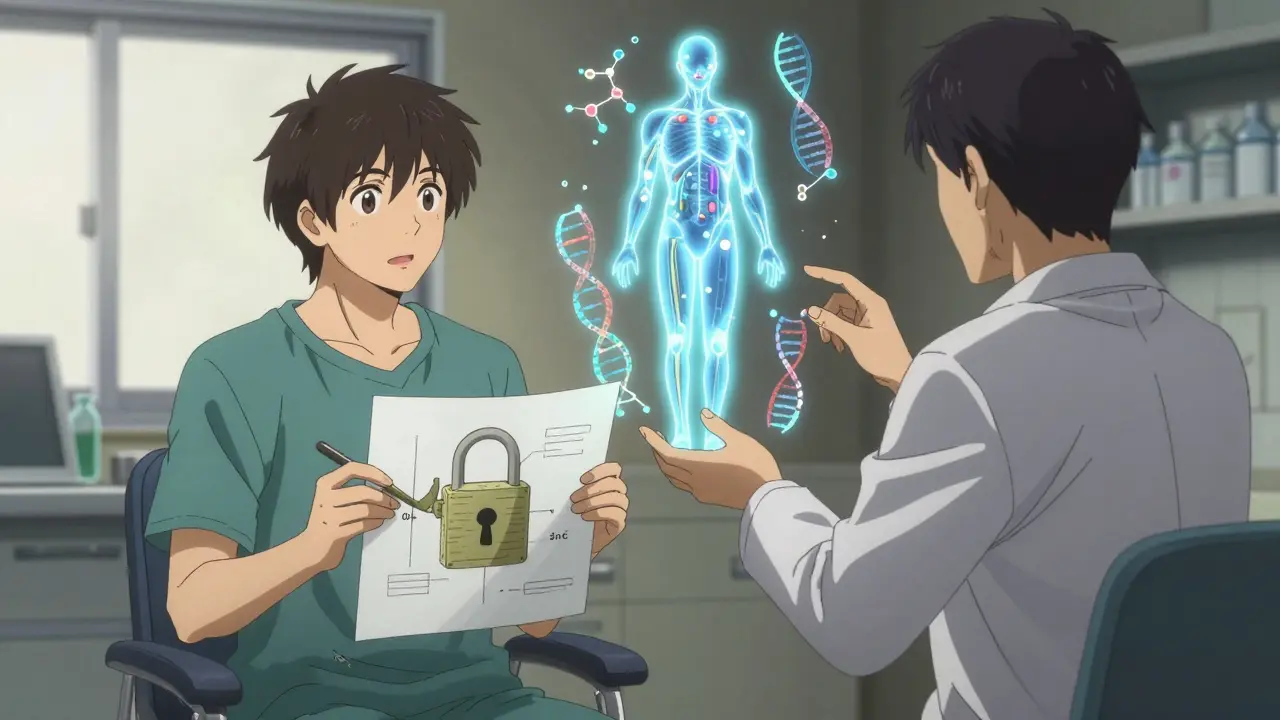
Pharmacists spend nearly 9 minutes per patient explaining this stuff. And studies show visual aids-like drawings of receptors and keys-boost understanding by 42%. Don’t be shy. Ask for a diagram. Ask again if you don’t get it. Your life depends on it.
The Future: Personalized Safety
Science is moving fast. The NIH’s All of Us program is collecting genetic data from a million people to see how DNA affects drug response. Turns out, 28% of bad reactions are linked to genes that change how your body processes meds. Someone might need half the dose because their liver breaks down the drug too slowly. Another might need double because they clear it too fast.By 2028, we might have “digital twins”-computer models of your body that simulate how a drug will affect you before you even take it. Early tests at Mayo Clinic show this could cut adverse events by 40-60%. But until then, the best tool you have is knowledge.
Medicines are powerful. They save lives. But they can also hurt you-if you don’t understand how they work. Safety isn’t just about following instructions. It’s about knowing why those instructions exist. And that’s something no app or label can replace. You have to ask. You have to listen. And you have to remember: your body isn’t just taking a pill. It’s having a conversation with chemistry.
How do medicines actually work in the body?
Medicines work by interacting with specific targets in your body, like receptors on cells. They can activate these targets (agonists), block them (antagonists), or interfere with enzymes. For example, aspirin blocks the COX-1 enzyme to reduce pain and inflammation, while SSRIs like fluoxetine stop serotonin from being reabsorbed, boosting mood. Each drug has a precise chemical design to fit its target, like a key in a lock.
Why is it important to know how a medicine works?
Knowing how a medicine works helps you recognize side effects early, avoid dangerous interactions, and understand why certain rules exist-like avoiding grapefruit or certain cheeses. Patients who understand their medication’s mechanism are more likely to report problems like muscle pain from statins or bleeding from warfarin, which can prevent serious complications. It also helps you trust your treatment and follow instructions more accurately.
Are all medications safe if taken as directed?
Not always. Even when taken exactly as prescribed, some drugs carry risks because of individual differences in metabolism, genetics, or other health conditions. Lithium, for example, has a very narrow safe range-too little doesn’t help, too much causes toxicity. Warfarin interacts with diet and other drugs. Some people metabolize drugs too slowly and build up dangerous levels. That’s why regular monitoring and open communication with your doctor are essential.
What should I do if I experience side effects?
Don’t stop taking the medicine without talking to your doctor. Instead, note what you’re feeling, when it started, and how severe it is. Then contact your prescriber or pharmacist. For serious symptoms like chest pain, trouble breathing, swelling, or sudden weakness, seek emergency care immediately. Many side effects are manageable if caught early-especially if you understand what the drug does and what changes are normal.
Can I take medicine with food or alcohol?
It depends on the drug. Some medicines work better with food (like antibiotics to reduce stomach upset). Others are affected by it-grapefruit can make statins and blood pressure drugs too strong. Alcohol can increase drowsiness with sedatives or raise liver damage risk with painkillers like acetaminophen. Always check the label or ask your pharmacist. The interaction isn’t random-it’s based on how your body processes the drug.
Why do some drugs need blood tests?
Drugs with narrow safety margins, like lithium, warfarin, or certain seizure medications, require blood tests to ensure the level in your blood is in the safe, effective range. Too little won’t help. Too much can be toxic. These drugs often have unpredictable effects between people, so testing is the only way to personalize the dose safely. It’s not overkill-it’s precision medicine.
Kiran Plaha
January 6, 2026 AT 08:46Wow, this actually made me understand why my grandma’s blood thinner needs so many checks. I always thought it was just bureaucracy. Turns out, it’s science keeping her alive. Thanks for breaking it down like this.
Saylor Frye
January 6, 2026 AT 16:19Of course, the real issue isn’t the mechanism-it’s that Big Pharma still markets drugs without explaining how they work. If patients understood pharmacokinetics, we wouldn’t have half the ER visits from ‘I just took it like the bottle said.’
Beth Templeton
January 7, 2026 AT 09:47So? You’re saying people should read the label? Groundbreaking.
Kelly Beck
January 7, 2026 AT 21:07This is so important!! 💖 I used to be terrified of my antidepressants until my pharmacist drew me a little key-and-lock diagram on a napkin. Now I know why I can’t eat aged cheese and why my brain doesn’t feel like mush anymore. You’re doing God’s work here. 🙏
Katie Schoen
January 8, 2026 AT 05:03So let me get this straight-your entire argument is ‘ask your doctor’? Wow. What a twist. I didn’t realize the secret to not dying was… talking to people. 🙃
Matt Beck
January 9, 2026 AT 23:28It’s not just chemistry… it’s *metaphysics*, man. The body isn’t a machine-it’s a symphony of quantum interactions, and every pill is a note in the cosmic chord of existence. 🌌💊 We’ve forgotten that healing isn’t about molecules-it’s about *resonance*.
Thalidomide? It didn’t cause birth defects-it *revealed* the soul’s resistance to synthetic harmony. The FDA? A bureaucratic prison for the divine.
And yet… you still take pills. Why? Because you’ve surrendered to the illusion of control. The truth? Your body knows better than your doctor. Listen to it. Not the label.
Molly McLane
January 11, 2026 AT 11:58For anyone who’s ever been told ‘just take it’ without explanation-this is your permission slip to ask more. You deserve to understand what’s in your body. No shame in saying ‘I don’t get it.’ Pharmacists are paid to explain this stuff. Use them. Ask for diagrams. Bring a friend. You’re not being annoying-you’re being smart.
And if your doctor rolls their eyes? Find a new one. Your life isn’t a guessing game.
Tiffany Adjei - Opong
January 11, 2026 AT 23:39Oh wow, so you’re saying drugs aren’t magic? Newsflash: I already knew that. But let’s be real-this whole post is just a PSA for people who don’t read the tiny print. Meanwhile, 90% of people take meds like candy. This is like writing an article titled ‘How to Breathe Air Safely.’
Also, ‘digital twins’? That’s not the future-that’s the dystopia we’re already living in. Next they’ll scan your DNA before you can buy ibuprofen.
Venkataramanan Viswanathan
January 13, 2026 AT 04:05As someone from India where polypharmacy is common and doctor-patient communication is often rushed, this article is a lifeline. In many rural clinics, patients are given 3-4 prescriptions with no explanation. The result? Side effects are ignored until it’s too late. We need community health workers trained to explain these mechanisms-not just hand out pills. Visual aids in local languages could save thousands.
My aunt was on lithium for years. No one told her about the sweat, the tremors, the thirst. She thought it was ‘just aging.’ Only when she collapsed did they check her levels. She’s fine now-but only because her grandson, a pharmacy student, asked the right questions. This isn’t just science. It’s justice.
Let’s push for mandatory patient education in every prescription. Not as a footnote. As a right.
Ryan Barr
January 14, 2026 AT 05:26Pharmacokinetics? Please. If you need a 1000-word essay to take aspirin, you shouldn’t be taking anything.
Susan Arlene
January 14, 2026 AT 07:42bro this is wild i never thought about how grapefruit breaks your meds like a hacker breaking into a bank
Isaac Jules
January 14, 2026 AT 10:58So you’re telling me the reason people die on meds is because they’re dumb? That’s it? No systemic failures? No corporate greed? No profit-driven drug approval? Just ‘ask your doctor’? Classic victim-blaming wrapped in a pretty infographic.
Meanwhile, the same people who can’t afford to see a pharmacist are being told to ‘understand their meds.’ How about we fix the system instead of blaming the patient?
Lily Lilyy
January 15, 2026 AT 15:07Thank you for writing this with such care. I work in a community clinic, and every day, I see people scared to ask questions because they think they sound silly. This article gives them the language to speak up. I’ve printed copies and put them in our waiting room. I’ve even started using the key-and-lock drawings with patients who don’t speak English well. One woman from Somalia cried and said, ‘Now I know why my medicine makes my hands shake.’ That’s not just education. That’s dignity.
Keep sharing this. We need more of it.
Joann Absi
January 17, 2026 AT 13:44Oh my GOD. I just realized-I’ve been taking my blood pressure med with grapefruit for 3 years. 😱 I’m gonna die. I’m gonna die and it’s all because I thought grapefruit was healthy. I’m a victim of capitalism and bad science. 🌍💔 I’m crying. Someone call my mom. I need a hug. And maybe a lawyer.