Herbal Supplements: St. John’s Wort and Major Drug Interactions
 Jan, 26 2026
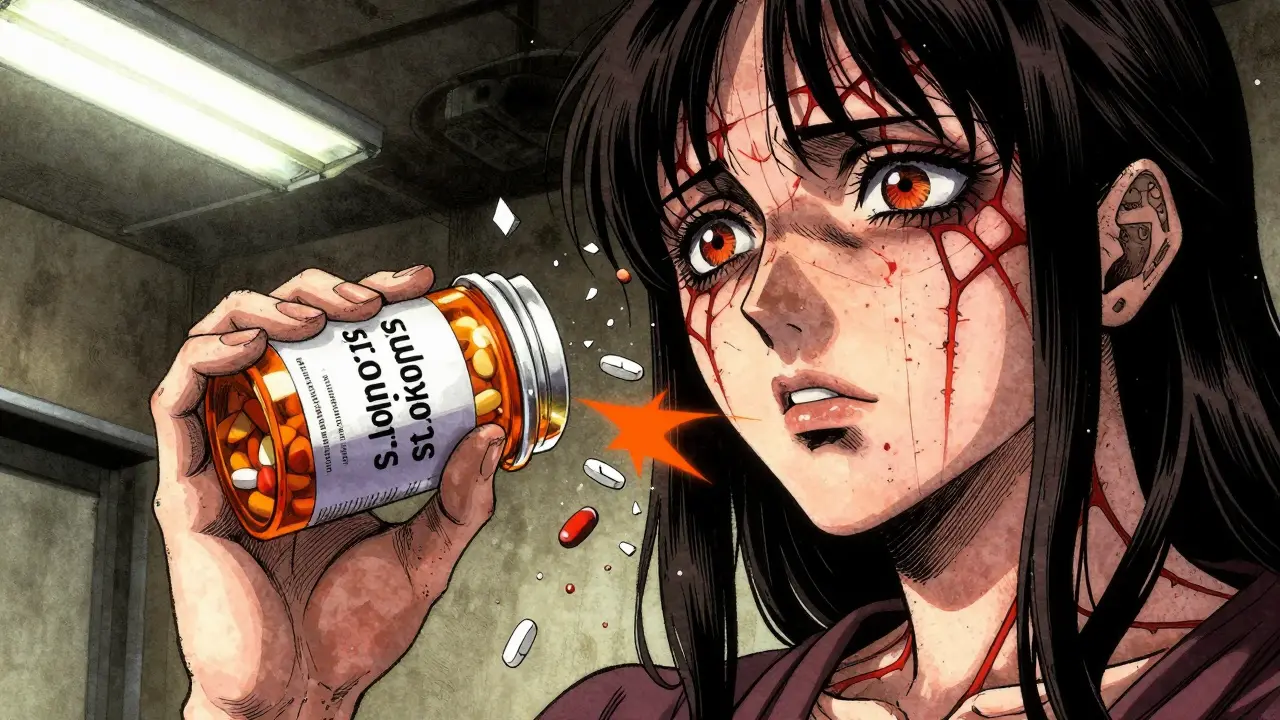
St. John’s Wort isn’t just another herb you toss into a tea. For millions, it’s a go-to for low mood, anxiety, or sleep issues. But here’s what no label tells you: St. John’s Wort can turn your prescription meds into useless paperweights-or worse, trigger life-threatening reactions. If you’re taking anything from birth control to HIV drugs, this isn’t a "maybe" situation. It’s a hard stop.
How St. John’s Wort Breaks Your Medications
This plant doesn’t just sit there. It actively rewires how your body handles drugs. The culprit? Hyperforin. It’s the compound in St. John’s Wort that flips a switch in your liver, telling it to crank up enzymes that break down medications. Think of it like a turbocharger for your detox system. Suddenly, drugs that used to last 12 hours? Gone in 4.
That’s not theory. It’s measurable. A 2006 study showed standard St. John’s Wort extracts increased liver enzyme activity by 2 to 3 times within two weeks. And it doesn’t matter if you take it as a capsule, tea, or tincture-if it contains hyperforin, it’s active. Even worse, the effect lingers for up to two weeks after you stop taking it. Your body doesn’t reset overnight.
Warfarin and Blood Thinners: The Silent Bleed Risk
Warfarin (Coumadin) keeps clots from forming. But St. John’s Wort makes it vanish. Between 1998 and 2000, European health agencies recorded 22 cases where people on stable warfarin doses suddenly had dangerously low INR levels-meaning their blood wasn’t thin enough. One 62-year-old man saw his INR drop from 2.8 to 1.4 in just seven days. That’s the difference between safe and stroke territory.
It’s not just warfarin. Phenprocoumon (Marcoumar), another blood thinner, loses 37% of its effect when mixed with St. John’s Wort. No warning. No symptoms. Just a silent rise in clot risk. If you’re on any anticoagulant, don’t even think about it. The European Medicines Agency flagged this in 2007. The FDA has since issued 17 warning letters to supplement makers for failing to warn about this.
Transplant Patients: A One-Way Ticket to Rejection
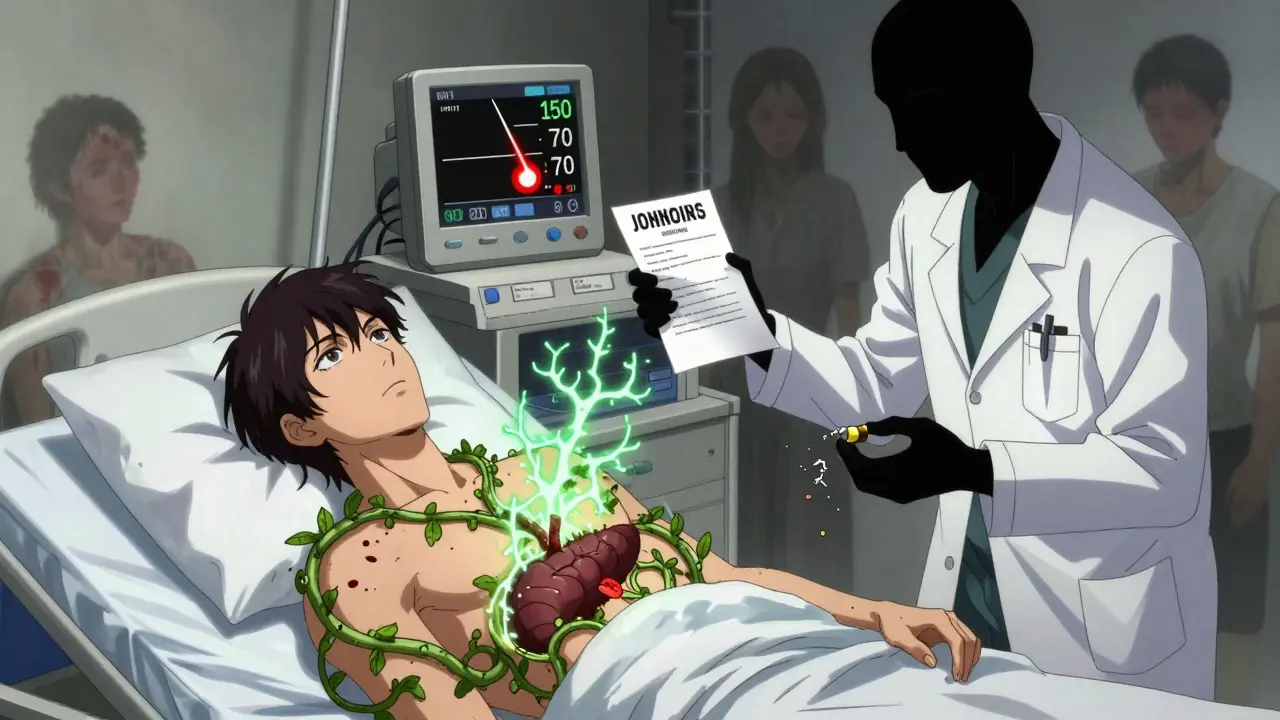
If you’ve had a kidney, liver, or heart transplant, St. John’s Wort could kill your new organ. Cyclosporine and tacrolimus are lifelines-they stop your immune system from attacking the transplant. But St. John’s Wort slashes their levels. In one 2004 study, 10 kidney transplant patients saw cyclosporine drop by 54% after adding St. John’s Wort. Two had acute rejection. One died.
It’s not rare. The EMA reviewed 17 cases. The American Journal of Transplantation reported tacrolimus levels crashing by up to 60%. These aren’t side effects. They’re preventable tragedies. No transplant center in the world allows St. John’s Wort. Period.
HIV Meds: Turning Treatment Into a Death Sentence
St. John’s Wort and HIV drugs? A deadly combo. Protease inhibitors like indinavir rely on steady blood levels to suppress the virus. St. John’s Wort slashes indinavir concentrations by 57% on average. In one case, a patient’s viral load spiked after starting the herb. That’s not just treatment failure-it’s drug resistance. Once HIV mutates, your options shrink. Forever.
The U.S. Department of Health and Human Services doesn’t just warn against this. It explicitly says: Do not use St. John’s Wort with any protease inhibitor or certain non-nucleoside reverse transcriptase inhibitors. Yet, only 18% of supplement users even know this interaction exists. That’s not ignorance. It’s negligence.
Birth Control: The Pregnancy Trap
Women think they’re protected. They’re not. St. John’s Wort cuts ethinyl estradiol (the estrogen in birth control) by 15% and levonorgestrel (the progestin) by 26%. That’s enough to make the pill useless. Between 2000 and 2003, Sweden documented 47 cases of contraceptive failure linked to this herb-12 resulted in pregnancy.
GoodRx’s 2022 analysis of FDA reports found 217 cases of possible birth control failure tied to St. John’s Wort. Yet, a 2023 Consumer Reports survey showed only 32% of users knew this risk. You’re not just risking pregnancy-you’re risking an unplanned, potentially dangerous pregnancy if you have a health condition. If you’re on hormonal birth control, St. John’s Wort is not an option.
Antidepressants: The Serotonin Syndrome Danger
Combining St. John’s Wort with SSRIs, SNRIs, or MAOIs is like pouring gasoline on a fire. It floods your brain with serotonin. That’s serotonin syndrome-a medical emergency. Symptoms? Sweating so bad you soak your clothes, heart racing over 100 beats per minute, muscles locking up, and confusion so severe you don’t recognize your own family.
In 2021, an 18-year-old in New Zealand ended up in the ER after mixing St. John’s Wort with 5-HTP and melatonin. His heart rate hit 128 bpm. Blood pressure soared. He was paranoid, agitated, and needed IV fluids and sedatives. He survived. Others don’t. The Mayo Clinic says serotonin syndrome kills. And it’s not rare when people combine supplements with antidepressants.
Other Dangerous Mixes You Might Not Know
St. John’s Wort doesn’t stop there.
- Benzodiazepines (Xanax, Valium): Levels drop by 40%. Your anxiety returns with a vengeance.
- Digoxin (Lanoxin): Heart failure meds get flushed out. Your heart struggles to pump.
- Phenytoin (Dilantin): Seizure meds lose up to 46% of their effect. Breakthrough seizures happen.
The FDA received 12 reports of seizures in epilepsy patients who added St. John’s Wort. That’s not anecdotal. It’s a pattern.
Who’s Responsible? And Why No One Knows
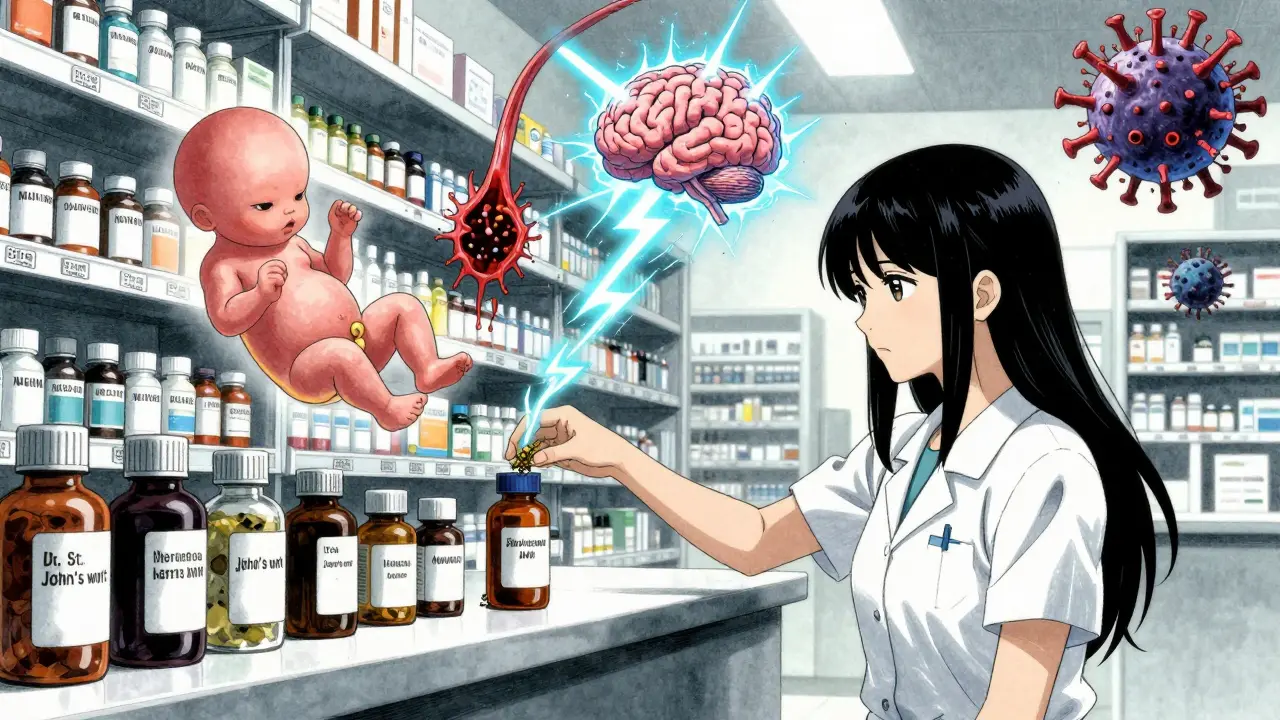
St. John’s Wort sales hit $187 million in the U.S. in 2022. But awareness? Pathetic. Only 18% know it interferes with HIV drugs. Only 32% know it can cause birth control failure. Why? Because supplement labels don’t have to say much. The FDA has issued 17 warning letters since 2019 for misleading labels. In Europe, labels now must say: "Do not use with medicines for depression, HIV, organ transplants, or birth control." In the U.S.? Still optional.
Dr. Paul Farmer from the National Center for Complementary and Integrative Health called it "one of the highest risk herbal supplements for drug interactions." He’s not exaggerating. Its effect on liver enzymes is as strong as prescription drugs like rifampin. And yet, it’s sold like a vitamin.
What Should You Do?
If you’re taking any prescription medication, stop. Don’t guess. Don’t assume. Ask your pharmacist. Show them your bottle. Ask: "Does this interact with my meds?" If they don’t know, find someone who does. Use the St. John’s Wort Drug Interaction Checker-it lists 142 known interactions with severity ratings.
If you’re considering St. John’s Wort for depression: Talk to your doctor first. The American Psychiatric Association says wait 14 days after stopping an antidepressant before starting it. That’s to avoid serotonin syndrome. But even then, it’s risky. There are safer, proven options.
If you’re on birth control, HIV meds, transplant drugs, or blood thinners: Don’t use it. Period. No exceptions. No "natural" excuses. Your life isn’t worth the gamble.
The Future: Are Safer Versions Coming?
There’s hope. Researchers are testing hyperforin-free extracts. A 2023 clinical trial showed a low-hyperforin version worked just as well for depression-but barely touched liver enzymes. It reduced midazolam (a test drug) levels by only 9%, compared to 56% with standard extracts. The NIH is funding a $2.4 million study to see if this is viable. Results come late 2024.
But until then? Stick to what’s proven. If you’re not on meds, and you’re using it for mild low mood, fine. But even then, tell your doctor. Because you never know what new drug you might need tomorrow.
Bottom Line
St. John’s Wort isn’t harmless. It’s a powerful enzyme inducer with effects as strong as prescription drugs. It doesn’t just "help"-it breaks things. Birth control. Transplants. HIV treatment. Blood thinners. Mental health meds. The list goes on.
If you’re taking anything regularly, don’t touch it. If you’re already using it, stop. And tell your doctor. The risks aren’t theoretical. They’re documented. They’re deadly. And they’re completely preventable.
Mel MJPS
January 27, 2026 AT 20:32Wow, this is terrifying. I’ve been taking St. John’s Wort for mild anxiety for years and just assumed it was "safe" because it’s natural. I’m going to my pharmacist tomorrow to check my meds. Thanks for laying this out so clearly.
Mindee Coulter
January 29, 2026 AT 17:39Rhiannon Bosse
January 30, 2026 AT 15:06Of course the FDA doesn’t regulate this. Big Pharma doesn’t want you to know you can replace their $200 antidepressants with a $12 herb that they can’t patent. But hey, let’s keep selling you pills while ignoring the real danger: corporate greed. 🤡
And don’t get me started on how they’re hiding the truth about liver enzymes. Wake up, sheeple. The supplement industry is just Big Herb.
Kathy Scaman
January 31, 2026 AT 13:13Man, I’ve seen this play out in my family. My aunt took it with her blood pressure med and ended up in the ER. No one told her anything. She thought it was "just herbal". Now she’s on a different supplement and swears by it. But I still don’t touch the stuff.
Anna Lou Chen
January 31, 2026 AT 14:58The epistemological rupture here is profound. The pharmacological hegemony of the allopathic paradigm systematically marginalizes phytochemical agency, rendering the hyperforin-mediated CYP3A4 induction not merely a biochemical event but a semiotic rupture in the bio-political economy of wellness. We’re not talking about drug interactions-we’re talking about the commodification of self-care under late-stage pharmaceutical capitalism.
And yet, the very notion of "safety" is a construct. Who defines risk? The FDA? A corporation? Or the individual sovereign body?
Colin Pierce
February 1, 2026 AT 20:25As a pharmacist, I see this every week. People come in with a bottle of St. John’s Wort and say, "My friend said it helped with depression." I check their med list and 8 out of 10 are on something dangerous with it. The worst part? They’re always shocked. No one reads the fine print because it’s not there.
And honestly? If you’re using it for depression, you’re risking way more than you’re gaining. There are better, safer, evidence-based options. Talk to your doctor. Don’t just Google it.
Mark Alan
February 3, 2026 AT 07:15AMERICA NEEDS TO STOP LETTING THIS HAPPEN 🇺🇸🔥
EUROPE HAS WARNINGS. WE HAVE NOTHING. THIS IS WHY WE’RE FALLING BEHIND. STOP THE HERBAL INVASION! 🚫🌿
Amber Daugs
February 4, 2026 AT 14:23If you’re taking St. John’s Wort and you’re on birth control, you’re not just being careless-you’re being selfish. What if you get pregnant and your body can’t handle it? What if you’re diabetic? hypertensive? You’re putting your future child at risk because you thought "natural" meant "safe".
It’s not just about you anymore. It’s about responsibility. And you’re failing.
Robert Cardoso
February 6, 2026 AT 08:37The data here is solid, but let’s not romanticize the science. The 2006 study showing 2-3x enzyme induction? That was with a specific extract. Not all St. John’s Wort products are created equal. The dose matters. The formulation matters. The timing matters.
Also, the FDA’s 17 warning letters? Most were for false claims like "cures depression"-not for missing interaction warnings. The labeling laws are weak, yes, but the real issue is consumer ignorance, not corporate malice.
And let’s not forget: St. John’s Wort has been used for centuries. The fact that it’s dangerous now doesn’t mean it was always dangerous. Context matters.
James Dwyer
February 6, 2026 AT 11:14Thank you for sharing this. I’ve been feeling down lately and was thinking about trying it. Now I’m going to talk to my doctor first. It’s scary how easy it is to accidentally hurt yourself with something you think is harmless.
You’re doing good work here.
jonathan soba
February 8, 2026 AT 05:36It’s ironic, isn’t it? The same people who demand transparency from Big Pharma turn around and trust a bottle labeled "100% Natural" with zero regulatory oversight. The cognitive dissonance is almost poetic.
And yet, the fact that the FDA hasn’t mandated interaction warnings speaks volumes about the power of the supplement lobby. We’re not fighting ignorance-we’re fighting money.
matthew martin
February 9, 2026 AT 06:48I used to think herbal meant gentle. Then I watched my uncle’s transplant meds get wiped out by a "natural mood booster" he bought at Whole Foods. He spent two weeks in the hospital. The doctors were furious.
Turns out "natural" doesn’t mean "safe"-it just means "unregulated". And that’s the scariest part.
Now I tell everyone: if it’s not on your prescription bottle, ask your pharmacist. Not Google. Not your cousin who "swears by it."
And if you’re on meds? Don’t gamble. Just don’t.
Jess Bevis
February 9, 2026 AT 22:25Rose Palmer
February 10, 2026 AT 02:14Thank you for this meticulously researched and clinically grounded exposition. The gravity of these pharmacokinetic interactions cannot be overstated. As a healthcare professional, I urge all individuals currently utilizing St. John’s Wort to immediately consult with a licensed pharmacist or physician to conduct a comprehensive medication reconciliation. The risk of therapeutic failure, particularly in the context of anticoagulation, immunosuppression, or psychiatric pharmacotherapy, constitutes a preventable public health emergency.
Further, I recommend the use of the St. John’s Wort Drug Interaction Checker referenced in the post, which is endorsed by the American College of Clinical Pharmacy. Proactive engagement with clinical resources is not optional-it is a moral imperative.
Howard Esakov
February 11, 2026 AT 20:48Of course you’re warning people. But let’s be real-this post reads like a corporate pharmacy pamphlet. St. John’s Wort has been used for centuries. The fact that you’re scared of it says more about your trust in Big Pharma than your understanding of botany.
Meanwhile, your precious SSRIs? They come with a 30-page warning leaflet and a 50% chance of emotional numbness. But hey, at least they’re FDA-approved, right? 🙄