Hearing Aid Batteries vs. Rechargeables: What Works Best for You?
 Dec, 9 2025
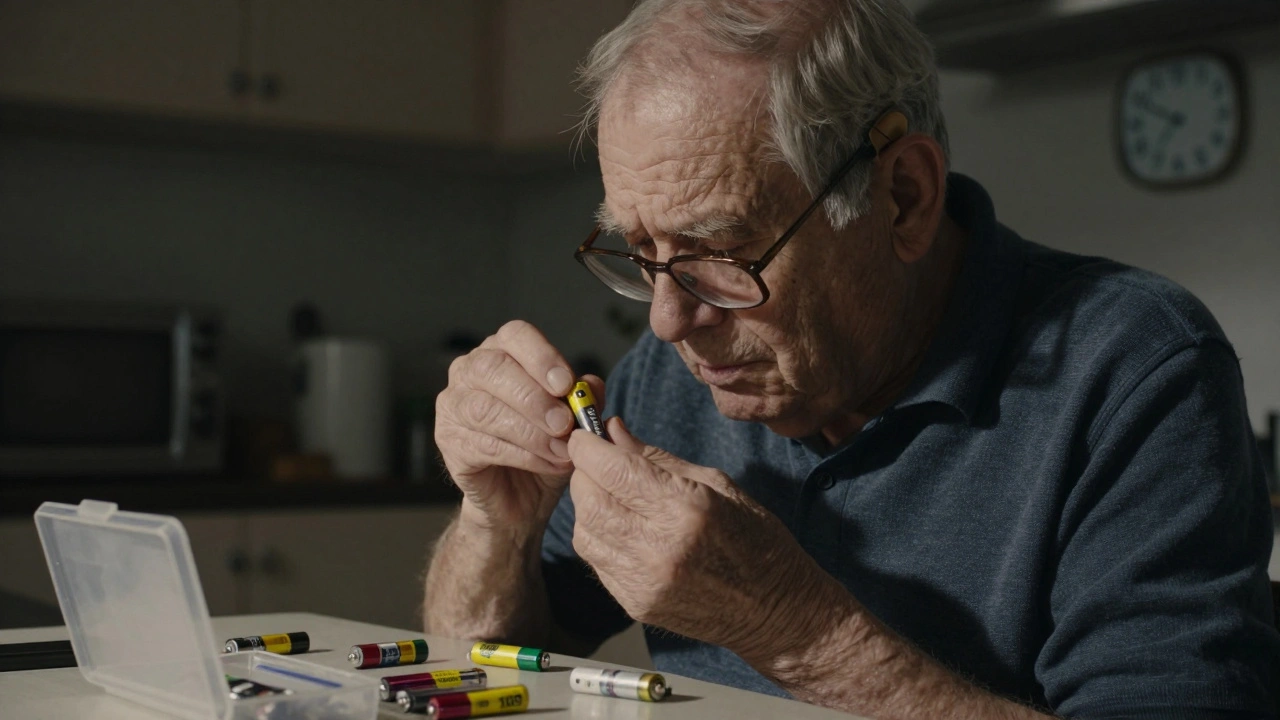
For decades, changing tiny hearing aid batteries was just part of daily life-like brushing your teeth or checking your watch. You’d fumble with the tab, pinch the battery between your fingers, and hope it snapped into place. But now, more people are simply placing their hearing aids in a charging case at night and forgetting about it. So which is better: disposable batteries or rechargeables? The answer isn’t one-size-fits-all. It depends on your hands, your routine, your budget, and even your travel habits.
How Hearing Aid Batteries Work
Most disposable hearing aid batteries are zinc-air. That means they don’t work until you pull off the tab and let air in. Once activated, they last anywhere from 5 to 16 days, depending on how much you use your hearing aids. Size matters too: Size 10 (yellow) is the smallest and lasts the least, while Size 675 (blue) is the largest and lasts the longest. These batteries are mercury-free now, but they still contain zinc and manganese-materials that shouldn’t end up in your regular trash.
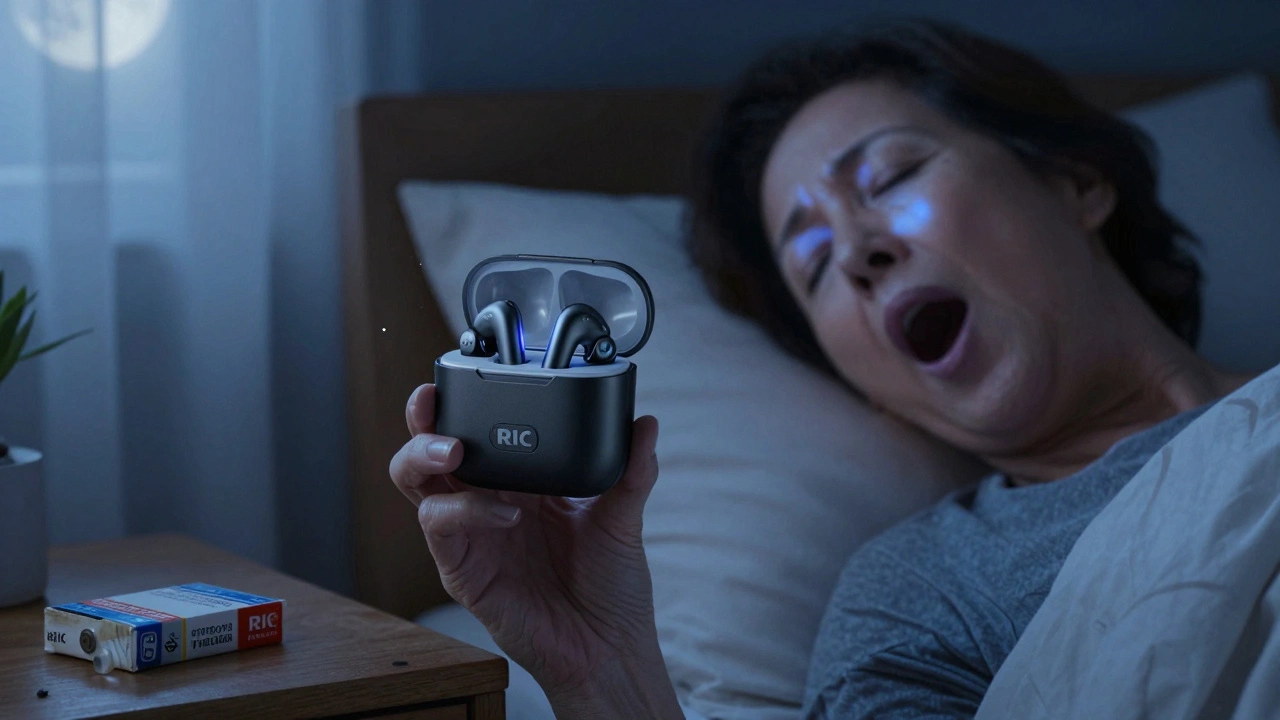
Rechargeable hearing aids use lithium-ion batteries, the same kind you find in your phone or earbuds. They’re built right into the device, so there’s no swapping out. A full charge gives you about 24 hours of use, and most models can be fully charged in 3 to 6 hours. Some newer ones, like the Phonak Audeo, can give you 8 hours of power from just a 30-minute charge. That’s a game-changer if you forget to charge overnight.
Why People Switch to Rechargeable
If you’ve ever struggled to open a battery compartment-especially with stiff fingers or arthritis-you already know why rechargeables are so popular. About 35% of hearing aid users are over 70, and many of them have trouble with fine motor skills. Changing a tiny battery isn’t just annoying; it can be painful or even impossible. Rechargeables remove that step entirely. Just pop them in the case before bed. Wake up. Put them on. Done.
There’s also the convenience factor. No more carrying around a plastic box of batteries. No more wondering if you have a spare when you’re out. And no more accidentally throwing away a battery because you didn’t realize it still had juice. People who use rechargeables often say they feel more confident. They don’t have to plan their day around battery life.
Environmentally, the difference is huge. The average user goes through 100 to 200 disposable batteries a year. That’s over 1.2 million pounds of battery waste in the U.S. alone. Rechargeables only need replacing every 1 to 1.5 years. That’s a massive drop in landfill waste. In fact, 65% of new hearing aid buyers in 2023 said environmental impact was a factor in their decision.
The Downsides of Rechargeable
But rechargeables aren’t perfect. They have more parts that can break. The charging dock, the internal battery, the circuitry-all of it can fail. One study found that rechargeable models need service 15-20% more often than those using disposables. If your charger stops working, you’re stuck. No backup. No quick fix.
And if you’re traveling? That’s where things get tricky. If your charger dies or you lose it, you’re out of luck. You can’t just run to the pharmacy and grab a pack of Size 312s. You need a backup plan. Some people carry a small supply of disposable batteries just in case. Others buy portable power banks designed for hearing aids.
Also, not all hearing aids can use rechargeable batteries. Completely-in-canal (CIC) models are too small to fit the internal battery and charging contacts. That means if you need the most discreet device, you’re stuck with disposables-for now.
Why Some Still Prefer Disposable Batteries
Disposable batteries still have real advantages. For one, they’re cheap upfront. A pack of six costs between $6 and $9. You don’t need to buy a charging station. That’s important if you’re on a tight budget or if your insurance doesn’t cover the extra cost of rechargeable systems.
They’re also reliable. If a battery dies, you replace it. No waiting. No software glitches. No charging errors. In 2023, Consumer Reports gave disposable battery models a 4.3 out of 5 for reliability-higher than rechargeables, which scored 3.7.
Travelers love them. Hikers, campers, people who spend weeks on the road without access to outlets-they carry a small container of 10-12 batteries. That’s enough for a month. One user on Reddit said, “I went on a 10-day fishing trip. I had 12 batteries. I used 8. No stress.”
And if your hearing aid breaks? You can still use it with a new battery. With rechargeables, if the internal battery fails, you need to send the whole device in for repair or replacement.
Cost Comparison Over Time
Let’s talk money. A pack of 60 disposable batteries costs about $70. If you use two hearing aids and replace batteries every 10 days, you’ll go through about 72 batteries a year. That’s $84 annually. Over five years? That’s $420.
Rechargeable hearing aids cost more upfront-usually $200-$400 extra for the charging system. But after 18 to 24 months, you’ve already saved more than that in battery costs. After three years, you’re ahead. And since the rechargeable battery itself lasts 1-1.5 years before needing replacement (at around $100-$150), your long-term cost drops sharply.
Plus, many manufacturers include battery replacement under warranty for the first two years. That’s free service. With disposables, you’re on your own.
Who Should Stick With Disposables
You should keep using disposable batteries if:
- You use CIC hearing aids
- You travel often without reliable power access
- You live in an area with frequent power outages
- You’re on a tight budget and can’t afford the upfront cost
- You prefer the simplicity of a replaceable part
There’s no shame in sticking with what works. Many people over 80 still prefer disposables because they’ve used them for decades. It’s familiar. It’s predictable.

Who Should Switch to Rechargeables
You should consider rechargeables if:
- You have arthritis, tremors, or limited dexterity
- You want to reduce waste
- You’re tired of buying batteries every few weeks
- You’re comfortable with nightly routines (like charging your phone)
- You use BTE, RIC, or ITE hearing aids
For people over 65, the preference is clear: 68% of users in one Reddit survey said they switched to rechargeables and never looked back. The biggest reason? “I don’t think about batteries anymore.”
Real-World Tips for Both Types
If you’re using disposables:
- Always keep a 30-day supply on hand-about 24-30 batteries.
- Store them in a cool, dry place. Heat and humidity kill battery life.
- Wait 60 seconds after removing the tab before inserting the battery. That lets the air activate it fully.
- Never leave batteries in the hearing aid if you won’t use it for days. Remove them to prevent corrosion.
If you’re using rechargeables:
- Charge them every night, even if they’re not dead. Lithium-ion batteries like regular use.
- Keep the charging case clean. Dust and earwax can block the contacts.
- Buy a second charging case if you travel often. They’re not expensive.
- Check your hearing aid’s battery indicator. Most apps or devices show you how much charge is left.
What’s Coming Next
The future of hearing aid power is hybrid. Companies are testing small, replaceable rechargeable micro-batteries-like a battery you can swap out, but one you can also recharge. That could give you the best of both worlds: portability and convenience.
Widex and Starkey are already adding features like temperature-resistant batteries and wireless charging. Stanford’s lab is working on solid-state batteries that could give you 48 hours of power. That’s a full two days without charging.
By 2027, experts predict 85% of new hearing aids will be rechargeable. By 2030, disposables might make up less than 25% of the market. But they won’t disappear. They’ll just become the backup option-for travelers, for emergencies, for those who need them.
The bottom line? Rechargeables are the future. But disposables are still the safety net. The right choice isn’t about what’s trendier. It’s about what fits your life.
Can I use rechargeable batteries in any hearing aid?
No. Rechargeable systems require built-in hardware that fits inside the hearing aid. They’re only available in behind-the-ear (BTE), receiver-in-canal (RIC), and some in-the-ear (ITE) models. Completely-in-canal (CIC) hearing aids are too small to fit the battery and charging contacts, so they still rely on disposable batteries.
How long do rechargeable hearing aid batteries last before needing replacement?
Most rechargeable lithium-ion batteries in hearing aids last between 300 and 500 charge cycles. That’s about 1 to 1.5 years of daily use. After that, the battery holds less than 80% of its original charge. At that point, you’ll need to take your hearing aids to a provider to have the battery replaced.
Are disposable hearing aid batteries dangerous to the environment?
Yes. While modern disposable hearing aid batteries are mercury-free, they still contain zinc and manganese, which can leach into soil and water if thrown in the trash. In the U.S., 38 states require them to be recycled separately. The average user throws away 100-200 per year. That adds up to over 1,500 tons of waste annually.
Do rechargeable hearing aids work during power outages?
Not directly. If the power goes out and your charging case is plugged in, you won’t be able to charge. But if your hearing aids are already charged, they’ll keep working for 24 hours or more. Many users keep a small backup supply of disposable batteries for emergencies like storms or extended outages.
Is it okay to leave hearing aids in the charger all the time?
Yes. Modern rechargeable hearing aids and chargers are designed to stop charging once the battery is full. Leaving them in overnight-or even longer-is safe. In fact, most users find it easiest to charge them every night, just like a phone. It helps maintain battery health and ensures you always have power when you need it.
Can I use regular AA or AAA batteries in my hearing aid?
No. Hearing aids require specific zinc-air batteries in standardized sizes (10, 312, 13, 675). Regular AA or AAA batteries are the wrong size, voltage, and chemistry. Using them can damage your hearing aid or cause it to malfunction. Always use the correct type listed in your device’s manual.
Iris Carmen
December 11, 2025 AT 07:39rechargeables are just another way companies make you buy stuff every 2 years lol. i used to change batteries once a month, now i gotta buy a whole new device when the battery dies. classic planned obsolescence.
Andrea Petrov
December 11, 2025 AT 14:05you know the government is pushing rechargeables so they can track your hearing aid usage through the app. they already know when you’re in public, what you’re listening to, even your heart rate. why do you think they banned mercury? it wasn’t about the environment-it was about control.
Suzanne Johnston
December 13, 2025 AT 02:04it’s fascinating how we’ve shifted from valuing reliability to valuing convenience. we used to fix things, now we replace them. the environmental math is clear, but what about the emotional cost of losing that small ritual-the tactile act of changing a battery? it’s not just utility, it’s a quiet form of autonomy.
Graham Abbas
December 14, 2025 AT 14:43oh my god YES. i switched to rechargeables last year and i swear i’ve gained 3 hours of mental space. no more panic when i can’t find my battery case. no more fumbling with tweezers like i’m defusing a bomb. i charge them like my phone-before bed, done. it’s like someone removed a constant low-grade anxiety from my life.
Steve Sullivan
December 15, 2025 AT 20:06the fact that you can get 8 hours from a 30-min charge? mind blown 😱 i used to carry 20 batteries in my bag like a hoarder. now i just have my case. also, if you ever lose your charger? amazon sells third-party ones for $12. game over for the "no backup" fear.
Tiffany Sowby
December 16, 2025 AT 20:54disposables are cheaper, simpler, and don’t require you to trust some corporate tech god who might stop supporting your device in 5 years. also, if you’re on medicare, they don’t cover the upgrade cost. so no, i’m not "stuck in the past"-i’m just being financially responsible.
George Taylor
December 17, 2025 AT 22:04...and yet, 15-20% more service calls? really? you’re telling me we’re supposed to be okay with that? every time my charger glitches, i have to call a technician, wait 3 weeks, and pay $75 just to get my hearing aids to work again. meanwhile, a $0.50 battery? pop it in. done. no paperwork. no waiting. no corporate nonsense. this isn’t progress-it’s a trap.
Stacy Tolbert
December 19, 2025 AT 11:23i switched to rechargeables after my arthritis got worse, and honestly? it saved my dignity. i used to cry trying to change those tiny batteries. now i just drop them in the case like a normal person. i don’t care what the stats say-I care that i can hear my granddaughter laugh without feeling like a burden.