Generic Appearance Changes: Why Your Pill Looks Different and What to Do About It
 Jan, 20 2026
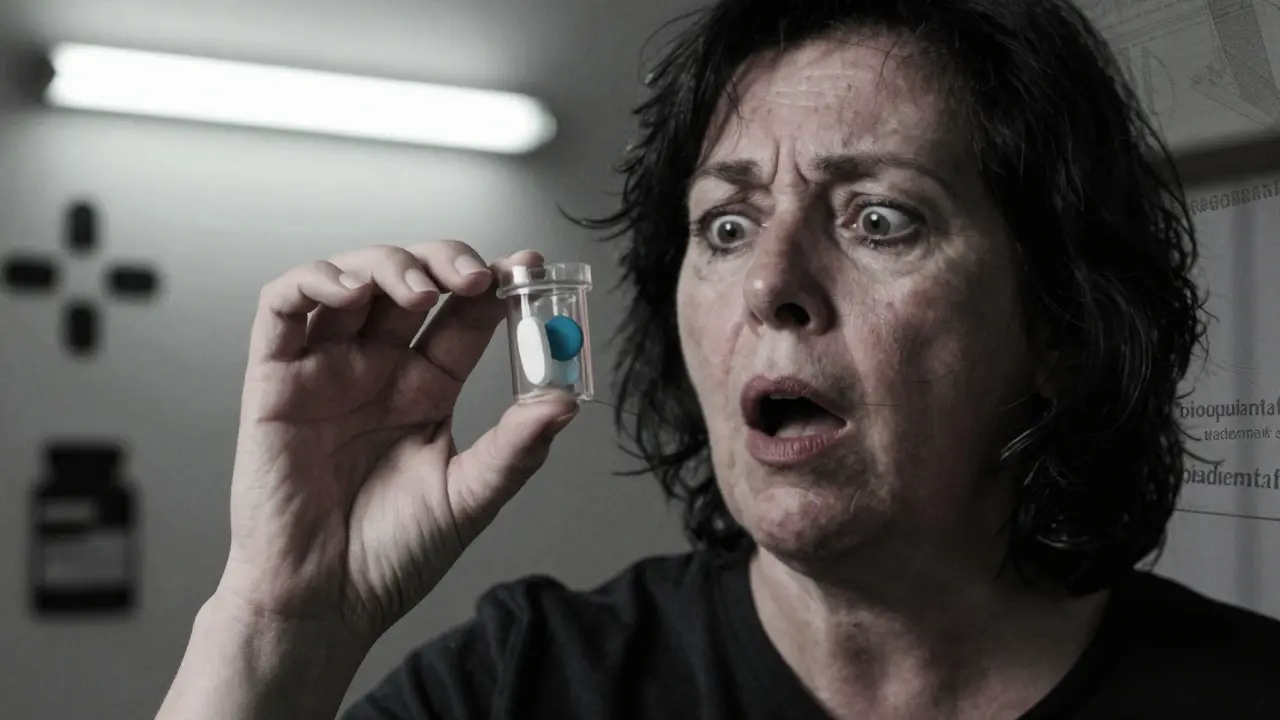
You take your medication every day. It’s part of your routine-like brushing your teeth or making coffee. But one day, you open the bottle and the pill looks completely different. It’s not the same color. Not the same shape. Maybe it even has a different marking on it. Your heart skips a beat. Is this the right medicine? Did the pharmacy give you the wrong thing? You’re not alone. Thousands of people in New Zealand, the U.S., and around the world face this exact moment every single week.
Why Do Generic Pills Look Different?
It’s not a mistake. It’s the law. In the U.S., the Hatch-Waxman Act of 1984 made it possible for generic drugs to enter the market at lower prices. But there’s a catch: trademark laws say a generic pill can’t look exactly like the brand-name version. Even if it’s the same active ingredient, same strength, same effect. The FDA requires generics to be bioequivalent-meaning they work the same way in your body-but they’re legally allowed to look different. That’s why Lipitor, the pink oval cholesterol pill, might be replaced by a white round tablet from one company, or a pale yellow oblong one from another. These differences aren’t random. They’re intentional. Manufacturers pick colors, shapes, and markings to avoid infringing on the brand’s trademark. A generic version of metformin might be white and oval one month, then pink and round the next. Same drug. Same dose. Same results. But your brain doesn’t care about the science. It cares about what it sees.What Changes? Color, Shape, Size, and Marks
Generic pills can vary in four key ways:- Color: From white to blue, yellow to green. Even slight shade changes can throw you off. Some manufacturers use Pantone color standards, so two generics might look almost identical-but not quite.
- Shape: Round, oval, caplet, oblong. Your blood pressure pill might switch from an oval to a capsule-shaped tablet. It’s still the same medicine, but it feels foreign.
- Size: Measured in millimeters. A 10mm tablet might become 14mm. For someone with arthritis or poor eyesight, that’s a big difference.
- Markings: Letters, numbers, lines, or symbols stamped on the pill. One version might say “ATV 20,” another “832.” You’ve memorized the old one. Now it’s gone.
When Appearance Changes, People Stop Taking Their Medicine
In 2014, researchers from Brigham and Women’s Hospital studied 38,507 people taking heart medications. They found something startling: when the pill’s appearance changed, patients were 34% more likely to quit taking it. That’s not a small number. It’s 16.8% of patients stopping versus 12.5% when the pill stayed the same. That’s a real, measurable drop in adherence. Why? Because we trust what we recognize. If your diabetes pill suddenly turns from white to blue, your brain thinks: “This isn’t mine.” You might think it’s a different drug. Or worse-you think it’s fake. One Reddit user wrote: “My blood pressure med changed from white oval to blue round. I almost didn’t take it. I was scared half to death.” A 2023 survey by Healthgrades showed 28.4% of patients were “very concerned” when their pill changed. Nearly 15% admitted they skipped doses because they weren’t sure it was the right medication. Older adults are hit hardest. AARP found 37% of people over 65 had trouble recognizing their meds after a change-compared to 22% of younger adults.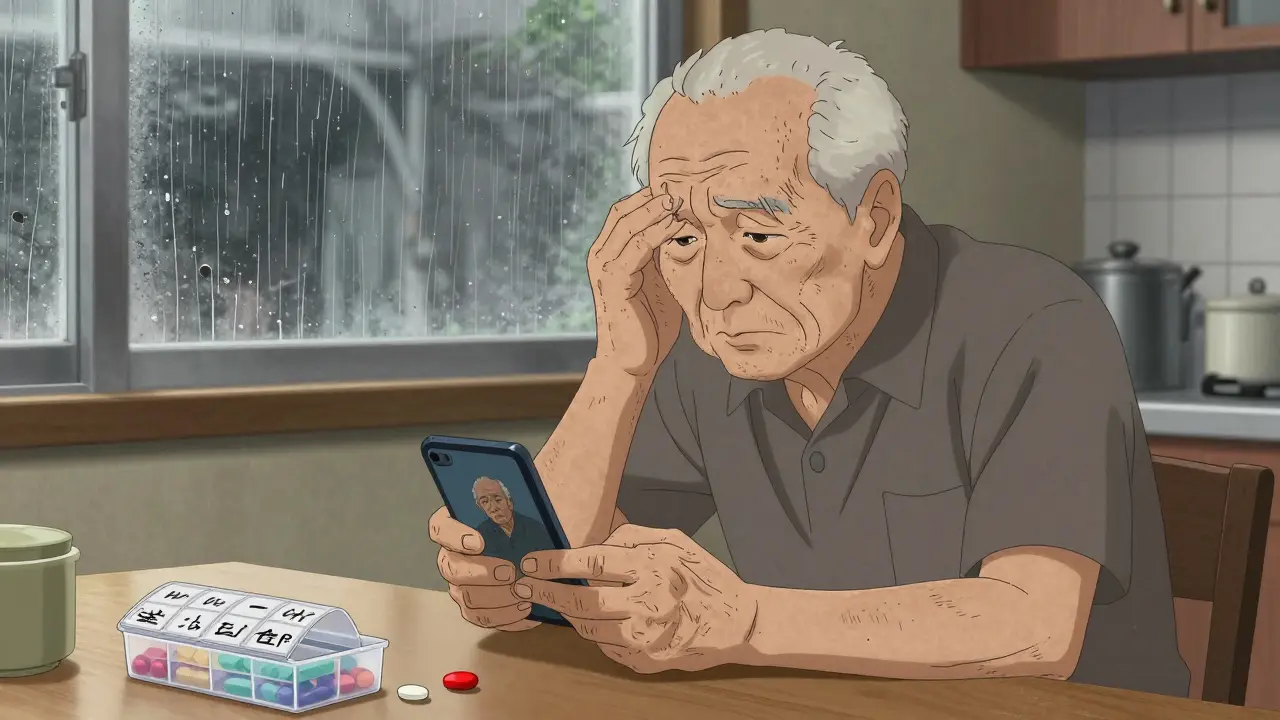
It’s Not Just About Confusion-It’s About Cost
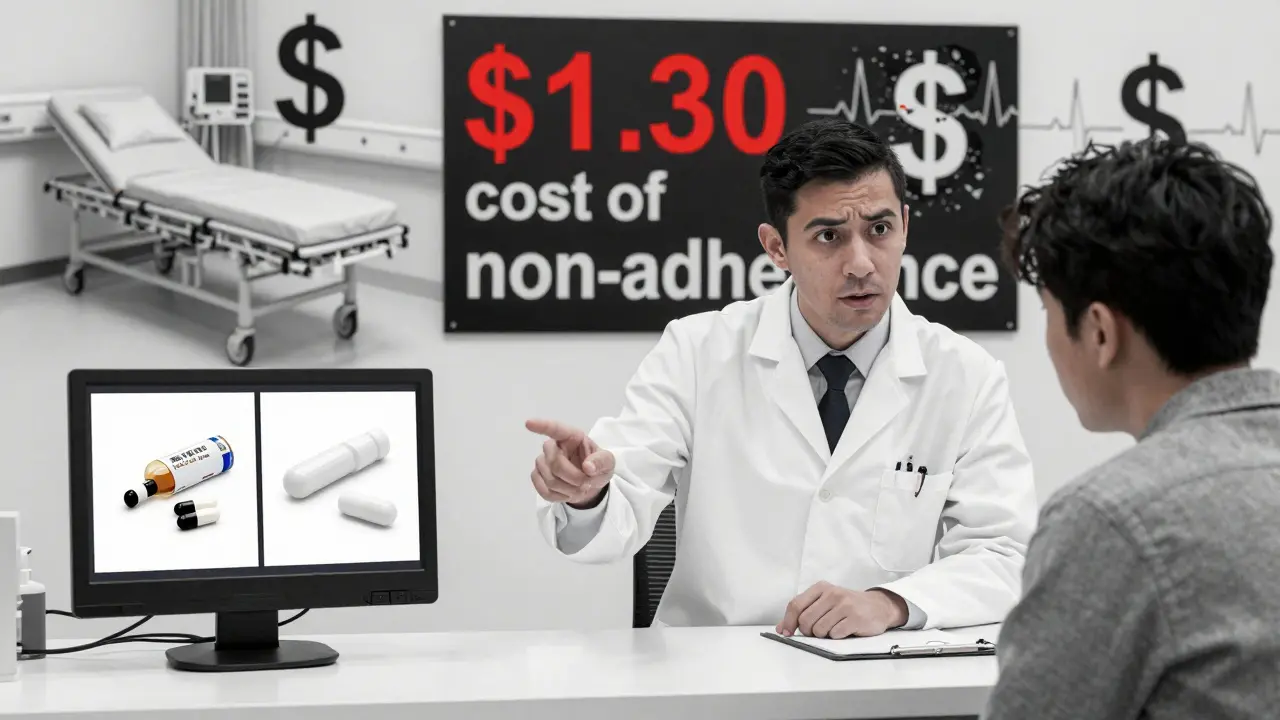
When people stop taking their meds because of appearance changes, the consequences aren’t just personal. They’re financial. The Generic Pharmaceutical Association estimates appearance-related non-adherence costs the U.S. healthcare system $1.3 billion a year. That’s hospital visits, emergency care, complications from untreated high blood pressure, uncontrolled diabetes, or worsening cholesterol. You save money switching to generics-$200 a year on your statin, $500 on your thyroid med. But if you stop taking it, you could end up paying thousands more down the road. The irony? The very thing meant to save you money might be costing you your health.What Can You Do?
You don’t have to live in fear every time you open a new bottle. Here’s what actually works:- Ask your pharmacist: When you pick up your refill, ask: “Is this the same medicine I got last time?” Pharmacists are trained to spot these changes. They can show you the old and new versions side by side.
- Take a photo: Snap a picture of your pill the first time you get it. Save it in your phone. Next time it looks different, pull up the photo. It’s a simple fix that cuts confusion by almost a third, according to a Johns Hopkins study.
- Use a pill organizer: Label each compartment with the drug name and purpose. Don’t rely on how it looks. Rely on the label.
- Request the same manufacturer: Some insurance plans let you choose which generic brand you get. Ask your pharmacy or insurer: “Can I get the same manufacturer as last time?” It’s not guaranteed-78% of pharmacy benefit managers don’t promise consistency-but it’s worth asking.
- Keep a written list: Write down your meds: name, dose, color, shape, markings. Update it every time your pill changes. Give this list to your doctor during checkups.
Why Doesn’t the FDA Just Standardize Appearance?
The FDA knows this is a problem. In 2016, they released official guidance urging manufacturers to consider pill appearance when developing generics. In 2023, they started a $4.7 million research project to explore “Visual Medication Equivalence Standards.” They’re listening. But they’re stuck. Trademark law is the barrier. As long as brand-name companies hold legal rights to a pill’s color and shape, generics can’t copy them-even if it helps patients. The courts have sided with trademark holders. In a 2022 case, Takeda Pharmaceuticals sued a generic maker for making a pill too similar to Lipitor. The court ruled in favor of Takeda. So the system stays broken. Meanwhile, Europe took a different path. The European Medicines Agency encourages generics to match the appearance of brand-name drugs when possible. In a 2022 study, that policy cut appearance-related errors by 18.3%. The U.S. could do the same-if lawmakers changed the rules.What’s Next?
By 2028, experts predict 75% of new generic approvals for high-risk drugs-like blood thinners, seizure meds, or thyroid hormones-will voluntarily match the original pill’s look. That’s up from just 32% today. Progress is slow, but it’s happening. For now, the burden falls on you. You’re the one who has to recognize your medicine. You’re the one who has to notice the change. You’re the one who has to speak up. Don’t assume it’s safe just because it’s generic. Don’t assume it’s wrong just because it looks different. Ask. Check. Document. Protect yourself.Frequently Asked Questions
Why does my generic pill look different every time I refill it?
Different generic manufacturers produce the same drug, and U.S. trademark laws prevent them from copying the exact color, shape, or markings of brand-name or other generic pills. Each company designs their version to avoid legal issues, so your pill may change when your pharmacy switches suppliers-even if the active ingredient is identical.
Are generic pills less effective because they look different?
No. Generic drugs must meet strict FDA standards for bioequivalence. This means they deliver the same amount of active ingredient into your bloodstream at the same rate as the brand-name version. The appearance has no effect on how the drug works. The difference is only in the inactive ingredients-like dyes or fillers-that change the pill’s look, not its function.
What should I do if I think I got the wrong pill?
Don’t take it. Don’t throw it away. Call your pharmacist immediately. Bring the bottle and your old pill container if you still have it. Pharmacists can verify the medication using drug databases and manufacturer information. Never guess-especially if you’re taking medication for heart disease, diabetes, or seizures.
Can I ask for the same generic manufacturer every time?
Yes, you can ask. Some insurance plans allow you to request a specific generic manufacturer. But most pharmacy benefit managers (PBMs) choose based on cost, not consistency. Only about 22% of prescriptions guarantee the same manufacturer. Still, it’s worth asking-it might save you from confusion or skipped doses.
Is it safe to use a pill organizer if my pills change shape?
Yes, and it’s one of the best things you can do. A pill organizer helps you track your meds by time of day, not by appearance. Label each compartment clearly with the drug name and purpose. Even if the pill looks different, you’ll know what’s supposed to go where. This reduces errors by up to 27% in older adults, according to Johns Hopkins research.
Why don’t pharmacies always warn me about pill changes?
Many pharmacies don’t have systems in place to track or notify patients about appearance changes. Some use digital tools like Surescripts to show past images, but only 42% of pharmacies use them. Pharmacists are busy, and unless you ask, they may assume you’ll notice the difference. Always check your pills when you pick them up-and ask if anything changed.
Roisin Kelly
January 22, 2026 AT 09:22lokesh prasanth
January 24, 2026 AT 04:02Malvina Tomja
January 24, 2026 AT 11:23Samuel Mendoza
January 25, 2026 AT 13:55Jerry Rodrigues
January 27, 2026 AT 01:54Ashok Sakra
January 27, 2026 AT 07:23Andrew Rinaldi
January 28, 2026 AT 23:26Gerard Jordan
January 30, 2026 AT 12:13