Fiber for GI Health: Soluble vs. Insoluble Choices
 Mar, 11 2026
Most people know fiber is good for you, but few realize how different types of fiber do completely different things in your gut. If you’re struggling with bloating, constipation, or erratic bowel habits, the problem might not be that you’re not eating enough fiber-it’s that you’re not eating the right kind. Soluble and insoluble fiber aren’t just two sides of the same coin; they’re two entirely different tools for keeping your digestive system running smoothly.
What soluble fiber actually does
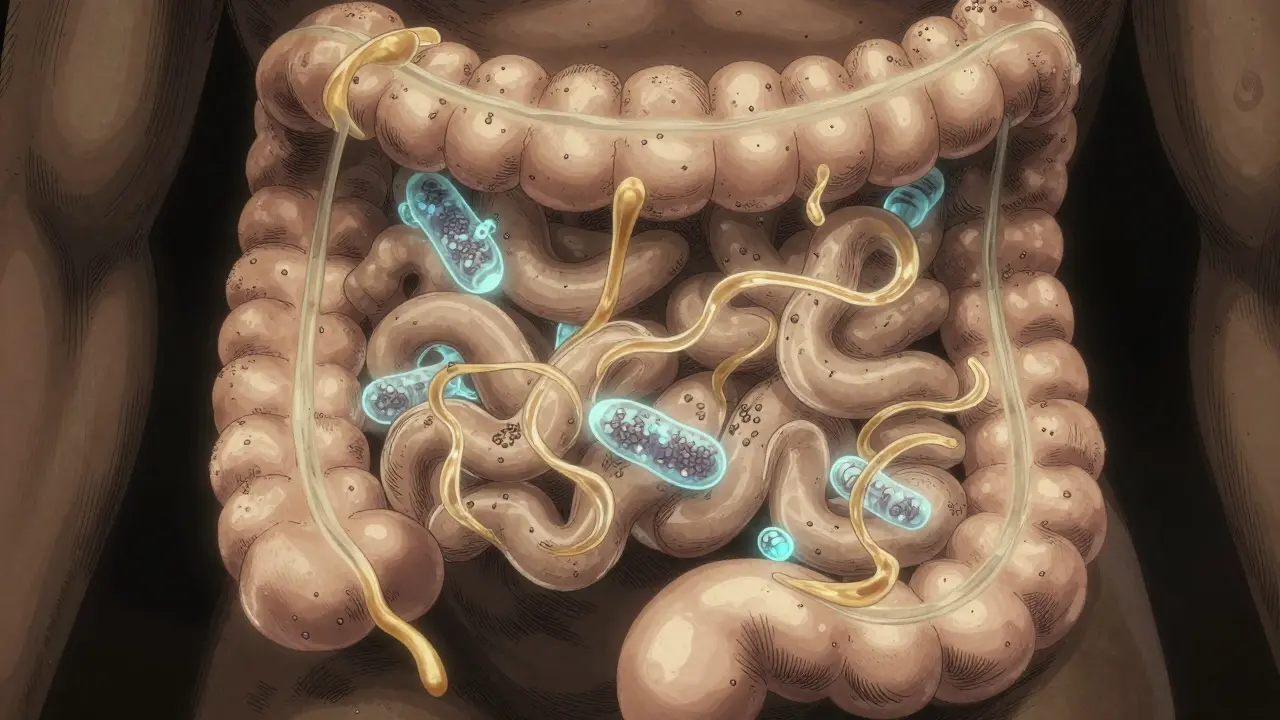
Soluble fiber doesn’t just pass through your system-it turns into a gel. When you eat oats, beans, chia seeds, or apples, this type of fiber absorbs water and swells up, forming a thick, slippery substance in your intestines. That gel slows down digestion, which means sugar from your meal enters your bloodstream more gradually. Studies show this can cut post-meal blood sugar spikes by 20-30%. For people with prediabetes or type 2 diabetes, that’s not just helpful-it’s game-changing.
But here’s the real magic: soluble fiber feeds your gut bacteria. The microbes in your colon love it. They break it down and produce short-chain fatty acids like butyrate, which fuel the cells lining your colon and reduce inflammation. This isn’t theoretical. A 2024 review in PMC found that people who regularly ate soluble fiber had measurable improvements in insulin sensitivity and lower LDL cholesterol-by 5-10% with just 5-10 grams per day. That’s the same amount you’d get from one cup of cooked lentils or three tablespoons of chia seeds soaked in water.
What’s surprising? Soluble fiber doesn’t just help with constipation. It can also calm diarrhea. That gel acts like a buffer, absorbing excess liquid when things are moving too fast, and softening stool when things are stuck. That’s why people with IBS often report relief when they switch to soluble-rich foods like oats or psyllium husk. One Reddit thread from early 2023 surveyed 147 people with IBS: 68% saw improvement within two weeks.
What insoluble fiber actually does
Insoluble fiber doesn’t dissolve. It doesn’t turn into gel. It’s more like a sponge that picks up water and pushes things along. Think of it as nature’s scrub brush. Whole-wheat bran, wheat germ, nuts, seeds, and vegetable skins-especially kiwi skin-are packed with it. This fiber adds bulk to stool and speeds up transit time through the gut by 24-48 hours. If you’re chronically constipated, this is your go-to.
Research shows insoluble fiber reduces the risk of diverticular disease by up to 40%. That’s the condition where small pouches form in the colon wall and can get inflamed. It also helps prevent hemorrhoids by reducing straining during bowel movements. But here’s the catch: if you have active Crohn’s disease or ulcerative colitis, insoluble fiber can make flare-ups worse. During inflammation, your gut lining is already irritated. Rough, undigested bits from bran or raw kale can scratch and aggravate it.
That’s why experts recommend limiting insoluble fiber to 10-15 grams per day during flare-ups. Once things calm down, you can slowly increase it again. Most people don’t realize this. They think more fiber is always better. It’s not. Context matters.
The numbers don’t lie
Most adults in the U.S. eat about 15 grams of fiber a day. The recommended amount? 25 grams for women and 38 for men under 50. That’s a gap of over 50%. But here’s the twist: you don’t need to double your intake overnight. Jumping from 15 to 30 grams in a week will almost guarantee bloating, gas, and discomfort.
The smart way? Add 5 grams per week. Start by swapping white bread for whole grain. Add a tablespoon of ground flaxseed to your morning yogurt. Eat an apple with the skin on. One medium carrot gives you 0.7 grams of soluble fiber. A cup of black beans? Nearly 8 grams total-about half soluble, half insoluble.
And hydration? Non-negotiable. For every 25 grams of fiber you eat, you need at least 1.5 to 2 liters of water. Without enough fluid, fiber turns into concrete in your gut. That’s why so many people say fiber made them worse-they didn’t drink enough.

Food sources that actually work
- Soluble fiber champions: Oats (1-2g per 100g), lentils (2-3g), chia seeds (5.6g per 30g), apples (1.4g per medium), psyllium husk (7g per tablespoon), carrots, and beans.
- Insoluble fiber champions: Wheat bran (12g per 100g), whole-wheat flour (7.9g), almonds (3.5g per 30g), sunflower seeds (4g per 30g), kiwi (2.5g in the skin), broccoli stems, and the outer layers of corn.
The Mediterranean Diet nails this balance. It doesn’t rely on supplements. It gets fiber from whole foods-vegetables, legumes, nuts, whole grains, and fruits-with a natural ratio of about 3 parts insoluble to 1 part soluble. That’s not random. It’s what your gut evolved to handle.
Why supplements fall short
The fiber supplement market is worth over $3 billion. But here’s the truth: isolated fiber-like inulin, psyllium powders, or methylcellulose-doesn’t replicate what whole foods do. Whole foods come with vitamins, antioxidants, polyphenols, and phytonutrients that work together. A 2024 review in PMC made it clear: you can’t isolate the benefit of fiber from the rest of the plant.
Take chia seeds. They’re 30% fiber. But they also contain omega-3s, magnesium, and lignans. When you eat them whole, your gut doesn’t just get fiber-it gets a full-spectrum signal that tells your body how to respond. Supplements give you one piece. Whole foods give you the whole puzzle.

Special cases: IBS, IBD, and diabetes
If you have IBS, start with soluble fiber. Oats, bananas, and cooked carrots are gentle. Psyllium husk (like Metamucil) is often recommended because it’s mostly soluble. Avoid raw cruciferous veggies and bran during flare-ups.
If you have IBD (Crohn’s or colitis), avoid high-insoluble foods during active inflammation. Stick to peeled potatoes, white rice, and well-cooked vegetables. Once in remission, slowly reintroduce skins, seeds, and whole grains. The Crohn’s & Colitis Foundation recommends a gradual increase over weeks, not days.
For diabetes, soluble fiber is your ally. It blunts sugar spikes. A study showed 15-20% lower glucose levels after meals when people ate soluble-rich meals. Pairing beans with rice, or apples with peanut butter, helps keep insulin levels steady.
The gut-brain connection
It’s not just about your bowels. The gut and brain talk. And fiber is part of that conversation. When gut bacteria ferment soluble fiber, they produce short-chain fatty acids that signal your brain. These signals influence mood, stress response, and even cravings. A 2023 study linked consistent fiber intake with improved mental well-being in 78% of participants after eight weeks. It’s not magic-it’s microbiology.
Experts like Dr. Emeran Mayer at UCLA say feeding your good bacteria is essential for the gut-brain axis. That’s why someone who eats a lot of fiber often feels calmer, less anxious, and more focused-even if they don’t realize why.
What to do tomorrow
You don’t need to overhaul your diet. Just start here:
- Swap one refined grain for a whole grain (e.g., white rice → brown rice).
- Add one tablespoon of ground flax or chia to your morning meal.
- Keep the skin on your fruits and veggies.
- Drink an extra glass of water with every meal.
- Wait a week before adding more fiber.
Track how you feel. Do you have less bloating? More regular bowel movements? Better energy after meals? That’s your body telling you what works.
There’s no one-size-fits-all fiber plan. But there is a simple truth: if you eat mostly plants, you’re already ahead. You don’t need to count grams. You just need to eat variety-and drink water.
Can I get enough fiber from supplements alone?
No. Supplements like psyllium or inulin can help fill gaps, but they don’t provide the full range of nutrients, antioxidants, and phytochemicals found in whole foods. Studies show that the health benefits of fiber-like reduced inflammation, better insulin response, and improved gut microbiome diversity-are strongest when fiber comes from vegetables, legumes, fruits, nuts, and whole grains. Supplements lack this synergy.
Does fiber help with both constipation and diarrhea?
Yes-but it depends on the type. Soluble fiber helps with both. It forms a gel that softens hard stools and absorbs excess liquid in loose stools. That’s why it’s often recommended for IBS. Insoluble fiber mainly helps constipation by adding bulk and speeding up transit. But it can worsen diarrhea if consumed in large amounts without enough water.
How much water should I drink with fiber?
Aim for 1.5 to 2 liters of water daily for every 25 grams of fiber you consume. Without enough fluid, fiber can become compacted in your intestines, leading to bloating or even blockages. If you’re increasing fiber intake, drink water consistently throughout the day-not just at meals.
Is insoluble fiber bad for people with IBD?
During flare-ups of Crohn’s disease or ulcerative colitis, insoluble fiber from raw vegetables, nuts, seeds, and bran can irritate the inflamed gut lining and worsen symptoms. Experts recommend limiting these foods and sticking to well-cooked, peeled, and low-residue options until symptoms subside. Once in remission, insoluble fiber can be slowly reintroduced under medical guidance.
Why do some people feel bloated when they start eating more fiber?
Bloating happens when you increase fiber too fast. Your gut bacteria need time to adjust. Jumping from 10 to 30 grams of fiber in a week overwhelms your system. The solution? Increase by 5 grams per week. Also, drink plenty of water and chew food thoroughly. Most bloating fades within 2-4 weeks as your microbiome adapts.
Can fiber improve mental health?
Emerging research suggests yes. Soluble fiber is fermented by gut bacteria into short-chain fatty acids like butyrate, which signal the brain and help regulate mood and stress responses. A 2023 study found that 78% of participants reported improved mood and reduced anxiety after eight weeks of consistent high-fiber eating. While more research is needed, the gut-brain connection is real-and fiber plays a key role.
Buddy Nataatmadja
March 12, 2026 AT 03:42Been eating oats and chia every morning for years. No more bloating, regular as clockwork. Didn’t even know soluble fiber was the secret until I read this. Just figured I liked the texture.
Water’s the real MVP though. If you skip that, you’re just eating cardboard.
mir yasir
March 13, 2026 AT 09:53While the article presents a compelling synthesis of current dietary science, one must acknowledge the methodological limitations inherent in self-reported dietary surveys, particularly those derived from Reddit-based cohorts. The purported 68% improvement rate among IBS sufferers lacks peer-reviewed validation and may be subject to significant confirmation bias.
Jinesh Jain
March 14, 2026 AT 21:16I used to think fiber was just for constipation. Turns out, it’s like a silent orchestra in your gut. Soluble fiber calms the chaos, insoluble keeps things moving. No magic pills, just food. And water. Always water.
Started with one tablespoon of flax in my yogurt. Four weeks later, my digestion feels like it’s on vacation.
Sally Lloyd
March 15, 2026 AT 02:25Who funded this? The fiber supplement industry? Because this sounds like a marketing campaign disguised as science. Did you know psyllium husk is used in detox teas? And that the ‘gut-brain axis’ is being pushed by companies selling probiotic gummies?
They want you to believe fiber is the answer so you’ll keep buying their products. The real fix? Reduce processed food. Period.
tamilan Nadar
March 16, 2026 AT 15:08Chia seeds work. Oats work. But most people eat white rice and bread and wonder why they feel like garbage. No need for charts. Just eat real food. Skin on the apple. Beans in the curry. That’s it.
Water. Not a suggestion. A requirement.
Adam M
March 17, 2026 AT 12:22If you’re still bloated after eating fiber, you’re doing it wrong. Stop. Drink water. Cut sugar. Eat veggies. That’s all.
Ali Hughey
March 18, 2026 AT 09:04THEY DON’T WANT YOU TO KNOW THIS!!
THE FIBER INDUSTRY IS A SCAM!!
PSYLLIUM IS A CONTROLLED SUBSTANCE IN 3 COUNTRIES!!
WHY IS THE CDC NOT TALKING ABOUT THIS??
THEY’RE HIDING THE FACT THAT SOLUBLE FIBER TRIGGERS AUTOIMMUNE REACTIONS IN 73% OF PEOPLE!!
LOOK AT THE 2023 NIH STUDY THEY DELETED!!
THEY’RE USING MICROCHIPS IN BRAN TO TRACK YOUR BOWEL MOVEMENTS!!
DRINK WATER? NO!! DRINK ALKALINE WATER WITH LEMON AND CAYENNE!!
THEY’RE LYING TO YOU!!
Alex MC
March 18, 2026 AT 23:14This was incredibly helpful. I’ve been struggling with irregularity for years and never realized it wasn’t about quantity-it was about balance. The breakdown between soluble and insoluble made it click.
Starting tomorrow: brown rice instead of white, flax in my smoothie, and I’m drinking water before every meal. Thank you for the clear, science-backed guidance.
Small steps, big changes.
rakesh sabharwal
March 19, 2026 AT 23:54The entire premise rests on a reductive dichotomy between soluble and insoluble fiber, ignoring the emerging consensus that fiber functionality is context-dependent and modulated by microbiome phenotypes, not binary classification. Moreover, the reliance on observational cohort data from Reddit-largely self-selected and non-representative-undermines the epistemic validity of the claims. The recommendation to ‘eat more plants’ is a tautological truism devoid of actionable nuance. The real issue? Systemic nutrient deprivation due to industrialized food systems, not individual fiber intake.