Ezetimibe Side Effects: Managing GI Symptoms and Tolerability
 Aug, 19 2026
Ezetimibe GI Symptom Risk & Management Estimator
Answer a few questions to estimate your likely chance of stomach-related side effects and see which strategies best fit your situation.
"Calculate My Risk Profile"
Recommended for you
Starting a new medication often comes with a mental checklist of "what could go wrong?" For many people prescribed Ezetimibe, a cholesterol-absorption inhibitor that blocks the NPC1L1 protein in the small intestine to lower LDL levels, the biggest worry isn't muscle pain-it's what happens in their stomach. Unlike statins, which are notorious for causing myalgia (muscle aches), ezetimibe is generally well-tolerated, but gastrointestinal (GI) symptoms remain its most common side effect profile. If you've been prescribed this drug, either as monotherapy or alongside a statin, you're likely looking for honest data on how bad the stomach issues really are and how to manage them without quitting your treatment.
The short answer? It’s usually mild and temporary. But "usually" doesn't cover every scenario. Let’s break down the actual numbers, compare it to other options, and give you practical steps to keep your digestion comfortable while fighting high cholesterol.
What Actually Happens in Your Gut?
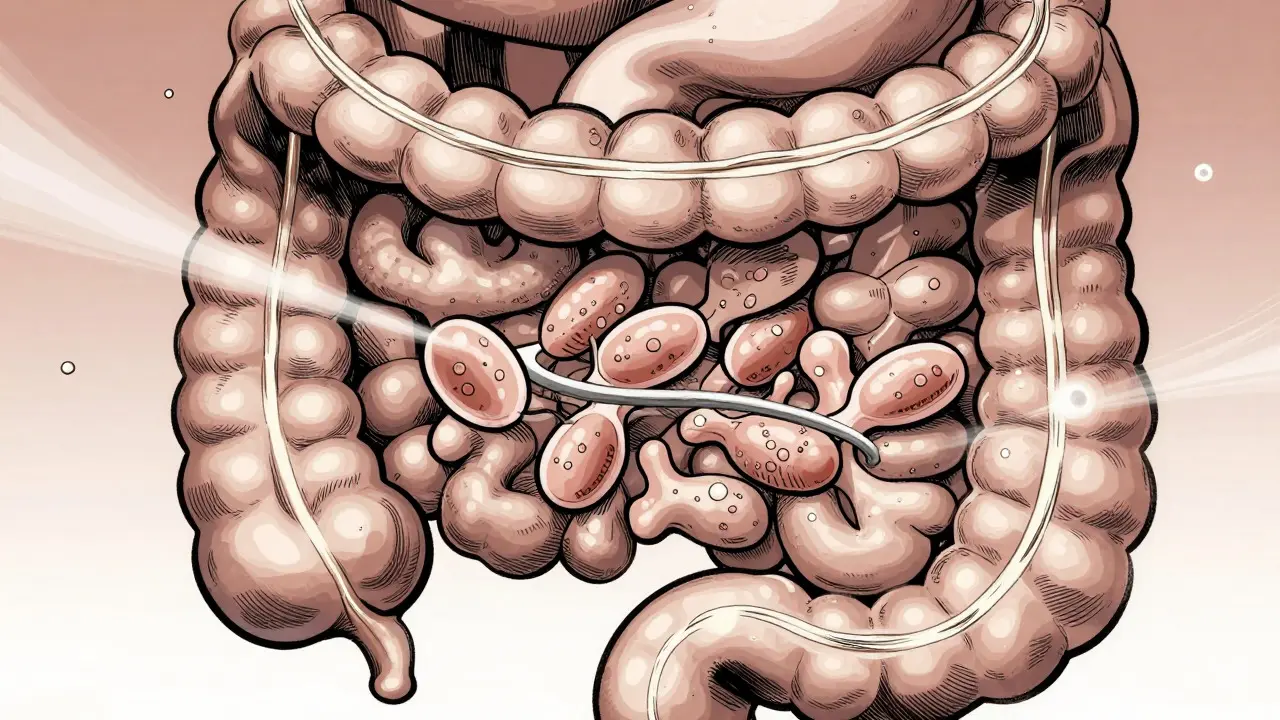
To understand why ezetimibe causes specific stomach issues, you have to look at where it works. It doesn't stop your liver from making cholesterol; instead, it blocks your intestines from absorbing it. This mechanical change in how your gut handles fats can trigger a few specific responses. The most frequent complaint is diarrhea, affecting roughly 5.6% to 7.2% of patients in clinical trials. That might sound like a lot, but when you compare it to the placebo group-where 5.3% to 6.5% also reported diarrhea-the difference is statistically small. It suggests that for many people, the "side effect" is barely distinguishable from normal digestive variance.
Other common GI complaints include:
- Abdominal Pain: Reported by about 4.1% to 5.8% of users. This is often described as a dull ache rather than sharp cramping.
- Flatulence (Gas): Affects roughly 3.2% to 4.5% of patients. Since less cholesterol is being absorbed, more material moves through the colon, potentially feeding bacteria that produce gas.
- Nausea: Occurs in 2.8% to 3.9% of cases, usually only during the first week or two.
- Vomiting: Rare, occurring in fewer than 2.3% of patients.
Here’s the good news: timing matters. Most of these symptoms hit within the first 4 to 6 weeks of starting the medication. In a large observational study of over 1,200 patients published in the Journal of Clinical Lipidology, nearly 78% of people who experienced these issues saw them resolve completely within 2 to 4 weeks. They didn’t stop the drug; they just waited it out.
Ezetimibe vs. Statins: The Tolerability Comparison
If you’re switching from a statin because of muscle pain, you’re probably relieved to hear that ezetimibe has a very low rate of myalgia. But does it trade one problem for another? Generally, no. In fact, ezetimibe often beats moderate-dose statins on pure GI comfort.
| Symptom | Ezetimibe (Monotherapy) | Atorvastatin (Moderate Dose) | Placebo |
|---|---|---|---|
| Diarrhea | 5.6% - 7.2% | ~6.1% (when combined with ezetimibe) | 5.3% - 6.5% |
| Abdominal Pain | 4.1% - 5.8% | Higher incidence in statin-only groups | 3.7% - 5.1% |
| Treatment Discontinuation due to GI Issues | 0.8% - 1.2% | 2.1% - 2.8% | N/A |
Data from a head-to-head trial involving 1,850 patients showed that ezetimibe monotherapy had significantly fewer treatment-emergent adverse events (17.4%) compared to atorvastatin (26.8%). More importantly, only 0.8% of people on ezetimibe quit the drug because of stomach issues, compared to 2.1% on atorvastatin. This makes it a strong candidate for anyone who finds statins too rough on their system, provided they don't have severe pre-existing bowel conditions.
When You Combine It With Statins
Many doctors prescribe ezetimibe alongside a statin (like simvastatin or atorvastatin) to push LDL levels down further. This combination is powerful, but it does tweak the side effect profile slightly. When you add ezetimibe to a statin, the rate of diarrhea bumps up to about 8.3%, compared to 6.1% for ezetimibe alone. Why? Because you’re now dealing with two different mechanisms affecting your metabolism and gut environment simultaneously.
If you’re on a combo pill (often branded as Vytorin or generic equivalents), expect a slightly higher chance of initial bloating or loose stools. However, the long-term tolerability remains excellent. The key takeaway here is that the "extra" side effects are mostly front-loaded. Once your body adjusts to the dual mechanism, the frequency of symptoms drops back down to baseline levels for most users.
Practical Strategies to Manage GI Symptoms
You don’t have to just suffer through the first month. Several evidence-based strategies can reduce the intensity of these symptoms. Think of it as training your gut to handle the new cholesterol dynamics.
- Take It With Food: This is the single most effective tip. Taking ezetimibe with a meal reduces GI symptoms by approximately 35%. The food acts as a buffer, slowing down absorption and reducing the shock to your intestinal lining.
- Hydrate Aggressively: If you experience diarrhea, fluid loss is the main risk. Aim for at least 2 liters of water daily. Electrolyte drinks can help if the diarrhea persists for more than a couple of days.
- Adjust Your Diet Temporarily: For the first 2-4 weeks, try eating smaller, more frequent meals instead of three large ones. Avoid gas-producing foods like beans, lentils, onions, and cruciferous vegetables (broccoli, cauliflower) until your tolerance improves.
- Try Probiotics: A randomized controlled trial found that taking Lactobacillus rhamnosus GG (10 billion CFU daily) helped resolve symptoms in 62% of patients. It helps rebalance the gut microbiota, which may be temporarily disrupted by the change in cholesterol absorption.
- Be Patient: Remember the 78% statistic. Most symptoms fade. Unless you have severe pain, vomiting, or dehydration, give it four weeks before calling your doctor to switch meds.

Who Should Be Cautious?
While ezetimibe is safe for most, certain groups need extra vigilance. Patients with type 2 diabetes, for instance, tend to be more sensitive to medication-related GI disturbances. However, studies show ezetimibe still performs better than statins in this group, with 40% fewer GI adverse events. On the other hand, if you have a history of inflammatory bowel disease (IBD) like Crohn's or Ulcerative Colitis, talk to your gastroenterologist first. While not contraindicated, the additional motility changes might exacerbate flare-ups in rare cases.
Also, keep an eye on your liver. While rare, hepatic events can present with GI symptoms like nausea or abdominal discomfort. If you notice yellowing of the eyes (jaundice) or dark urine alongside stomach issues, see your doctor immediately. Otherwise, routine monitoring is sufficient for most healthy individuals.
The Bottom Line on Long-Term Use
After 20 years on the market, the safety data for ezetimibe is robust. The FDA confirmed in 2024 that no new GI safety concerns have emerged since approval. Adverse event reporting rates have remained stable at about 12.7 reports per 100,000 prescriptions, which is low. For the vast majority of people, ezetimibe offers a sweet spot: effective LDL reduction without the muscle pain of statins or the severe constipation of bile acid sequestrants like cholestyramine.
If you’re considering this medication, know that the GI hump is real but manageable. By taking it with food, staying hydrated, and giving your body a few weeks to adjust, you can likely avoid the minority experience of persistent issues requiring discontinuation. It remains a cornerstone therapy for those needing additional cholesterol control with an excellent tolerability profile.
How long do ezetimibe side effects last?
Most gastrointestinal symptoms, such as diarrhea or abdominal pain, appear within the first 4 to 6 weeks of starting treatment. For about 78% of patients, these symptoms resolve naturally within 2 to 4 weeks without changing the medication dose or stopping the drug.
Is ezetimibe better tolerated than statins?
Generally, yes. Ezetimibe has a much lower rate of muscle pain (myalgia) compared to statins. In terms of GI side effects, ezetimibe monotherapy often shows similar or slightly better tolerability than moderate-dose statins, with fewer patients discontinuing treatment due to stomach issues.
Should I take ezetimibe with food or on an empty stomach?
You can take it either way, but taking it with food is recommended if you experience stomach upset. Clinical data suggests that taking ezetimibe with a meal can reduce gastrointestinal symptoms by approximately 35% by buffering the absorption process.
Does ezetimibe cause constipation?
Constipation is not a primary side effect of ezetimibe; diarrhea is more common. However, individual reactions vary. If you experience constipation, it may be related to dietary changes or other factors. Bile acid sequestrants are the cholesterol drugs most associated with constipation, not ezetimibe.
Can I take probiotics with ezetimibe?
Yes, there is no known negative interaction. In fact, some evidence suggests that taking specific probiotics like Lactobacillus rhamnosus GG may help alleviate GI symptoms associated with ezetimibe use, improving symptom resolution rates.