Delayed Medication Side Effects: Recognizing Late-Onset Adverse Reactions
 Feb, 18 2026
Delayed Medication Side Effects Checker
Check Your Symptoms
Select symptoms that match what you're experiencing. This tool helps identify potential delayed medication side effects based on the information in our article.
Results
Note: This tool is for informational purposes only and should not replace professional medical advice. If you're experiencing symptoms, please contact your healthcare provider.
Most people assume that if a medication has been working fine for months or even years, it’s safe. But that’s not always true. Some of the most dangerous side effects don’t show up until long after you’ve started taking a drug-sometimes after delayed medication side effects have been quietly building for months or even decades. These aren’t rare oddities. They’re real, documented, and often missed because doctors and patients alike assume the drug is harmless if no problems showed up early. If you’ve ever had a strange rash, swollen tongue, joint pain, or unexplained fatigue that came out of nowhere after being on a medication for years, you’re not alone-and you might be dealing with a late-onset reaction.
What Exactly Are Delayed Medication Side Effects?
Delayed medication side effects, or late-onset adverse drug reactions (ADRs), are harmful responses that appear hours, days, weeks, or even years after you start taking a drug. Unlike immediate reactions-like an allergic rash that pops up within minutes of taking a pill-these show up so far after the fact that they’re rarely linked back to the medication. The World Health Organization estimates that 5% of all hospital admissions are due to adverse drug reactions, and nearly a third of those are delayed. That means thousands of people every year are being hospitalized because a doctor didn’t realize their symptoms were caused by a drug they’d been taking for years.How Long Can It Take? Patterns You Need to Know
Not all delayed reactions follow the same timeline. Some show up fast, others creep in slowly. Here’s what to watch for based on timing:- 2-8 weeks after starting: This is the sweet spot for DRESS syndrome (Drug Reaction with Eosinophilia and Systemic Symptoms). You might get a widespread rash, swollen lymph nodes, fever, and organ damage-liver, kidneys, or lungs. It’s often triggered by antiseizure drugs like phenytoin or carbamazepine, or antibiotics like allopurinol.
- 6-12 months: Drug-induced lupus can appear after long-term use of medications like procainamide (used for heart rhythm issues) or hydralazine (for high blood pressure). Symptoms mimic real lupus: joint pain, fatigue, rashes, and kidney problems.
- 2+ years: Proton pump inhibitors (PPIs) like omeprazole or esomeprazole, commonly used for heartburn, can cause serious nutrient deficiencies. Studies show vitamin B12 levels drop 65% after two years and 112% after four years of daily use. Low magnesium from PPIs can cause muscle cramps, irregular heartbeat, or even slurred speech.
- Months after stopping: Fluoroquinolone antibiotics (ciprofloxacin, levofloxacin) can cause tendon ruptures-even after you’ve finished the course. The FDA issued a strong warning in 2018 after over 1,800 cases were reported where people tore their Achilles tendon months later.
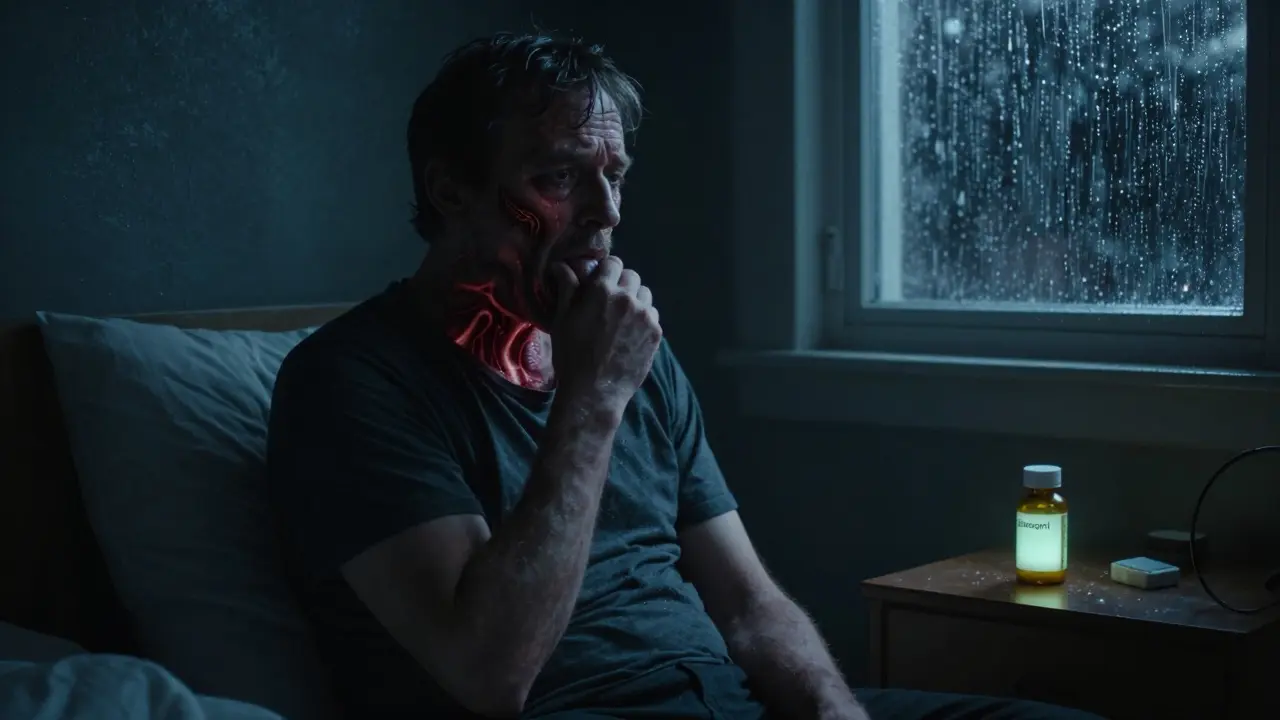
- Years after starting: ACE inhibitors like lisinopril or enalapril can cause angioedema-sudden, life-threatening swelling of the tongue or throat-after seven, ten, or even fifteen years of safe use. One patient in Illinois described waking up with his tongue swollen shut at 3 a.m. after seven years on the drug. The ER almost intubated him before he remembered reading about this delayed reaction.
Medications Most Likely to Cause Late Reactions
Some drugs are far more likely than others to cause delayed damage. Here are the big offenders:- ACE inhibitors (lisinopril, enalapril, ramipril): Angioedema. Risk increases with age, Black patients, and those with a history of allergies.
- Proton pump inhibitors (omeprazole, pantoprazole): Long-term use leads to low magnesium, calcium, iron, and B12. This can cause osteoporosis, fractures, anemia, and neurological symptoms.
- Fluoroquinolone antibiotics (ciprofloxacin, levofloxacin): Tendon rupture, nerve damage, muscle weakness. Symptoms can appear months after stopping.
- Corticosteroids (prednisone): Used for asthma, arthritis, or autoimmune conditions. After years, they can cause cataracts, glaucoma, diabetes, and bone thinning.
- Metformin: The most common diabetes drug. After 4+ years, it can cause vitamin B12 deficiency in up to 30% of users-leading to numbness, tingling, memory issues, and fatigue.
- Antiepileptics (phenytoin, carbamazepine, lamotrigine): Linked to DRESS and Stevens-Johnson Syndrome. Risk is much higher in people with the HLA-B*15:02 gene variant.

Who’s at Highest Risk?
Not everyone gets these reactions. But certain groups are far more vulnerable:- People over 65: They make up only 16% of the population but account for over 25% of emergency visits due to drug reactions. Their bodies process drugs slower, and they often take multiple medications that interact.
- Women: Studies show women experience delayed hypersensitivity reactions 1.5 to 2 times more often than men. Hormonal differences may play a role.
- People with autoimmune conditions: Those with Crohn’s disease, lupus, or rheumatoid arthritis have a 12-fold higher risk of DRESS when taking thiopurines.
- People with certain genes: The HLA-B*15:02 gene increases the risk of Stevens-Johnson Syndrome from carbamazepine from 0.01% to 50-80%. Genetic testing is now recommended before prescribing this drug in high-risk populations.
What Do These Reactions Look Like?
Symptoms vary wildly because these reactions can affect almost any system in the body. Here are the most common signs:- Skin: A rash that doesn’t go away, blisters, peeling skin, or hundreds of tiny pustules (that’s AGEP-a rare but serious reaction). DRESS causes a red, flat rash that spreads and turns into peeling skin.
- Swelling: Sudden swelling of the lips, tongue, throat, or face. This can happen with ACE inhibitors even after years of use.
- Neurological: Unexplained fatigue, confusion, memory loss, numbness, or slurred speech. These can be signs of B12 deficiency from metformin or PPIs.
- Joint and muscle: Pain, weakness, or tendon rupture without injury. Fluoroquinolones are notorious for this.
- Systemic: Fever, swollen lymph nodes, liver or kidney problems. These are red flags for DRESS or drug-induced lupus.
If you’ve been on the same medication for years and suddenly develop any of these symptoms, don’t assume it’s aging, stress, or a virus. Ask yourself: When did this start? And What am I taking?
Why Do Doctors Miss These Reactions?
It’s not that doctors aren’t paying attention. It’s that the system isn’t built to catch these. Most doctors are trained to look for immediate reactions. If you get a rash after your first dose of penicillin, they’ll know it’s an allergy. But if you get a rash after year three? They’ll send you to a dermatologist. Or diagnose you with eczema. Or call it stress.Studies show that over 60% of patients with delayed reactions were misdiagnosed at first. One analysis of patient forums found that 76% of people with ACE inhibitor angioedema had their symptoms dismissed by doctors. Another found that 58% of patients kept taking the drug for 14 days or more after symptoms started-because no one connected the dots.
Dr. Michael Chen from the FDA says doctors need to ask one simple question during every checkup: “Have you noticed any new symptoms since you started this medication?” Not “Are you having side effects?” But “Have you noticed anything new?” That small shift in wording makes all the difference.

How to Protect Yourself
You can’t avoid every medication, but you can reduce your risk:- Keep a full medication list. Include doses, start dates, and why you’re taking each one. Update it every time your doctor changes something.
- Ask about delayed risks. When a new drug is prescribed, ask: “Can this cause problems months or years from now?”
- Watch for new symptoms. If something changes-new rash, swelling, fatigue, numbness, joint pain-note when it started. If it lines up with a drug you’ve been on for months or years, suspect the medication.
- Don’t ignore “minor” symptoms. A little tingling in your fingers? A new dry cough? Unexplained bruising? These can be early signs.
- Get tested if needed. If you’ve had a suspected delayed reaction, ask about skin patch testing (70-80% accurate) or lymphocyte testing (85-90% accurate). These can confirm if a drug caused it.
What to Do If You Suspect a Delayed Reaction
If you think a medication is causing a late-onset reaction:- Don’t stop abruptly-some drugs need to be tapered. Talk to your doctor.
- Bring your full medication list and symptom timeline to your appointment.
- Ask specifically: “Could this be a delayed drug reaction?”
- Request a referral to a drug allergy specialist or pharmacologist if your doctor is unsure.
- Report it to your country’s adverse event system. In the U.S., use the FDA’s MedWatch program. In New Zealand, report to the Centre for Adverse Reactions Monitoring (CARM).
Every report helps build the evidence. The more we document these reactions, the better doctors will become at spotting them.
What’s Next?
The future is changing. The FDA’s Sentinel Initiative now tracks over 200 million patient records and has developed an algorithm that predicts delayed reactions with 82% accuracy. By 2025, genetic screening before prescribing high-risk drugs like carbamazepine could become routine. In Europe, updated labeling now warns about delayed tendon damage from fluoroquinolones and nutrient depletion from PPIs.But until then, the best defense is awareness. If you’ve been on a medication for years and something feels off-listen to your body. Don’t wait for a textbook case. Don’t wait for your doctor to connect the dots. Ask the question. Document the change. And if you’re right? You might just save your life.
Davis teo
February 19, 2026 AT 08:55Michaela Jorstad
February 21, 2026 AT 03:49James Roberts
February 22, 2026 AT 01:29Danielle Gerrish
February 23, 2026 AT 03:04Chris Beeley
February 23, 2026 AT 19:19Scott Dunne
February 24, 2026 AT 07:33madison winter
February 25, 2026 AT 17:40Oana Iordachescu
February 25, 2026 AT 23:32Robert Shiu
February 26, 2026 AT 04:17James Roberts
February 27, 2026 AT 10:09