Cold Sores vs. Pimples: How to Tell Them Apart and Treat Them Right
 Jan, 3 2026
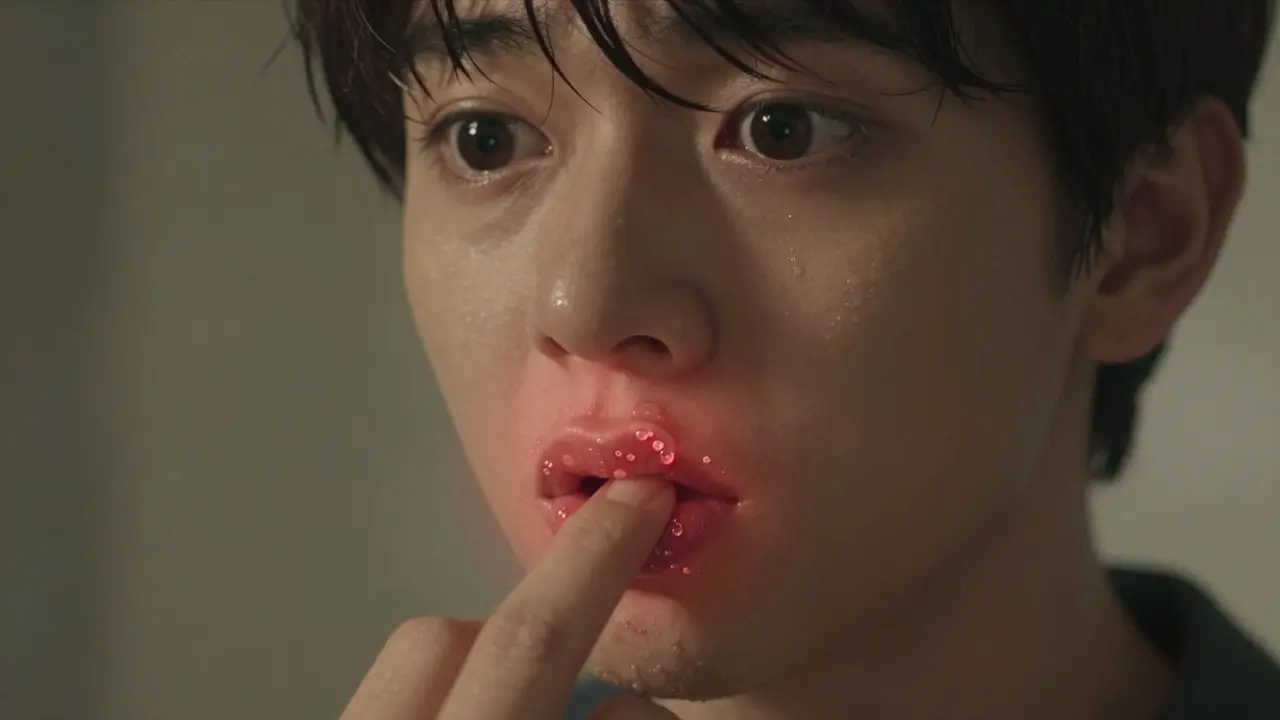
Ever looked in the mirror and wondered if that little bump on your lip is a pimple or a cold sore? You’re not alone. Many people mistake one for the other - and end up treating it wrong. Applying acne cream to a cold sore can make it worse. Using lip balm on a pimple might clog the pore even more. The difference matters. A lot.
What’s Really Going On?
Cold sores and pimples look similar at first glance. Both can appear as red, swollen bumps near the mouth. But they come from completely different causes.Cold sores are caused by the herpes simplex virus type 1 (HSV-1). It’s not rare - about 67% of people under 50 worldwide carry it, according to the World Health Organization. Once you have it, the virus stays in your nerves for life. It doesn’t go away. It just sleeps… until something wakes it up.
Pimples, on the other hand, are caused by clogged pores. When oil, dead skin cells, and bacteria (like Cutibacterium acnes) get trapped in a hair follicle, your body sends in inflammatory signals. The result? A red, sometimes pus-filled bump. Acne isn’t contagious. It’s not a virus. It’s a blockage.
Where Do They Show Up?
Location is one of the clearest clues.Cold sores almost always appear on the vermillion border - that thin line where your lip meets your skin. You’ll see them on the edge of your upper or lower lip, sometimes right at the corner of your mouth. Rarely do they show up on the actual lip surface or inside the mouth.
Pimples? They can pop up anywhere there’s a hair follicle. That includes your forehead, chin, nose, jawline - and yes, even the surface of your lip. If the bump is right on the lip, not the edge, it’s more likely a pimple.
What Do They Look Like?
Cold sores don’t start as a single bump. They begin as a cluster of tiny, fluid-filled blisters. Think of it like a group of water balloons forming in a tight bunch. Over a few days, they burst, ooze, then crust over into a yellowish scab. The whole process takes 7 to 14 days without treatment.Pimples are usually solitary. One bump. One head. Sometimes it’s white or yellow with pus. Other times, it’s just a red, tender lump under the skin. No blisters. No clusters. No scabbing unless you pick at it.
How Do They Feel?
This is where most people get it right - if they pay attention.Cold sores come with a warning. Before you even see the bump, you’ll feel it. A tingling, burning, itching sensation on your lip. It can last 12 to 48 hours. That’s your body’s signal: “Virus is waking up.” If you catch it then, treatment can cut the outbreak short.
Pimples? No warning. One day it’s fine. The next, you touch your lip and it hurts. It’s tender to the press, maybe a little sore. But no tingling. No itching. No burning before it appears.
Are They Contagious?
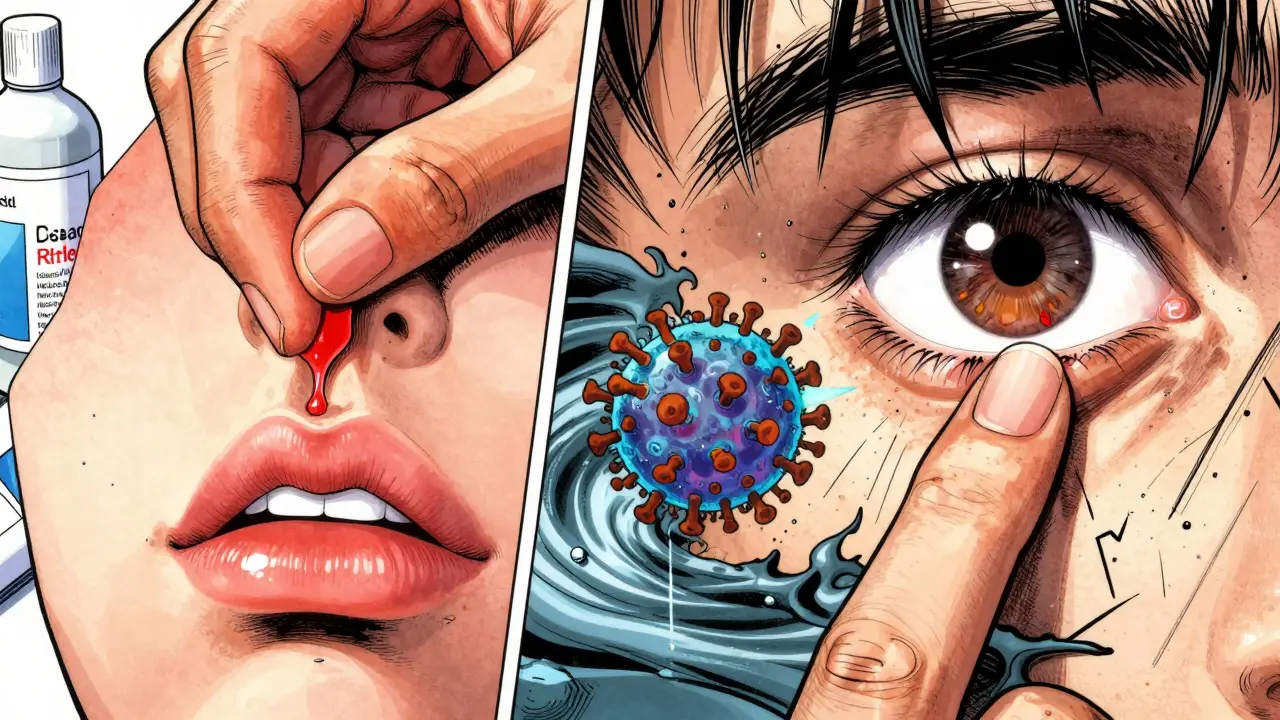
This is the biggest difference - and the most dangerous to ignore.Cold sores are highly contagious. The virus spreads through direct contact: kissing, sharing lip balm, eating off the same spoon, or even touching the sore then touching your eye. About 30-50% of people who come into contact with an active cold sore will catch it. That’s why doctors warn against kissing babies or sharing towels during an outbreak.
Pimples? Zero risk. You can’t catch acne from someone. Even if you touch their pimple, you won’t get one. It’s not a germ. It’s a clogged pore. No transmission. No danger to others.
How to Treat Them
Treating them the wrong way makes things worse.If it’s a cold sore:
- Start antiviral treatment at the first sign of tingling. Prescription options like acyclovir (Zovirax) or valacyclovir (Valtrex) can shorten the outbreak by 1-2 days.
- Over-the-counter docosanol (Abreva) can help too, but it needs to be applied 5 times a day for 4-5 days.
- Don’t pop it. Don’t pick the scab. That spreads the virus and delays healing.
- Apply penciclovir cream (Denavir) every 2 hours while awake during the first 4 days for best results.
- Avoid sun exposure. UV light is one of the top triggers - 32% of outbreaks are linked to sunlight.
If it’s a pimple:
- Use benzoyl peroxide 2.5%-10%. It kills bacteria and reduces inflammation. Studies show it clears up 40-60% of inflammatory acne in 4 weeks.
- Salicylic acid 0.5%-2% helps unclog pores. Use it daily to prevent new pimples.
- Don’t use toothpaste, baking soda, or alcohol-based spot treatments. They dry out the skin and cause more irritation.
- Wash your face twice a day with a gentle cleanser. Over-washing makes acne worse.
- Keep your hands off. Touching it spreads bacteria and can lead to scarring.
Common Mistakes People Make
People try all kinds of home fixes - and most of them backfire.- Applying acne cream to a cold sore: This ruptures blisters, spreads the virus, and can cause new sores on your cheek or nose.
- Using lip balm on a pimple: If it’s oily, it clogs the pore even more.
- Sharing lip products during an outbreak: One study found 41% of partners caught HSV-1 this way.
- Popping the blister: Instead of healing in 7 days, it takes 10-12. You’re also more likely to leave a scar.
- Ignoring the tingling: Waiting until you see the blister means you’ve already missed the best window to stop it.
Reddit users in r/skincareaddiction reported that 68% of first-time cold sore sufferers thought it was a pimple. Many ended up spreading the virus to other parts of their face - or to their partner.
When to See a Doctor
Most cold sores and pimples clear up on their own. But see a dermatologist if:- Your cold sore lasts longer than 2 weeks.
- You get more than 5 outbreaks a year.
- The bump is huge, painful, or bleeding without healing.
- You have a weakened immune system (from illness, chemo, or medication).
- You’re not sure what it is - and it keeps coming back.
Doctors can prescribe stronger antivirals or test for other conditions like folliculitis or impetigo, which can mimic both.
Prevention Tips
You can’t always stop a cold sore - but you can reduce how often they happen.- Use sunscreen on your lips daily. SPF 30+ lip balm cuts UV-triggered outbreaks by half.
- Manage stress. 28% of outbreaks are linked to anxiety or lack of sleep.
- Don’t share towels, razors, or lip products.
- Wash your hands often - especially after touching your face.
- For acne, stick to non-comedogenic skincare. Look for “won’t clog pores” on the label.
Recent research shows that 85% of cold sore triggers are avoidable. That means most outbreaks aren’t random. They’re signals - your body telling you to slow down, protect your skin, or rest.
What’s New in Treatment?
Science is moving fast. In 2023, the FDA approved pritelivir - an experimental antiviral that reduces viral shedding by 70% in trials. It’s not widely available yet, but it’s a sign that better options are coming.For acne, new treatments are focusing on the skin’s microbiome. Instead of killing all bacteria, they target only the bad ones. This means fewer side effects and less dryness.
Laser treatments for cold sore prevention are also rising in popularity - up 20% in 2023. They don’t cure the virus, but they help reduce outbreak frequency in people who get them often.
Bottom Line
Cold sores and pimples look alike. But they’re not the same. One is a virus. One is a clog. One spreads. One doesn’t. One needs antivirals. One needs exfoliants.Pay attention to the signs: tingling? Lip edge? Cluster of blisters? That’s a cold sore. No warning? Single bump? On the lip surface? That’s a pimple.
Treat them right - and you’ll heal faster, avoid spreading the virus, and stop making the same mistake twice.
Enrique González
January 3, 2026 AT 22:56Been there. Thought I had a pimple right on my lip edge-turned out to be a cold sore. Popped it. Big mistake. Now I know better. Don’t be like me.
Aaron Mercado
January 4, 2026 AT 03:23ARE YOU KIDDING ME?!?! People are STILL mixing these up?!?! I’ve seen people kiss their babies after popping a ‘pimple’-and then the baby gets herpes encephalitis?!?! This is a public health crisis!!!
saurabh singh
January 4, 2026 AT 05:46Bro, in India we just call both ‘lip bug’ and slap on some neem paste. Works 70% of the time. But yeah, if it tingles first? That’s herpes. My cousin got it from sharing chai cups. Lesson learned. Don’t share anything near your mouth unless you trust them with your life.
Dee Humprey
January 4, 2026 AT 07:35That tingling warning is everything. I used to ignore it. Now as soon as I feel it, I grab my Abreva and stay out of the sun. It cuts my outbreaks from 10 days to 3. Life-changing. 🌞🚫
John Wilmerding
January 6, 2026 AT 05:23It is imperative to emphasize the distinction between viral etiology and follicular obstruction. Misapplication of topical agents may exacerbate both conditions, as delineated in the referenced literature. One must exercise clinical discernment.
mark etang
January 6, 2026 AT 12:23Scientifically accurate. Well-structured. This should be required reading for every high school health class. Thank you for this.
Ethan Purser
January 7, 2026 AT 16:18So… the virus lives in your nerves… and it’s triggered by… stress? Sun? What if it’s just… your soul’s way of saying ‘you’ve been ignoring yourself’? Like, the body doesn’t lie. Maybe the cold sore isn’t the problem. Maybe you are.
Stephen Craig
January 8, 2026 AT 18:47Tingling = cold sore. No warning = pimple. Simple.
Roshan Aryal
January 10, 2026 AT 18:20Western medicine overcomplicates everything. In my village, we use garlic paste. Burn? Yes. Work? Hell yes. Your ‘acyclovir’ is just expensive garlic with a patent. And your ‘microbiome’ nonsense? That’s just science trying to sound deep.
Jack Wernet
January 11, 2026 AT 03:08This is an exceptionally well-researched and clearly articulated post. I appreciate the inclusion of statistical data and practical guidance. Thank you for taking the time to compile this.
Charlotte N
January 12, 2026 AT 13:42I think the tingling thing is real… but what if you don’t feel it? Like… what if it just shows up? And what if it’s not a cold sore or pimple… but something else? Like… a bite? Or… a tumor? I’m scared now
Catherine HARDY
January 13, 2026 AT 13:42Did you know the CDC hides the truth? HSV-1 isn’t just a virus… it’s a bio-weapon from the 1980s. They want us to think it’s ‘common’ so we don’t ask questions. Why is it only on lips? Why not elsewhere? Why do they sell ‘Abreva’ and not a cure? Coincidence? I think not.
bob bob
January 14, 2026 AT 05:37Man I used to use toothpaste on mine. Felt like a ninja. Turns out I was just burning my lip. Now I use coconut oil and chill. Life’s better when you stop treating your face like a science experiment.
Vicki Yuan
January 15, 2026 AT 11:52Excellent breakdown. I especially appreciate the distinction between vermillion border and lip surface localization. The data on UV-triggered outbreaks (32%) is particularly compelling and warrants greater public awareness.
Uzoamaka Nwankpa
January 16, 2026 AT 11:18I used to think it was just a pimple… then I kissed my boyfriend. Now he has three. I feel terrible. I didn’t know. I’m so sorry. I’m crying right now.