Citalopram vs Escitalopram: QT Prolongation Risks and Safe Dose Limits
 May, 6 2026
QT Prolongation Risk & Safe Dose Calculator
Analysis Results
Enter your details and click "Analyze Risk" to see the results.
Imagine you are sitting in a doctor's office. You have been struggling with depression or anxiety for months. The doctor hands you a prescription for an SSRI-either Citalopram (Celexa) or Escitalopram (Lexapro). These are among the most commonly prescribed antidepressants in the world because they work well and usually cause fewer side effects than older drugs. But there is a catch that many patients-and even some prescribers-don't fully understand. Both medications can affect your heart rhythm by prolonging the QT interval. This isn't just a minor footnote; it is a critical safety issue that requires specific dose limits to prevent serious, potentially fatal arrhythmias.
If you are taking one of these drugs, or if you are considering them, you need to know exactly how much risk exists, what the safe dosage boundaries are, and why your age matters more than you might think. This guide breaks down the science behind the warnings issued by global health agencies like the FDA and MHRA, giving you the clarity needed to manage your treatment safely.
The Core Issue: What Is QT Prolongation?
To understand the risk, we first need to look at how your heart works electrically. Every heartbeat starts with an electrical signal that travels through your heart muscle, causing it to contract and pump blood. After the contraction, the heart needs to reset itself for the next beat. This resetting phase is called repolarization. On an electrocardiogram (ECG), this period is measured as the QT interval.
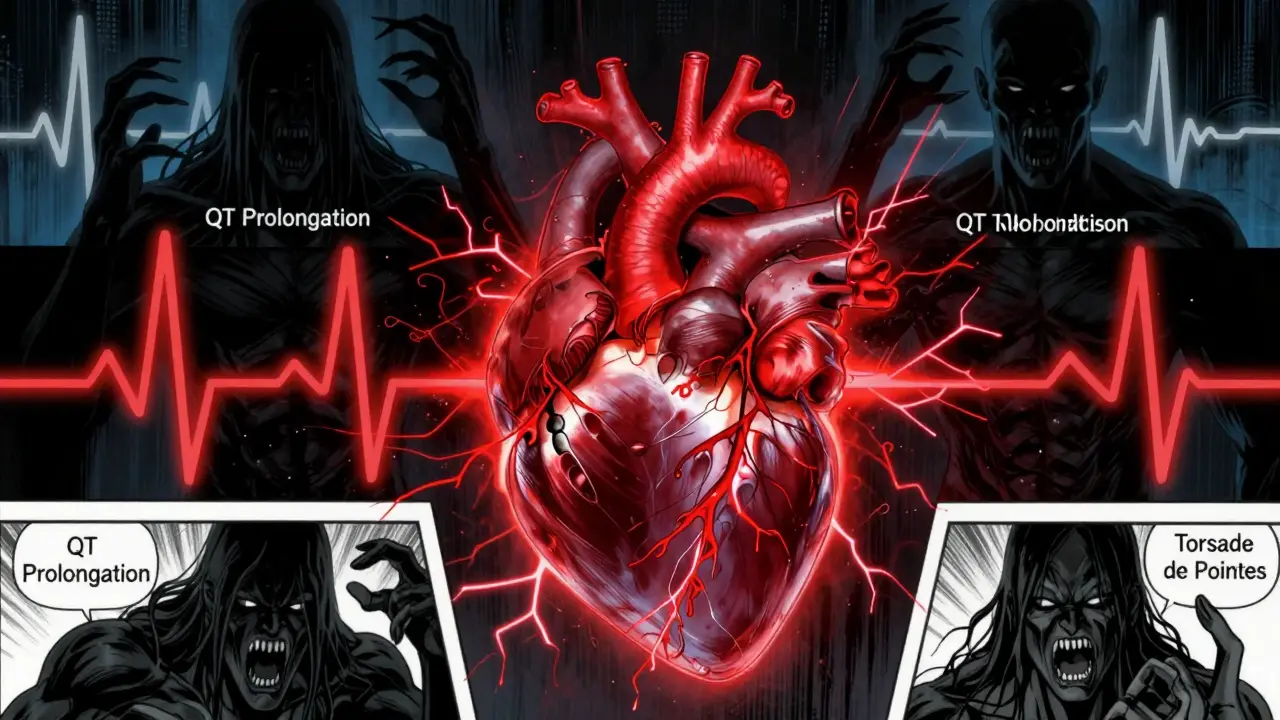
When we say "QT prolongation," we mean this resetting phase takes longer than normal. If the QT interval gets too long, the heart's electrical system becomes unstable. This instability can lead to a dangerous type of irregular heartbeat known as Torsade de Pointes, which can degenerate into ventricular fibrillation-a condition where the heart quivers instead of pumping, leading to sudden cardiac arrest if not treated immediately.
Citalopram and escitalopram belong to a class of drugs called Selective Serotonin Reuptake Inhibitors (SSRIs). While their primary job is to increase serotonin levels in the brain to improve mood, they also interact with potassium channels in the heart cells, specifically the hERG channels. By blocking these channels, they slow down the flow of potassium out of the heart cells, which delays repolarization and lengthens the QT interval. This effect is dose-dependent, meaning the higher the dose, the greater the impact on your heart rhythm.
Citalopram vs. Escitalopram: A Chemical Difference That Matters
You might wonder why there are two separate drugs if they are so similar. The answer lies in chemistry. Citalopram is a racemic mixture, meaning it contains two mirror-image molecules: the R-enantiomer and the S-enantiomer. Research showed that only the S-enantiomer is responsible for the antidepressant effect. The R-enantiomer does little for mood but contributes to side effects, including cardiac risks.
Escitalopram was developed to isolate just the active S-enantiomer. Theoretically, this should make it safer and more effective. And in terms of potency, it is. However, when it comes to QT prolongation, the difference is nuanced. While citalopram causes a larger absolute increase in the QT interval at equivalent doses, escitalopram still carries a significant risk. Regulatory bodies recognized that while escitalopram has a "more favorable" profile, it is not risk-free.
| Drug | Daily Dose | Average QTc Increase (ms) | Risk Level |
|---|---|---|---|
| Citalopram | 20 mg | 8.5 ms | Moderate |
| Citalopram | 40 mg | 12.6 ms | High |
| Citalopram | 60 mg | 18.5 ms | Very High |
| Escitalopram | 10 mg | 4.5 ms | Low-Moderate |
| Escitalopram | 20 mg | 6.6 ms | Moderate |
| Escitalopram | 30 mg | 10.7 ms | High |
As shown in the table above, derived from clinical data reviewed by medical education centers, the jump in risk for citalopram between 40mg and 60mg is substantial. For escitalopram, the increase is smaller but still present. This data drove regulatory changes worldwide starting in 2011.
Regulatory Wake-Up Call: The 2011 Safety Reviews
For years, these drugs were prescribed without strict upper limits. That changed dramatically in August 2011 when the U.S. Food and Drug Administration (FDA) issued a drug safety communication regarding abnormal heart rhythms associated with high doses of citalopram. Shortly after, in December 2011, the UK's Medicines and Healthcare Products Regulatory Agency (MHRA) released updated guidance covering both citalopram and escitalopram. In New Zealand, Medsafe published related information in March 2012.
These agencies reviewed extensive preclinical and clinical evidence. They concluded that the risk of QT prolongation was real and clinically significant, particularly at higher doses. The key metric they focused on was the corrected QT interval (QTc). A QTc duration of 500 milliseconds or longer, or an increase of 60 milliseconds or more from baseline, is considered the threshold where the risk of Torsade de Pointes rises sharply.
The regulatory response varied slightly by region. The FDA focused heavily on citalopram, recommending against doses above 40mg daily. Health Canada followed suit. The European regulators, including the MHRA, took a broader precautionary stance, imposing stricter limits on both medications, especially for vulnerable populations. This reflects a global consensus that while these drugs are essential tools in mental health treatment, their use must be balanced against cardiac safety.
Strict Dose Limits: Who Gets What?
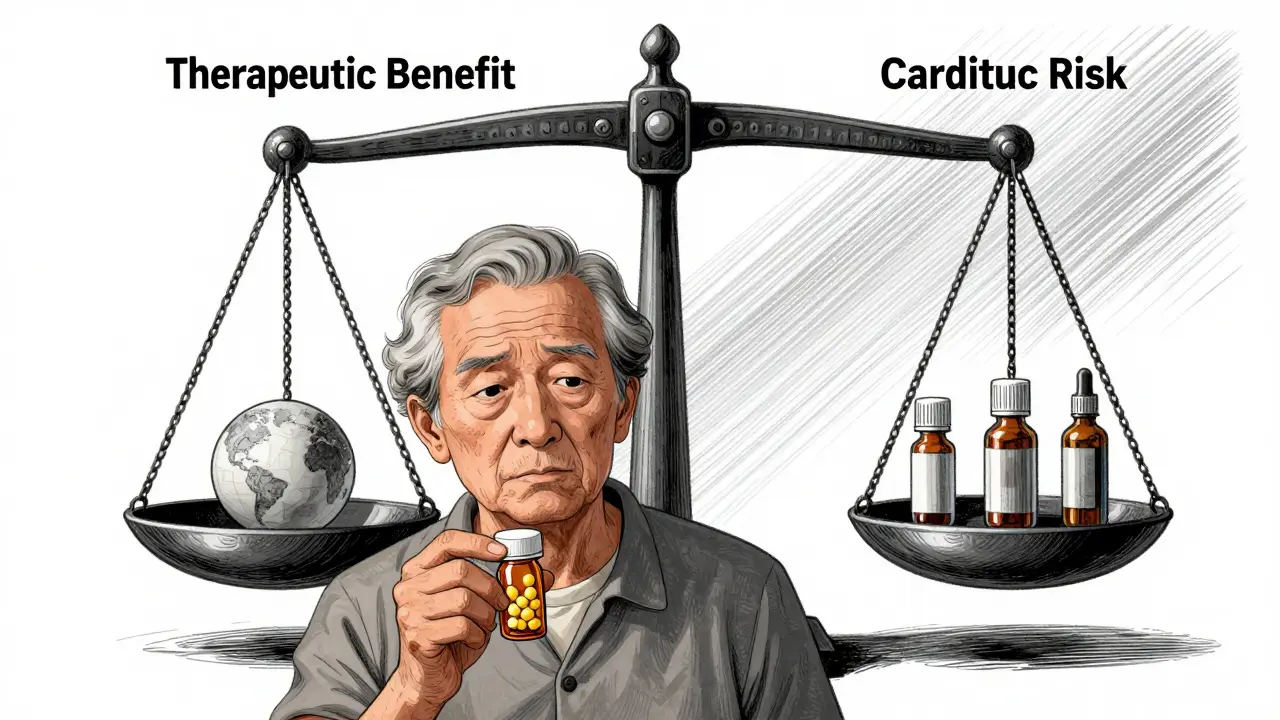
This is the most actionable part of this guide. You need to know the maximum daily doses recommended by major health authorities to minimize cardiac risk. These limits are not arbitrary; they are based on the point where the benefit-to-risk ratio begins to tip unfavorably.
Citalopram (Celexa) Limits
- Patients under 60 years old: Maximum 40 mg per day.
- Patients over 60 years old: Maximum 20 mg per day.
- Avoid entirely: Doses above 40 mg are no longer recommended for any patient due to disproportionate risk.
Escitalopram (Lexapro) Limits
- Patients under 65 years old: Maximum 20 mg per day.
- Patients over 65 years old: Maximum 10 mg per day.
- Hepatic impairment: Patients with liver issues often require lower doses, as the liver metabolizes these drugs. Consult your doctor for specific adjustments.
Why the difference for elderly patients? As we age, our metabolism slows down. We eliminate drugs from our bodies less efficiently. This means that a standard dose in a younger person might result in much higher blood concentrations in an older adult, significantly increasing the strain on the heart. The MHRA explicitly noted that elderly patients have higher exposure due to age-related decline in metabolism and elimination.
Risk Factors: Are You More Vulnerable?
Not everyone who takes citalopram or escitalopram will experience QT prolongation. For many healthy young adults, the risk is low. However, certain factors stack the deck against you, making monitoring crucial.
You are at higher risk if you have:
- Pre-existing heart conditions: Including congenital long QT syndrome, recent myocardial infarction (heart attack), or heart failure.
- Electrolyte imbalances: Low levels of potassium (hypokalemia) or magnesium (hypomagnesemia) severely exacerbate QT prolongation. Diuretics, laxatives, or vomiting can cause these imbalances.
- Bradycardia: A naturally slow heart rate increases the time available for QT prolongation to occur.
- Other medications: Combining SSRIs with other drugs that prolong the QT interval creates a synergistic danger. Common culprits include certain antibiotics (like macrolides), antipsychotics (like haloperidol), and antiarrhythmics.
If you fall into any of these categories, your doctor should likely order a baseline ECG before starting treatment and periodic follow-ups. It is not paranoia; it is prudent medicine.
Comparative Context: How Do Other Antidepressants Stack Up?
If you are worried about cardiac risks, you might ask if other antidepressants are safer. The landscape is mixed. Tricyclic antidepressants (TCAs) like amitriptyline and maprotiline carry a high risk of QT prolongation and are generally avoided in patients with heart disease unless absolutely necessary.
Other SSRIs, such as fluoxetine (Prozac), sertraline (Zoloft), and paroxetine (Paxil), have minimal effects on the QT interval. They are often preferred for patients with significant cardiac history. Serotonin-norepinephrine reuptake inhibitors (SNRIs) like venlafaxine show low risk at therapeutic doses but require caution in overdose scenarios or in the elderly.
So, why do doctors still prescribe citalopram and escitalopram? Because they are highly effective for many people, especially for anxiety disorders, and they tend to have fewer sexual and weight-gain side effects compared to TCAs or some other SSRIs. The goal is not to ban them but to use them wisely within safe parameters.
Practical Steps for Safe Use
How do you protect yourself? Here is a practical checklist for patients and caregivers:
- Disclose your full medical history: Tell your doctor about any heart issues, fainting spells, or family history of sudden death.
- List all medications: Include over-the-counter drugs and supplements. Some interactions are hidden.
- Monitor electrolytes: If you take diuretics or have digestive issues, ask your doctor to check your potassium and magnesium levels regularly.
- Watch for symptoms: Be alert for dizziness, lightheadedness, palpitations, or fainting. These could be signs of an arrhythmia. Seek immediate medical attention if they occur.
- Respect the dose limit: Never exceed the prescribed dose. If 20mg of citalopram isn't working, don't assume more will help. Talk to your doctor about switching to a different medication rather than pushing the dose higher.
Remember, the warnings issued in 2011-2012 did not render these drugs useless. As studies have shown since then, the pro-arrhythmic effects are manageable in clinical practice when appropriate precautions are taken. Millions of people continue to benefit from these medications every year without incident because they adhere to these safety guidelines.
Can I take citalopram and escitalopram together?
No, you should never take citalopram and escitalopram together. They are both SSRIs and act on the same neurotransmitter pathways. Combining them would dangerously increase the risk of serotonin syndrome and compound the QT prolongation effect, significantly raising the chance of severe cardiac arrhythmias. Always consult your doctor before changing any medication regimen.
Do I need an ECG before starting citalopram?
If you are young and healthy with no history of heart disease, an ECG may not be strictly required. However, if you are over 60, have existing heart conditions, electrolyte imbalances, or are taking other medications that affect heart rhythm, a baseline ECG is strongly recommended. This helps establish your starting QT interval and ensures it is safe to proceed with treatment.
What happens if my QTc reaches 500 milliseconds?
A QTc of 500 milliseconds or more is considered a critical threshold. At this level, the risk of developing Torsade de Pointes, a life-threatening arrhythmia, increases substantially. If your ECG shows this value, your doctor will likely discontinue the medication immediately, correct any underlying electrolyte issues, and switch you to an antidepressant with a lower cardiac risk profile, such as sertraline or fluoxetine.
Is escitalopram completely safe for the heart?
No medication is completely free of cardiac risk. Escitalopram has a more favorable profile than citalopram, causing smaller increases in the QT interval. However, it still blocks hERG potassium channels and can prolong the QT interval, especially at doses above 20mg or in vulnerable patients. It should be used with caution and within established dose limits, particularly in the elderly.
Why are dose limits lower for elderly patients?
Elderly patients typically have reduced kidney and liver function, which slows down the metabolism and elimination of drugs from the body. This leads to higher concentrations of the medication in the bloodstream for longer periods, amplifying its effects, including the unwanted blockade of heart potassium channels. Lower doses help maintain therapeutic benefits while minimizing the risk of toxic side effects like QT prolongation.