Chemotherapy Explained: How Cytotoxic Drugs Work and Manage Side Effects
 Aug, 12 2026
When you hear the word chemotherapy, your mind might jump to hair loss, nausea, or exhaustion. But beneath those well-known struggles lies a powerful medical strategy that has saved millions of lives. Chemotherapy is not just one drug; it is a class of cytotoxic medications designed to kill rapidly dividing cells. While this sounds simple, the reality is complex. These drugs target cancer because cancer cells divide faster than most healthy cells. The catch? They don’t always tell the difference between a tumor cell and a healthy hair follicle or gut lining.
Understanding how these drugs work-and why they cause specific side effects-can help you navigate treatment with less fear and more control. This guide breaks down the science behind cytotoxic agents, explains what happens in your body during each cycle, and offers practical, evidence-based ways to manage the physical and emotional toll of treatment.
How Cytotoxic Drugs Attack Cancer Cells
To understand chemotherapy, you first need to understand the enemy. Cancer cells are defined by their uncontrolled growth. They ignore the signals that tell normal cells to stop dividing. Chemotherapy exploits this weakness. It targets the machinery cells use to replicate their DNA and split into two new cells.
There isn't just one way to do this. Doctors choose from over 100 different agents, grouped into six main classes based on how they disrupt the cell cycle:
- Alkylating Agents: Drugs like cyclophosphamide attach chemical groups to your DNA, causing tangles that prevent replication. Think of it as jamming the gears of a machine.
- Antimetabolites: Medications such as 5-fluorouracil (5-FU) mimic essential nutrients. Cancer cells eat them up, thinking they’re food, but instead, they get poisoned from the inside, halting DNA synthesis.
- Anthracyclines: Powerful drugs like doxorubicin squeeze themselves between DNA strands (intercalation) and block enzymes needed for unwinding DNA. This causes breaks in the genetic code.
- Plant Alkaloids: Derived from plants, drugs like vincristine and paclitaxel (Taxol) attack the cell’s skeleton (microtubules). Without this structure, the cell cannot pull apart its chromosomes during division.
- Topoisomerase Inhibitors: Agents like etoposide freeze the enzymes that unwind DNA, stopping the copying process mid-stream.
- Miscellaneous Agents: Other drugs that work through unique mechanisms, often used in combination with the above.
The goal is to hit the cancer hard enough to shrink tumors or eliminate microscopic disease after surgery. Because these drugs travel through your bloodstream, they reach cancer cells anywhere in the body, making them vital for treating metastatic disease.
The Reality of Chemotherapy Cycles
You won’t receive chemotherapy continuously. Treatment comes in cycles, typically lasting 2 to 6 weeks. Why the break? Your body needs time to recover. Healthy cells in your bone marrow, mouth, and gut also divide quickly. They take damage alongside cancer cells, but unlike cancer, they can repair themselves if given a rest period.
A typical cycle looks like this:
- Active Days: You receive the drug(s). This might be a single-day infusion, a multi-day IV drip, or oral pills taken at home.
- Recovery Phase: For the next few weeks, your blood counts drop (nadir), then slowly rise again as your bone marrow regenerates cells.
- Assessment: Before the next cycle starts, doctors check your blood work and overall health to ensure you’re ready for another dose.
Administration methods vary. About 65% of chemo is given intravenously (IV). Others are taken orally (like capecitabine), injected into the spine (intrathecal), or delivered directly into the abdomen (intraperitoneal). The method depends on the drug’s properties and where the cancer is located.
Why Side Effects Happen (And What They Mean)
Side effects aren’t random bad luck; they are direct results of how cytotoxic drugs work. Since these drugs target any rapidly dividing cell, they impact healthy tissues that naturally turn over quickly.
| Side Effect | Affected Tissue | Biological Reason | Frequency |
|---|---|---|---|
| Hair Loss (Alopecia) | Hair Follicles | Follicles divide rapidly to produce hair shafts; drugs disrupt this growth. | 78% of patients |
| Nausea/Vomiting | Gut Lining / Brain Center | Drugs irritate the stomach lining and trigger the brain’s vomiting center. | 65% of patients |
| Fatigue | Blood Cells / Muscles | Anemia (low red blood cells) reduces oxygen delivery; body uses energy to repair. | 82% of patients |
| Mouth Sores (Mucositis) | Mouth/Throat Lining | Rapidly dividing mucosal cells die off, leaving open sores. | 40-50% of patients |
| Neuropathy | Nerves | Certain drugs (taxanes/platinum) damage nerve endings, causing tingling/pain. | 30-40% of patients |
| "Chemo Brain" | Brain Function | Inflammation and metabolic changes affect memory and focus. | 75% during treatment |
It’s important to know that not everyone experiences every side effect. Severity varies based on the drug type, dose, and your individual biology. However, recognizing why these symptoms occur helps you advocate for better management.
Managing Nausea and Digestive Issues
Nausea used to be the most feared side effect. Today, thanks to advanced anti-emetic drugs, severe vomiting is much less common. In the 1990s, 70-80% of patients suffered severe nausea. Now, that number is down to 10-20% for highly emetogenic regimens, thanks to 5-HT3 receptor antagonists like ondansetron.
However, nausea still comes in waves. There’s acute nausea (within 24 hours) and delayed nausea (days later). Here’s how to handle both:
- Pre-medication is key: Take prescribed anti-nausea meds before you feel sick. Don’t wait until you’re vomiting.
- Eat small, frequent meals: Large meals overwhelm your stomach. Try bland foods like toast, bananas, rice, or applesauce.
- Stay hydrated: Drink 1-2 liters of water daily. Dehydration worsens nausea. Sip slowly rather than gulping.
- Avoid strong smells: Cooking odors or perfumes can trigger gag reflexes. Eat cold or room-temperature foods which have less aroma.
If you experience diarrhea, use over-the-counter options like loperamide (Imodium) as directed by your doctor. But watch out: black stools or bloody diarrhea require immediate medical attention, as they may signal internal bleeding.
Coping with Fatigue and "Chemo Brain"
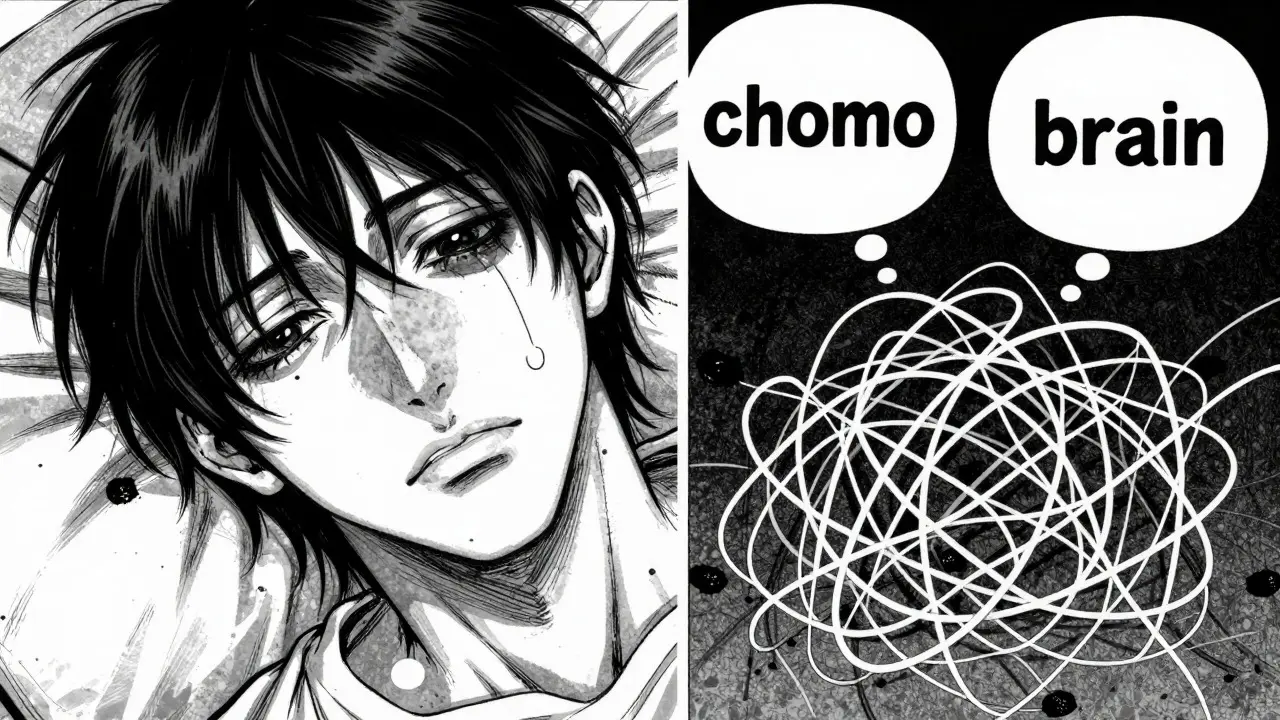
Fatigue from chemotherapy isn’t just tiredness. It’s a deep, whole-body exhaustion that sleep doesn’t fix. It affects 82% of patients. Meanwhile, "chemo brain"-cognitive fog affecting memory, attention, and multitasking-affects 75% of people during treatment.
Here’s what works:
For Fatigue: Counterintuitively, exercise helps. Studies show that 30 minutes of moderate activity (like walking) daily reduces fatigue severity by 25-30%. Listen to your body: push gently, but don’t overexert. Prioritize sleep hygiene and stay hydrated.
For Chemo Brain: Mindfulness practices are surprisingly effective. Research from MD Anderson shows meditation can reduce cognitive complaints by 40%. Apps like Calm or Headspace, used for 20 minutes daily, have shown 30-40% improvement in symptoms. Also, use external aids: write things down, set phone reminders, and keep a calendar visible. Don’t beat yourself up; your brain is under stress.

Protecting Your Nerves and Skin
Peripheral neuropathy is a serious concern for patients on taxane (like paclitaxel) or platinum-based drugs. It causes tingling, numbness, or pain in hands and feet. For 5-10% of patients, some symptoms become permanent.
Prevention and management strategies include:
- Report early: Tell your oncologist about any tingling immediately. Dose adjustments can prevent permanent damage.
- Protect extremities: Wear gloves when handling hot/cold objects. Check water temperature before bathing.
- Vitamin D check: Some studies suggest low vitamin D levels correlate with worse neuropathy. Ask your doctor to test your levels before starting treatment.
- Skin care: Chemo makes skin dry and sensitive. Use fragrance-free moisturizers daily. Avoid harsh soaps. Sun protection is critical, as some drugs increase sun sensitivity.
When to Call the Doctor Immediately
While many side effects are manageable at home, some signs indicate life-threatening complications. Chemotherapy lowers your white blood cell count (neutropenia), making you vulnerable to infections.
Seek emergency care if you experience:
- Fever ≥100.4°F (38°C): This is neutropenic fever. Do not wait. Go to the ER immediately.
- Shortness of breath or chest pain.
- Uncontrolled vomiting or inability to keep fluids down for 24 hours.
- Bleeding that won’t stop or unusual bruising.
- Severe headache or confusion.
Remember: Red urine after doxorubicin is normal (the drug turns urine orange/red for a day or two). Black stools are not.
The Future of Chemotherapy Care
Chemotherapy is evolving. New supportive drugs are reducing toxicity. For example, trilaciclib (Cosela), approved in 2023, protects bone marrow from damage during treatment for small cell lung cancer. Scalp cooling systems now reduce hair loss incidence from 65% to 25% in breast cancer patients receiving taxanes.
While targeted therapies and immunotherapies are taking over in some cancers (like HER2+ breast cancer or melanoma), chemotherapy remains essential. It’s the backbone for 78% of blood cancers and widely used in ovarian, colorectal, and breast cancers. Experts agree it will remain a critical tool for decades, especially for cancers without targetable mutations.
Your journey with chemotherapy is unique. Work closely with your care team, track your symptoms, and don’t hesitate to ask for help. You are not alone in this.
Does chemotherapy weaken your immune system permanently?
For most patients, no. White blood cell counts typically recover within a few weeks after treatment ends. However, some people may experience long-term immune suppression, especially if they received high doses or stem cell transplants. Regular monitoring and vaccinations (as approved by your doctor) are recommended post-treatment.
Can you work while undergoing chemotherapy?
Many people do, especially if their jobs allow flexibility. Fatigue and "chemo brain" are the biggest hurdles. If possible, consider part-time hours, remote work, or taking leave during intense cycles. Communicate openly with your employer about your limitations.
Is hair loss always permanent?
No. Hair usually begins growing back 3-6 months after treatment ends. It may come back a different texture or color initially, but this often stabilizes over time. Scalp cooling caps can help preserve hair during certain treatments.
What foods should I avoid during chemotherapy?
Avoid raw or undercooked meats, eggs, and seafood due to infection risk. Limit alcohol and caffeine, which can dehydrate you. If you have mouth sores, avoid spicy, acidic, or rough-textured foods. Focus on soft, nutrient-dense foods like smoothies, soups, and mashed potatoes.
How long does it take to recover after finishing chemotherapy?
Recovery varies. Most people feel significantly better within 6-12 months. Fatigue and cognitive issues may linger longer. Gradual return to normal activities, balanced nutrition, and regular follow-up care support full recovery.