Cancer Prevention: Lifestyle Factors and Chemoprevention Guide
 May, 13 2026
You don't need a crystal ball to know that cancer is scary. But here is the good news you might have missed: roughly 30-40% of all cancer cases are preventable. That number comes straight from the World Health Organization (WHO) in their 2023 global report. It means that for every three people diagnosed with cancer, one could have avoided it through simple, daily choices. We aren't talking about magic pills or expensive treatments. We are talking about how you eat, how you move, and what you put on your skin.
The Power of Daily Habits
Let’s cut through the noise. The American Cancer Society (ACS) has been tracking this data since 2006, updating their guidelines in 2012 and again in 2020. These aren’t just suggestions; they are evidence-based rules adopted by healthcare systems worldwide. Dr. Alpa Patel, PhD, Senior Scientific Director of Epidemiology Research at ACS, oversees these updates. Her team found that implementing just three key recommendations can reduce your cancer risk by 18-21% within five years. Yes, five years. You don’t have to be perfect forever to see results.
Think about your weight. It sounds blunt, but carrying extra weight is a major risk factor. The American Institute for Cancer Research (AICR) found in their 2022 Continuous Update Project that every 5-unit increase in BMI above 25 raises your risk significantly. Specifically, it increases postmenopausal breast cancer risk by 12%, kidney cancer by 10%, and colorectal cancer by 8%. Keeping your BMI between 18.5 and 24.9 isn’t just about fitting into old jeans; it’s about keeping inflammation low and hormones balanced.
Movement as Medicine
If you think exercise is only for heart health, you’re missing half the picture. Physical activity is a potent tool against cancer cells. The recommendation is clear: aim for 150 minutes of moderate-intensity exercise weekly. This could be brisk walking at 3-4 mph. Or, if you prefer intensity, 75 minutes of vigorous activity like running at 6+ mph works too. Why does this matter? A 2023 analysis by Mayo Clinic showed that hitting these targets reduces colon cancer risk by 24% and breast cancer risk by 12-20% compared to sitting on the couch all day.
We know time is tight. UCLA Medical Center surveyed 1,200 patients in 2023 and found that 68% struggle with consistent physical activity, mostly because they feel they lack time. Here is a trick: pair activity with social support. UC Davis Health’s 'Cultivating Health' initiative launched in January 2022 proved that when people track activity with friends or groups, adherence jumps by 40%. Participants achieved 85% of their weekly goals, compared to just 45% for those going solo. Find a walking buddy. It works.
What’s on Your Plate?
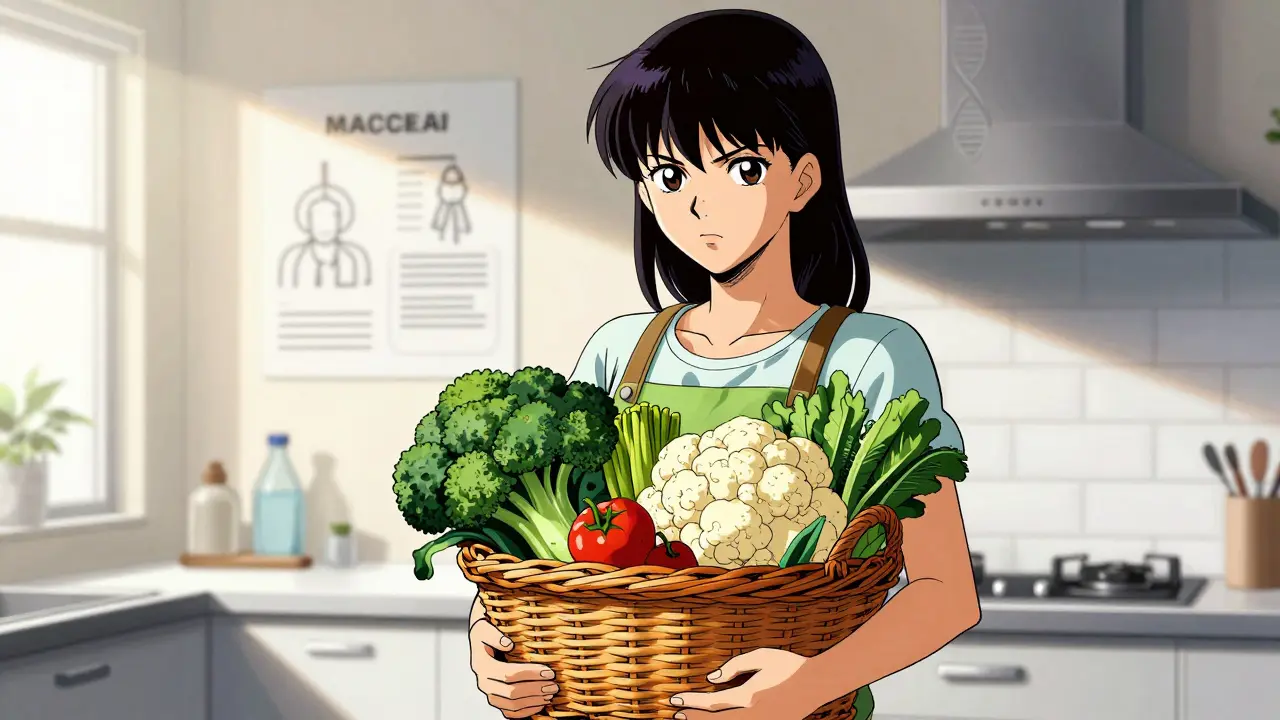
Your diet plays a huge role. The ACS 2020 guidelines suggest eating 2.5-3 cups of vegetables and 1.5-2 cups of fruit daily. Sounds easy, right? Yet, the CDC’s 2023 Behavioral Risk Factor Surveillance System shows only 12% of adults actually hit that vegetable target. Focus on cruciferous vegetables like broccoli and cauliflower. A 2024 meta-analysis from UC Davis Health linked these veggies to a 15-20% lower risk of prostate cancer. They contain compounds that help your body detoxify carcinogens naturally.
Be careful with meat, though. There is a debate here. The World Cancer Research Fund (WCRF) and AICR recommend avoiding processed meat entirely. Why? Because the International Agency for Research on Cancer (IARC) classifies processed meat as a Group 1 carcinogen. That puts it in the same category as tobacco and asbestos in terms of evidence strength. The ACS is slightly more lenient, allowing limited consumption under 18 ounces per week. If you want to play it safe, swap the bacon for beans. You’ll get fiber, which helps keep your gut clean and reduces colorectal cancer risk.

Alcohol and Sun Protection
Let’s talk about alcohol. Many people think a glass of wine is healthy. For cancer prevention, the answer is no. Cancer Research UK reported in 2023 that each additional daily drink increases breast cancer risk by 7-12% and esophageal cancer by 20-30%. The limit is strict: maximum two standard drinks (28g ethanol) daily for men and one (14g) for women. Less is always better.
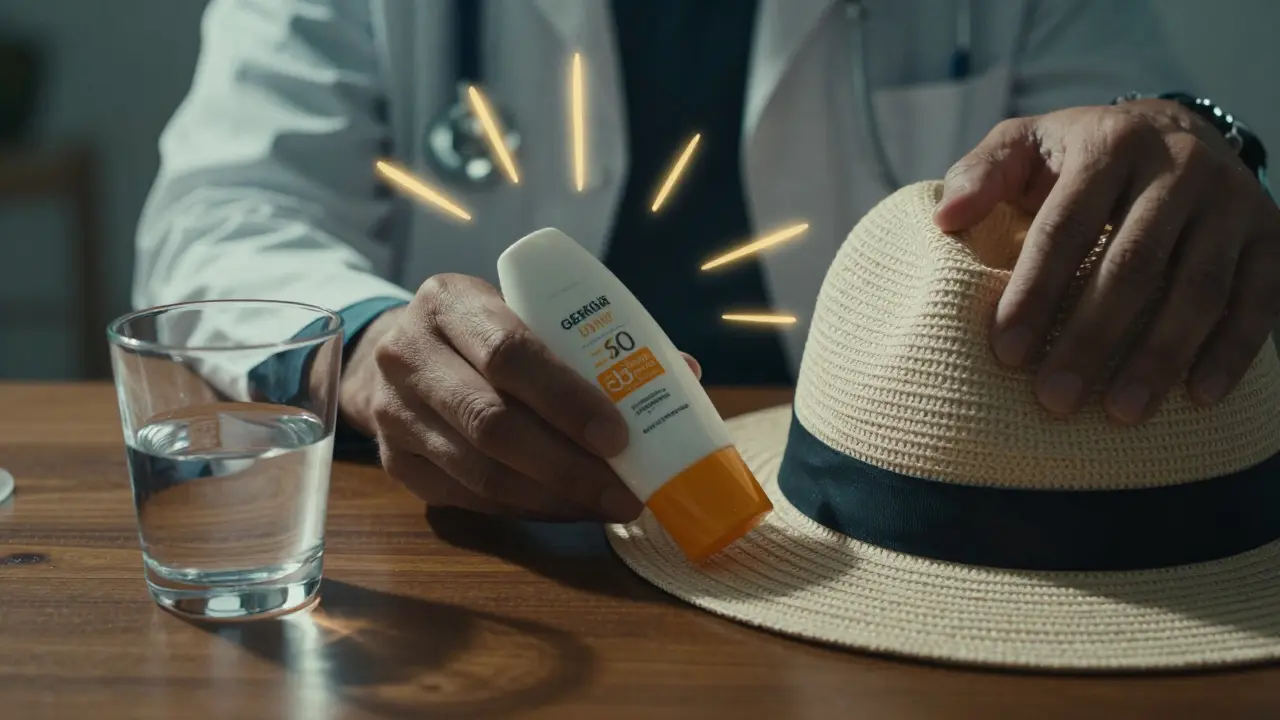
Sun protection is equally critical. Melanoma is aggressive, but preventable. Use SPF 30+ broad-spectrum sunscreen. Apply it every two hours if you are outside. A 2022 dermatology review from Mayo Clinic states this simple habit reduces melanoma risk by 50%. Avoid UV exposure between 10 a.m. and 4 p.m., when 80% of daily UV radiation hits the earth. Wear hats. Seek shade. It’s not just about wrinkles; it’s about survival.
Chemoprevention: The Medical Side
Lifestyle changes are powerful, but sometimes medicine helps too. This is where chemoprevention comes in. Chemoprevention uses medications, vitamins, minerals, or other substances to decrease the risk of developing cancer. It’s not treatment for existing cancer; it’s prevention for high-risk individuals.
For example, aspirin has shown promise in reducing colorectal cancer risk. Some studies suggest low-dose aspirin can lower risk by up to 20% in certain populations. However, it’s not for everyone due to bleeding risks. Another example is tamoxifen, used to reduce breast cancer risk in high-risk women. These decisions require a doctor. Never self-prescribe. The NIH notes that we still have gaps in understanding how these drugs interact with lifestyle factors. Only 12% of analyzed studies look at combined interventions. Talk to your oncologist or primary care provider about whether chemoprevention makes sense for your specific genetic profile.
Implementation Strategies
Knowing what to do is hard. Doing it consistently is harder. Dr. Cynthia Thomson, PhD, from the University of Arizona, emphasizes that even a 5-10% weight loss can modulate insulin-like growth factor pathways, reducing tumor-promoting inflammation by 25-30% within six months. You don’t need to lose 50 pounds to benefit. Small wins add up.
The American Cancer Society suggests a '3-2-1' framework:
- 30 minutes of activity daily.
- 2+ servings of vegetables at lunch and dinner.
- 1 hour less screen time.
The Reality Check
Don’t blame yourself if you get cancer despite doing everything right. Dr. Otis Brawley, former Chief Medical Officer at ACS, cautions that lifestyle interventions alone cannot eliminate risk. Genetic factors account for 5-10% of cases, and environmental exposures contribute another 15-20%. You control what you can. Focus on the 30-40% that is preventable. Ignore the rest.
The market for cancer prevention is growing, valued at $186.7 billion in 2023. Employers are catching on, with 68% of Fortune 500 companies offering prevention programs. But disparities remain. Only 29% of Medicaid patients receive structured lifestyle counseling versus 67% of privately insured patients. Advocate for yourself. Ask your doctor for resources. Knowledge is power.
Looking Ahead
The future looks promising. The NIH allocated $287 million for lifestyle intervention research in their 2024-2028 plan. We are moving toward precision prevention. The NCI-MATCH trial sub-study is testing if genetic profiling can personalize dietary recommendations. Preliminary data is expected in Q3 2025. Meanwhile, Harvard’s Dr. Walter Willett is leading a study tracking 120,000 participants to quantify synergistic effects of combined lifestyle factors. Results are anticipated in late 2026.
Until then, stick to the basics. Move more. Eat plants. Limit alcohol. Protect your skin. Consult your doctor about chemoprevention if you are high risk. These steps are proven. They work. Start today.
How much exercise really reduces cancer risk?
Aim for 150 minutes of moderate-intensity exercise weekly, such as brisk walking. This has been shown to reduce colon cancer risk by 24% and breast cancer risk by 12-20% compared to sedentary lifestyles, according to Mayo Clinic's 2023 analysis.
Is processed meat really that dangerous?
Yes. The International Agency for Research on Cancer (IARC) classifies processed meat as a Group 1 carcinogen. The WCRF and AICR recommend avoiding it entirely. The ACS allows limited consumption under 18 ounces per week, but avoidance is safer for risk reduction.
What is chemoprevention?
Chemoprevention involves using medications, vitamins, or other substances to decrease the risk of developing cancer in high-risk individuals. Examples include low-dose aspirin for colorectal cancer or tamoxifen for breast cancer. Always consult a doctor before starting.
Can I reverse cancer risk quickly?
Significant risk reduction can happen relatively quickly. Harvard's T.H. Chan School of Public Health reports that implementing just three key lifestyle recommendations can reduce cancer risk by 18-21% within five years of consistent adherence. Even modest weight loss of 5-10% can reduce inflammation markers within six months.
How does alcohol affect cancer risk?
Alcohol increases risk linearly. Each additional daily drink increases breast cancer risk by 7-12% and esophageal cancer by 20-30%. The recommended limit is maximum two standard drinks daily for men and one for women, but less is always better for prevention.
Tanya KLIMCHUK Klimchuk
May 14, 2026 AT 01:02Look, I’ve been working in oncology support for over a decade and let me tell you something that might make your skin crawl but will save your life: stop eating processed meat. Seriously. It’s not a debate. The data is overwhelming. People cling to their bacon like it’s the last crumb of comfort in a cold world, but every slice is literally loading the dice against you. You want to know what actually works? Consistency. Not perfection. Just showing up for yourself every single day with better choices. Move your body. Eat plants. Limit the booze. It sounds simple because it is. We complicate health because we’re terrified of discipline. But here’s the truth: your body knows how to heal itself if you stop poisoning it. I see patients who turn things around in months just by swapping fried food for steamed veggies and taking daily walks. It’s not magic; it’s biology. And biology doesn’t care about your excuses. So get out there and do the work.
Jeremiah Cassandra
May 14, 2026 AT 05:25Oh, brilliant. Another article telling us to stop enjoying life so we can live longer in misery. 🙄 Because nothing says 'fun' like counting broccoli florets and avoiding sunlight between 10 and 4. I’m sure Dr. Patel has never had a glass of wine while sitting on a beach. Probably too busy measuring her BMI. Thanks for the scare tactics, though. Nothing motivates like guilt. 😂
Emma Olliff
May 14, 2026 AT 17:23The sheer ignorance displayed in this thread is truly staggering. One must understand that cancer prevention is not merely a matter of 'lifestyle choices' but a fundamental duty to one's own biological integrity. To suggest that processed meats are a trivial indulgence is to ignore the rigorous scientific consensus established by the IARC. It is classified as a Group 1 carcinogen, alongside tobacco. Yet here we have people mocking the necessity of discipline. It is pathetic. If you cannot adhere to basic nutritional guidelines, you are essentially volunteering for disease. There is no room for sarcasm when dealing with mortality. Read the AICR guidelines. Educate yourselves. Stop being lazy.
Diana Wiechecka
May 16, 2026 AT 05:09I actually tried the walking buddy thing mentioned in the post and it was surprisingly fun! 🚶♀️✨ My friend and I started doing 30-minute walks after dinner and now we’re both feeling way more energetic. Plus, we talk about everything, so it’s like therapy + exercise. Highly recommend finding someone who won’t judge your pace! 🌱💪
Kris Wong
May 17, 2026 AT 06:48You think the WHO report is real? Please. 🧐 The entire medical-industrial complex is designed to keep you sick enough to buy supplements and meds but healthy enough to pay taxes. They say 30-40% is preventable, but who funded that study? Big Pharma loves 'lifestyle changes' because it shifts blame from environmental toxins they created onto the individual. Meanwhile, they quietly patent chemoprevention drugs to sell back to you at triple the price. Wake up. The real prevention is detoxing from their narrative. 🚫💊
Anthony Red
May 18, 2026 AT 19:40Hey man, I appreciate the straightforward advice. I’ve been trying to cut down on alcohol since my last checkup and it’s harder than I thought, but the stats on breast and esophageal cancer risk are pretty sobering (pun intended). I switched to sparkling water with lime and honestly, my sleep quality has improved. Small steps, right? Also, anyone else struggle with the 'screen time' part? I feel like I’m always glued to my phone. Gotta try that 3-2-1 framework.
Danny S
May 19, 2026 AT 15:21It is quite amusing how readily the masses accept these guidelines without questioning the source. Who benefits from this narrative? Certainly not the average citizen. The push for 'chemoprevention' is a Trojan horse for pharmaceutical dependency. They want you to take aspirin or tamoxifen, creating lifelong patients rather than cured individuals. The government tracks your health data through these programs. It is surveillance capitalism disguised as public health. Do not trust the NIH. Trust your instincts. They are selling you fear to control your bodies. 📉👁️
Lori Wildrick
May 21, 2026 AT 12:21I really liked the point about social support making a difference. As an introvert, I usually prefer doing things alone, but joining a local gardening club has helped me stay active without feeling pressured. We grow our own vegetables, which means I’m eating more cruciferous veggies naturally. It feels good to be part of a community that cares about health. Have any of you found other gentle ways to stay active?
charles robert
May 21, 2026 AT 20:38The existential dread of knowing you are slowly dying unless you perform specific rituals is the modern condition. 🎭 We are trapped in a panopticon of wellness metrics, constantly monitoring our BMI, our step count, our vegetable intake. Is this freedom? Or is it just a new form of slavery? The 'chemoprevention' angle is particularly ironic-we ingest chemicals to avoid the consequences of living in a chemical-saturated world. We are playing god with our own biology, yet we remain utterly powerless against the systemic rot. Truly tragic. 🥀📉
Kathryn Byrd
May 22, 2026 AT 07:10I read the section on alcohol and decided to cut out wine completely. It wasn't easy at first, but I noticed my energy levels stabilized within two weeks. I also started using SPF 30 sunscreen daily, even when it's cloudy. I didn't realize UV exposure was so damaging until I saw the statistics on melanoma risk reduction. It seems like small changes add up over time.
Desirea Gaona
May 23, 2026 AT 07:38It is imperative that we approach this information with a sense of collective responsibility. The data presented herein underscores the necessity of adopting evidence-based practices for the betterment of our communal health infrastructure. One must consider the socioeconomic disparities highlighted in the text, wherein Medicaid patients receive significantly less counseling than their privately insured counterparts. This inequity demands our attention and advocacy. Furthermore, the implementation of the '3-2-1' framework should be encouraged within all demographic groups, regardless of background. We must foster an environment where knowledge is accessible to all, thereby mitigating the preventable burden of cancer upon our society. Let us strive for excellence in our personal habits while simultaneously demanding systemic change.
Javier Arauz
May 25, 2026 AT 04:09This whole thing is a scam to make us weak. Real men eat steak and drink beer. Look at Europe, look at America before all this woke health stuff. Now everyone is scared of shadow and broccoli. It’s destroying our culture. Just live your life and don’t worry about some made-up percentages from bureaucrats who’ve never lifted anything heavier than a pen. 🇺🇸